The $301.2 Million Puzzle: How the 2026 NFL Salary Cap Will Define the Chiefs’ Critical Offseason
The confetti cannons have long been silent, and for the Kansas City Chiefs, the sting of a 2025 season that fell short of the franchise’s sky-high standards remains a powerful motivator. As the NFL world turns its attention to free agency and the draft, the Chiefs’ mission to revamp their roster and reclaim the AFC throne is running headlong into a familiar, formidable obstacle: the salary cap. The league’s official setting of the 2026 cap at $301.2 million per team—a significant $22 million jump—provides relief but no simple solution. For General Manager Brett Veach, this offseason is a high-stakes financial and strategic puzzle where every move must be calculated to perfection.
A Rising Tide That Doesn’t Lift All Boats
On the surface, a record-setting salary cap increase to $301.2 million seems like a windfall for every franchise. For a team like the Chiefs, however, it’s more of a necessary life raft. Despite the substantial bump, Kansas City remains millions over the cap as the critical March 11th deadline looms. This reality underscores the complex contract structures and back-loaded deals common among perennial contenders. The cap increase doesn’t create a spending spree; it merely provides the necessary room to become compliant and execute a targeted team-building strategy.
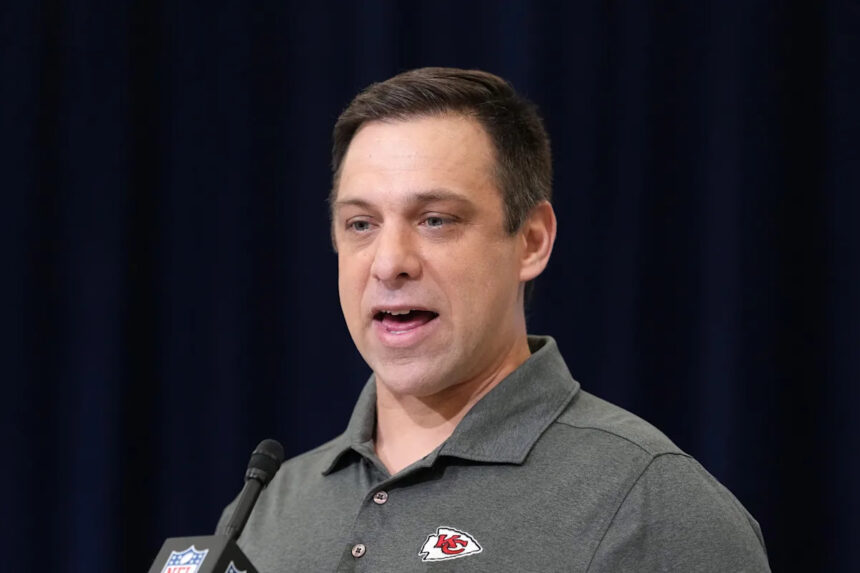
Veach’s candid assessment at the NFL Scouting Combine framed the challenge perfectly. “Every year it’s a challenge,” Veach stated. “We do have some flexibility… but it’s not like we have 90 million in cap space.” This admission is crucial. The Chiefs’ offseason won’t be defined by blockbuster, headline-grabbing signings. Instead, it will be a masterclass in salary cap gymnastics, value hunting, and shrewd draft capital utilization. The goal isn’t to win the offseason; it’s to construct a roster capable of winning in January, all while navigating the financial constraints that success itself has created.
First Moves in a Necessary Financial Reshuffle
The Chiefs have already begun the delicate dance of cap compliance. The release of dependable defensive lineman Mike Danna was a sobering but expected move, clearing immediate cap space at the cost of on-field production. The more significant lever pulled was the restructuring of Patrick Mahomes’ contract. By converting a portion of Mahomes’ salary into a signing bonus, the team can spread the cap hit over future years, creating vital breathing room for 2026.
These are the first of several anticipated maneuvers. The specter of additional veteran departures hangs over the roster as the new league year approaches. The front office must ask difficult questions:
- Which aging, high-cost veterans can be replaced with younger, cheaper talent?
- Can contract extensions for key players be structured to lower the 2026 cap number?
- Is there a candidate for a post-June 1st designation, which would allow the team to spread dead money over two seasons?
Each decision carries risk. Cutting productive players weakens the roster. Restructuring contracts, like Mahomes’, pushes financial obligations into the future, potentially exacerbating cap issues down the line. Veach’s “flexibility” lies in having multiple paths to compliance, but each path has its own consequences for the 2026 roster.
The Veach Doctrine: Efficiency in Free Agency, Excellence in the Draft
With limited cap space once compliant, the Chiefs’ philosophy in free agency will shift. The era of signing a premier top-tier free agent like Joe Thuney appears to be on pause. Instead, look for Kansas City to employ a strategy focused on:
- Value Signings: Targeting one or two mid-tier veterans who fill specific, glaring needs, potentially at positions like wide receiver, offensive tackle, or defensive end.
- Prove-It Deals: Offering short-term, incentive-laden contracts to players looking to rebuild their value, a tactic that has paid dividends in the past.
- Internal Retention: Using precious cap dollars to re-sign their own key free agents who may be more affordable, preserving continuity and system knowledge.
This approach places an immense burden on the NFL Draft. As Veach emphasized, the team must “nail these picks.” The draft is the most cost-effective tool for roster building, with rookie contracts providing elite talent at a fraction of the market rate. For the Chiefs to fill multiple starting roles and add depth, their 2026 draft class needs to yield immediate contributors. A miss in the early rounds could create a roster hole they lack the financial means to fix in free agency.
Predictions for a Pivotal Chiefs Offseason
Given the financial constraints and the team’s stated goals, several key developments are likely on the horizon for Kansas City.
One More Significant Cap Casualty: The release or trade of another established veteran—potentially on the defensive side—feels inevitable to reach cap compliance comfortably and create a modest pool for free agency. This will be the toughest decision of the offseason.
A Quiet Start to Free Agency: Don’t expect the Chiefs to be active in the first wave. They will likely monitor the market, waiting for prices to drop before pouncing on a calculated value signing, much like the Drue Tranquill move two offseasons ago.
Heavy Investment in the Draft’s First Two Days: With needs at premium positions, Kansas City could package picks to move up in the first or second round to secure a blue-chip prospect at wide receiver or tackle. Alternatively, staying put and accumulating more Day 2 picks to address multiple needs is equally plausible.
An Extension as a Cap Tool: A long-term extension for a core player like cornerback Trent McDuffie could be structured to lower his 2026 cap hit, serving the dual purpose of securing a star and creating immediate cap space.
Conclusion: Cap Hell or Championship Calculus?
For lesser franchises, being over the cap would signal a dire rebuild. For the Kansas City Chiefs, it is the annual cost of doing business at the highest level. The 2026 salary cap situation is not a catastrophe; it is the defining parameter of their offseason strategy. The $301.2 million figure is the boundary within which Brett Veach and his staff must operate to correct the course after a “disappointing” step back.
The path forward is clear: painful but necessary financial adjustments, disciplined and opportunistic forays into free agency, and a draft class that must deliver. The success of this meticulous process won’t be judged in March, but in the crucible of the 2026 season. If executed correctly, this cap-constrained offseason could become the foundation for the next Chiefs championship run, proving once again that in the modern NFL, navigating the ledger is just as important as dominating the gridiron.
Source: Based on news from Yahoo Sports.