San Francisco 49ers’ Keion White Shot in Ankle, Undergoes Successful Surgery
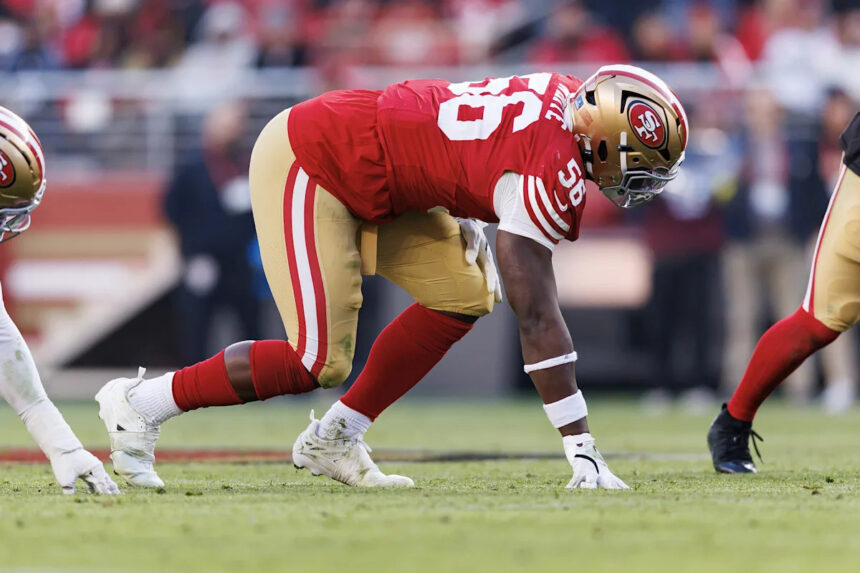
In a shocking and violent incident that has sent ripples through the NFL community, San Francisco 49ers defensive lineman Keion White is recovering after being shot in the ankle early Monday morning. The promising young player was an unintended victim of a shooting following an altercation at a San Francisco event, according to team and police statements. While the 49ers have confirmed White underwent surgery and is expected to be okay, the event casts a stark light on the unpredictable dangers professional athletes can face away from the field and raises immediate questions about his availability for the upcoming season.
A Terrifying Morning: The Incident and Immediate Aftermath
The unsettling news broke via social media from trusted 49ers beat reporters, notably The Athletic’s Matt Barrows. The incident occurred on Mission Street in San Francisco in the early hours of Monday morning. Crucially, initial reports indicate that Keion White was not involved in the altercation that precipitated the violence. He was, in the team’s own words, “a victim of a shooting.”
The San Francisco Police Department provided a preliminary statement, noting: “A preliminary investigation revealed a verbal altercation occurred between two groups inside a business. The victim was injured when shots were fired by an unknown suspect.” This detail is paramount—it frames the event as a case of being in the wrong place at the wrong time, a frightening scenario for any individual.
The 49ers organization acted swiftly, releasing an official statement: “Keion White was a victim of a shooting and sustained a bullet wound to his ankle this morning in San Francisco. He is currently undergoing surgery at a local hospital. We will provide further updates when appropriate.” Later updates from reporters confirmed the surgery was successful, offering a sigh of relief to teammates, coaches, and fans.
Medical and Football Implications: The Road to Recovery
While the phrase “expected to be OK” is comforting from a life-and-health perspective, for a professional athlete, the specifics of an ankle gunshot wound are complex. The recovery timeline and long-term impact are now the central concerns for the 49ers’ medical and coaching staff.
Ankle injuries for defensive linemen are particularly tricky. The position requires explosive power, the ability to anchor against double teams, and sudden changes in direction. A bullet wound, depending on the damage to bone, tendons, ligaments, and nerves, can affect all these attributes. The primary goals of surgery would be to:
- Remove the bullet and any fragments to prevent infection and further tissue damage.
- Repair damaged structures such as bones (fibula, tibia, talus) or critical ligaments.
- Ensure proper vascular and nerve function to the foot, which is essential for mobility and strength.
Rehabilitation will be a multi-phase process. Initial focus will be on wound healing and controlling swelling, followed by restoring range of motion, then rebuilding strength and stability. The final and most critical phase will be football-specific functional training—relearning how to push off with power, change direction, and absorb the immense forces of NFL contact.
This incident is a stark reminder that NFL player availability can be affected by off-field incidents beyond anyone’s control. The team’s depth at defensive line will be tested immediately as they enter training camp.
Roster Impact and Team Response in a Critical Season
Keion White, entering a pivotal point in his career, was projected to be a key rotational piece along the 49ers’ formidable defensive front. His unique blend of size and athleticism provided valuable flexibility for Defensive Coordinator Steve Wilks. His absence creates an immediate void.
The 49ers, perennial Super Bowl contenders, are built on a foundation of defensive line dominance. While stars like Nick Bosa and Javon Hargrave anchor the unit, depth is what sustains a pass rush through a grueling 17-game season and a deep playoff run. White was a core part of that depth strategy. In his absence, the team may look to:
- Increase reps for young players like Robert Beal Jr. or recent draft picks.
- Explore the veteran free-agent market for a temporary replacement, though cap space is tight.
- Adjust schematic packages to maximize the personnel they have available.
Beyond the schematic impact, the emotional and psychological effect on the locker room cannot be understated. Seeing a teammate become an innocent victim of street violence is a traumatic event. Head Coach Kyle Shanahan and the team’s veteran leaders will be tasked with managing this reality, supporting White, and keeping the team focused amidst a disturbing distraction. The organization’s handling of this crisis management situation will be closely watched.
Broader Context: Athletes, Safety, and Unpredictable Risk
The shooting of Keion White forces a difficult conversation about the environment surrounding professional athletes. While leagues and teams invest heavily in player safety on the field—from advanced equipment to concussion protocols—off-field risks are far more nebulous and difficult to mitigate.
Athletes, by virtue of their public profile and financial status, can sometimes be targets, but this case appears different. White was reportedly an uninvolved bystander, highlighting that the risk is often simply the risk of urban life. This incident raises questions about:
- Player education and security protocols when frequenting public venues.
- The challenges of ensuring personal safety in major metropolitan areas.
- The league’s role in providing resources for players to navigate their communities safely.
It also serves as a sobering counterpoint to the controlled, regulated violence of football. The game’s injuries, while severe, occur within a framework of rules and immediate medical care. A random act of violence on the street offers no such structure. The mental recovery from such a traumatic event may be as important as the physical rehabilitation for White.
Conclusion: A Long Road Ahead for White and the 49ers
Keion White’s successful surgery is the first and most positive step on what will be a challenging journey back to the football field. The 49ers community and the wider NFL world are rightfully relieved that his injuries were not life-threatening. However, the path from a hospital bed back to an NFL trench is long and uncertain.
Football implications aside, the human element remains paramount. A young man’s life and career were abruptly altered by a moment of senseless violence. His resilience, supported by the 49ers’ world-class medical and player support staff, will now be tested in an entirely new way.
For the team, this is an unforeseen adversity as they prepare for a season with championship aspirations. It tests their depth, their “next man up” philosophy, and their collective spirit. How they rally around their teammate while maintaining their competitive edge will be a defining subplot of their upcoming campaign. The hope for a full and speedy recovery for Keion White is universal, but the reality is that the echoes of this morning’s gunshots will be felt by the player and the franchise for months to come.
Source: Based on news from Yahoo Sports.