


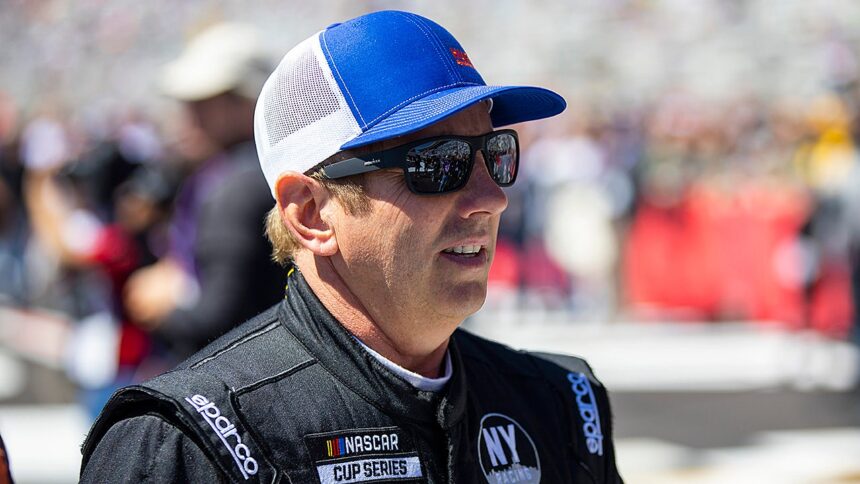
Former NASCAR Star Greg Biffle’s Plane Crashes at North Carolina Airport
A private jet owned by former NASCAR Cup Series star Greg Biffle crashed during a landing attempt at a North Carolina airport Thursday morning, drawing immediate attention from the racing world and aviation authorities. The incident, involving a Cessna Citation business jet, occurred at Statesville Regional Airport (SVH), approximately 50 miles north of Charlotte. While initial reports indicate no serious injuries, the crash has sparked an investigation by the Federal Aviation Administration (FAA) and the National Transportation Safety Board (NTSB) and raised questions about the risks inherent in athlete-owned aviation.
The Incident: A Hard Landing at Statesville Regional
According to federal aviation records and local news reports, the aircraft involved was a Cessna C550 Citation, bearing the tail number N257BW. The plane is registered to GB Aviation Leasing LLC, a company owned by Greg Biffle. The crash happened in the morning hours as the jet was approaching the runway. Footage from the scene broadcast by local affiliate WJZY-TV showed the aircraft on the ground with significant damage to its fuselage and landing gear, having skidded off the paved surface. Remarkably, early indications suggest that the two people on board, the pilot and a passenger, were able to exit the aircraft without life-threatening injuries. The swift response from local emergency services at the airport likely prevented a more severe outcome.
Statesville Regional Airport is a known hub for general and corporate aviation, frequented by many in the NASCAR community due to its proximity to the sport’s heartland in Mooresville and Concord. The airport features a single 5,500-foot runway, and conditions at the time of the crash are a key focus of the ongoing investigation. Factors such as mechanical failure, pilot error, or weather will be scrutinized by the NTSB in the coming weeks and months.
Greg Biffle: From Racetrack to Runway
For fans of NASCAR, Greg Biffle is a household name. The Vancouver, Washington native was a fierce competitor in the NASCAR Cup Series for nearly two decades, primarily driving the No. 16 Ford for Roush Fenway Racing. His career highlights are formidable:
- 19 NASCAR Cup Series wins, including prestigious victories at the Daytona 500 (2003) and the Southern 500 (2005, 2006).
- Finished as the series runner-up in the 2005 championship standings.
- A champion in both the NASCAR Truck Series (2000) and the Xfinity Series (2002), making him one of only three drivers to win championships in all three of NASCAR’s national series.
- Known for his aggressive, no-nonsense driving style and his expertise on intermediate speedways.
Since stepping back from full-time Cup Series competition after the 2016 season, Biffle has remained connected to racing through part-time Truck Series efforts and roles as a driver coach. His ownership of GB Aviation Leasing LLC underscores a common trend among top-tier athletes: the use of private aviation for efficiency, privacy, and the demanding schedules of professional sports. For a driver whose career was built on speed and precision, the transition to pilot and aircraft owner is a logical, if not without risk, progression.
Expert Analysis: The Risks of Athlete-Owned Aviation
The crash brings into sharp focus the complex relationship between professional athletes and private air travel. Aviation experts note that while statistically safe, private aviation carries inherent risks that are magnified when high-profile individuals are involved.
“What we often see in these cases is a confluence of factors,” explains a veteran aviation analyst who requested anonymity due to the active investigation. “High-performance aircraft like the Cessna Citation require constant training and meticulous maintenance. The owner’s passion for speed and machinery from their professional life doesn’t always translate directly to the cockpit. The key questions investigators will ask revolve around pilot proficiency, aircraft upkeep, and operational decisions leading up to the landing.”
The Cessna C550 Citation is a popular twin-engine business jet known for its reliability. However, its landing speed and handling characteristics are vastly different from the commercial airliners most people are familiar with. A hard landing or runway excursion can occur due to a sudden wind shear, a misjudged approach angle, or a technical malfunction with the flaps or landing gear system.
For the NASCAR community, this incident is a sobering reminder. The sport has been tragically marred by aviation accidents in the past, most notably the 2004 crash that killed legendary driver and team owner Alan Kulwicki, and the 1993 accident that took the life of rising star Davey Allison. While technology and safety have advanced tremendously, the shadow of those events lingers, making any crash involving a racing figure a deeply felt event.
Predictions and Ramifications: Investigation, Safety, and Legacy
The path forward from this incident will follow a well-established protocol. The NTSB will take the lead, with investigators already on site to document the wreckage, interview the pilot and passenger, and collect data from the aircraft’s flight data and cockpit voice recorders. A preliminary report is expected within 10 days, though a final probable cause determination could take a year or more.
We predict several key outcomes from this event:
- Renewed Scrutiny on Pilot Training: The investigation will heavily focus on the pilot’s qualifications, recent flight hours, and training specific to the C550. This could lead to broader conversations within sports aviation circles about mandatory recurrent training benchmarks.
- Maintenance Records Under the Microscope: The maintenance logs for N257BW will be examined page by page. Any irregularities or deferred items could become central to the NTSB’s findings.
- Impact on Biffle’s Aviation Ventures: While Greg Biffle was not piloting the aircraft, his company owns it. The crash may influence how he and other athlete-owners manage their aviation assets, potentially leading to stricter operational policies or a reevaluation of the necessity of private travel for certain trips.
- A Moment of Pause for the Racing Community: Expect drivers, team owners, and crew members who are also pilots to discuss this event privately. It will serve as an unplanned safety briefing, reinforcing the need for unwavering discipline when transitioning from the racetrack to the runway.
Conclusion: A Stark Reminder of the Unforgiving Nature of Speed
The crash of Greg Biffle’s Cessna Citation at Statesville Regional Airport is a story of fortunate escape, but also a powerful metaphor. It highlights the thin margins that exist in all disciplines governed by physics and focus, whether on a banked oval at 200 mph or on final approach to a runway. Greg Biffle built a Hall of Fame-worthy career by mastering risk and understanding machinery at the limit. This incident demonstrates that those same principles—respect for the machine, commitment to preparation, and acknowledgment of risk—are absolute, non-negotiable tenets in aviation.
As the investigation unfolds, the racing world will collectively exhale, grateful that the outcome was not tragic. The event will inevitably become a case study, not for sensationalism, but for reinforcing a culture of safety. For Biffle, a competitor who always strived for perfection on the track, the aftermath may involve ensuring that the standards of excellence he upheld in NASCAR are mirrored perfectly in the operations of GB Aviation. In the end, this crash is a stark reminder that the pursuit of speed, in any arena, demands the highest level of respect and responsibility.
Source: Based on news from Fox Sports.



