OU Football’s Playoff Dreams Crushed as Special Teams Failures Earn Brutal Grade
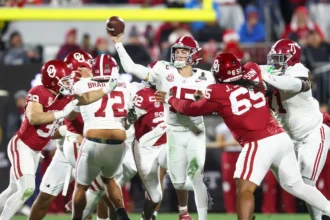
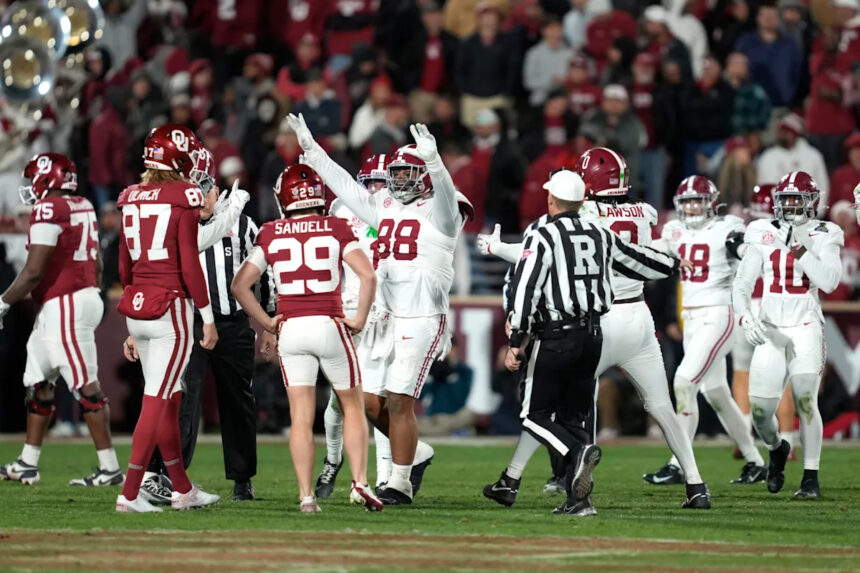
NORMAN — The roses were smelling pretty sweet. Then they wilted. Fast. In a collapse that will haunt the Oklahoma Sooners program for years, a 17-0 lead evaporated into a 34-24 College Football Playoff loss to the Alabama Crimson Tide. While the offense sputtered and the defense wore down, the post-mortem points to one unit as the primary architect of this agony: special teams. A perceived monumental advantage became a catastrophic liability, turning momentum, field position, and ultimately the season, on its head in a brutal display at the worst possible time.
A Promising Start Obscured by a Tidal Wave of Errors
For the first quarter and a half, the Sooners’ script was perfect. The defense was generating stops, the offense was efficient, and the scoreboard reflected a team ready to punch its ticket to Pasadena. The special teams, however, were a ticking time bomb. What was touted as a huge advantage for OU quickly revealed itself as a facade. The cracks began subtly before exploding into game-altering disasters.
The first critical failure was a missed 47-yard field goal attempt in the first quarter, a chance to extend the lead to 20-0 that instead left points on the field and gave Alabama life. This was a precursor to the avalanche to come. The true turning point arrived just before halftime. With Oklahoma clinging to a 17-10 lead and poised to receive the second-half kickoff, a catastrophic muffed punt gifted Alabama the ball deep in OU territory. The Tide promptly scored, seizing a lead they would never relinquish. In a span of minutes, a dominant position evaporated into a deficit, all fueled by special teams calamity.
Grading the Catastrophe: A Unit-by-Unit Breakdown
The final grade for Oklahoma’s special teams is an unequivocal F. This wasn’t a case of one bad play; it was a systemic failure across multiple phases that directly decided a playoff game.
- Punt Return Unit: F-. The muffed punt was a season-ending error. Beyond the fumble, decision-making on fair catches was questionable, and the unit generated zero positive return yards, consistently putting a struggling offense in poor field position.
- Field Goal Operation: D. The missed field goal in a tight playoff game is a massive swing. In a contest ultimately decided by 10 points, those left-behind points are magnified. The operation lacked the clutch gene required on the biggest stage.
- Kick Coverage: C-. While not directly responsible for a touchdown, Alabama consistently found room to start drives near or across the 30-yard line. In a game of inches and field position, providing a championship opponent with a short field is a losing strategy.
- Punting: C. The punting itself was adequate, but the protection and coverage were part of the larger, anxious ecosystem. The unit operated under pressure all night, a symptom of the overall breakdown.
This collective performance stands in stark contrast to the playoff-caliber execution exhibited by Alabama, whose units were steady, mistake-free, and opportunistic. The Sooners’ biggest supposed edge became their most glaring weakness.
The Ripple Effect: How Special Teams Doomed OU’s Strategy
The impact of these failures extended far beyond the scoreboard. They fundamentally broke Oklahoma’s game plan and psyche.
First, they squandered defensive heroics. The OU defense played its heart out early, generating stops to build the lead. Special teams repeatedly betrayed that effort, either by gifting Alabama points or burying the offense deep. The defense, already tasked with slowing a juggernaut, was eventually exhausted by short fields and lost momentum.
Second, they handcuffed the offense. Starting drives inside the 10-yard line is a recipe for disaster against an elite defense. Quarterback play became pressurised, the playbook shrunk, and offensive rhythm vanished. Instead of playing with a lead and a balanced attack, the Sooners were perpetually in comeback mode from terrible field position—a situation directly created by return and coverage failures.
Finally, the momentum shift was palpable. The muffed punt wasn’t just a turnover; it was an emotional dagger. You could see the energy siphon from the Oklahoma sideline and inflate the Alabama contingent. In a playoff environment, such psychological blows are often fatal.
Looking Ahead: An Offseason of Soul-Searching and Drills
This loss will define Oklahoma’s offseason. The focus won’t just be on replacing star offensive players; it will necessitate a deep, forensic examination of the special teams philosophy. Coaches must ask hard questions: Were the right personnel on the field? Was preparation intense enough? Is the scheme too complex for high-pressure moments?
Moving forward, expect several key developments:
- A dedicated special teams coordinator may become a priority. The “by committee” approach among position coaches showed its fatal flaw under the brightest lights.
- Elite athletes will be forced to play on coverage and return units. No longer can special teams be an afterthought for backups; starters must contribute to ensure reliability.
- Fundamental, repetitive drills—catching punts, securing blocks, lane discipline—will be the grueling soundtrack to Oklahoma’s winter and spring. The basics failed, and they must be rebuilt from the ground up.
The margin for error in the College Football Playoff is zero. Oklahoma learned that lesson in the most painful way imaginable. To return to this stage and advance, they must transform their special teams from a brutal weakness into a genuine, reliable weapon.
Conclusion: A Painful Lesson Etched in Playoff History
The story of Oklahoma’s 2023 playoff exit will not be solely about Alabama’s resilience. It will be a cautionary tale about how a single, underprepared unit can unravel a championship dream. The Sooners led 17-0, outplaying the Crimson Tide in almost every facet—until the third phase of the game took the field. The brutal grades assigned to the special teams are more than just a report card; they are the autopsy results of a season that died from self-inflicted wounds.
In the end, the roses wilted because the foundation cracked. For Oklahoma to ever smell them again, they must first rebuild from the ground up, starting with the phase they mistakenly took for granted. The path to the future is paved with endless special teams drills, a stark reminder of the Friday night a season slipped through their fingers.
Source: Based on news from Yahoo Sports.