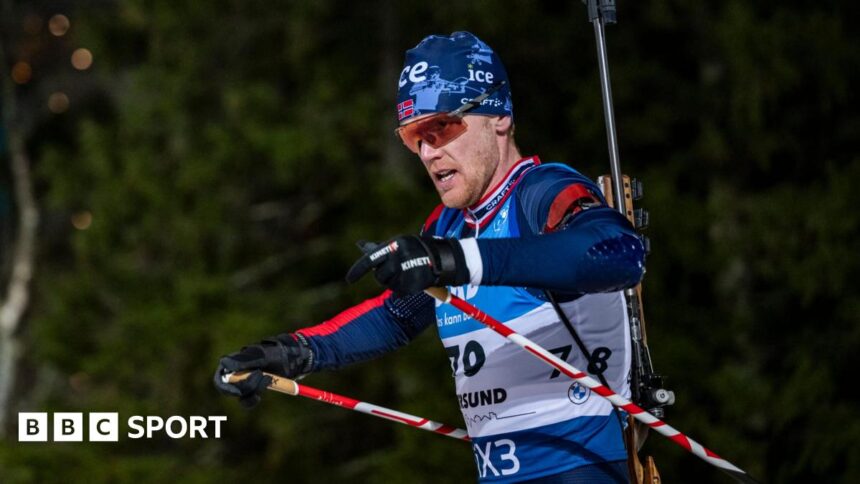
Norwegian Biathlete Sivert Guttorm Bakken Dies at 27, Leaving Sport in Mourning
The world of winter sports is cloaked in profound sorrow following the tragic and untimely death of Norwegian biathlete Sivert Guttorm Bakken. He was 27 years old. A rising talent whose career was defined by a courageous battle against a serious heart condition, Bakken’s passing has sent shockwaves through the tight-knit biathlon community and beyond, casting a pall over a season where he had triumphantly returned to the snow.
A Promising Career Interrupted by Adversity
Sivert Guttorm Bakken represented the next generation of Norwegian biathlon excellence. Competing in several Biathlon World Cup events this season, he had shown flashes of the speed and precision that make champions in this grueling sport combining cross-country skiing and rifle marksmanship. His trajectory pointed toward the pinnacle of athletic achievement: the Winter Olympics. With the Milano-Cortina 2026 Games on the horizon, Bakken was diligently working to solidify his place on the formidable Norwegian team.
However, his path was dramatically altered in 2022 when he was diagnosed with myocarditis, an inflammation of the heart muscle often caused by viral infection. This diagnosis is particularly perilous for elite endurance athletes, placing immense strain on the cardiovascular system. The condition forced Bakken into a mandatory and uncertain hiatus from competition. For an athlete in his prime, this was not merely a pause in training; it was a profound physical and psychological challenge that threatened to end his career entirely.
- Myocarditis Diagnosis (2022): Forced immediate withdrawal from all elite training and competition.
- Extended Rehabilitation: Underwent a lengthy period of medical monitoring and carefully managed recovery.
- Uncertain Future: Faced the real possibility of never returning to the sport at the highest level.
The Triumphant and Inspiring 2024 Comeback
What defined Sivert Bakken’s legacy, even before his passing, was his remarkable resilience. His return to competition in 2024 was a story that transcended sport. After nearly two years away, stepping back onto the World Cup circuit required more than physical readiness; it demanded immense courage and a deep love for biathlon. His comeback was a powerful narrative of human spirit, closely followed and celebrated by fans, fellow athletes, and officials.
Olle Dahlin, President of the International Biathlon Union (IBU), encapsulated the collective sentiment of the sport. “Sivert’s comeback to biathlon after a period of great hardship was a source of immense joy for everyone in the biathlon family and an inspiring demonstration of his resilience and determination,” Dahlin said. This statement underscores that Bakken’s impact was measured not just in results, but in the hope and inspiration he provided. His presence on the start line this season was a victory in itself, a testament to his unwavering passion and a shining example to all athletes facing career-threatening obstacles.
Expert Analysis: The Physical and Mental Toll of Comebacks
From a sports journalism and physiological perspective, Bakken’s comeback attempt was an exceptionally rare and arduous undertaking. Myocarditis requires extreme caution; the return-to-play protocols are stringent and protracted. Experts would have monitored his cardiac function relentlessly, with his clearance to train at an elite level signifying a medically sound recovery at that time.
Biathlon analysts noted that his return was about more than logging kilometers. It involved rebuilding the unique neuromuscular coordination of skiing at race pace while controlling heart rate and breathing for the precise rifle shooting that follows. Mentally, he had to conquer the inherent fear and anxiety associated with pushing his heart to its absolute limit after such a diagnosis. His ability to do so, to compete again amongst the world’s best, spoke volumes about his character. It also highlighted the advanced sports medicine protocols in place in nations like Norway, though it tragically reminds us of the inherent and sometimes hidden risks in elite endurance sport.
Predictions for a Sport Navigating Grief and Legacy
In the immediate future, the biathlon world will navigate this loss with heavy hearts. We can expect tributes at upcoming World Cup events—likely black armbands, moments of silence, and dedicated gestures from his teammates and rivals. The Norwegian team, known for its formidable cohesion, will rally around each other, competing with a renewed, somber perspective. Bakken’s story will inevitably bring increased scrutiny and conversation around athlete heart health, potentially influencing even more rigorous screening and monitoring protocols across winter sports.
Long-term, Sivert Guttorm Bakken’s legacy will be dual-faceted. He will be remembered as a talented athlete whose potential was cruelly cut short. But more enduringly, he will be celebrated as a symbol of resilience and determination. His fight to return to the sport he loved will become a part of biathlon’s lore, a story told to young athletes about courage in the face of overwhelming adversity. His name will inspire not just future podiums, but future comebacks of all kinds.
A Final Salute: Courage Beyond the Finish Line
The death of Sivert Guttorm Bakken is a heartbreaking reminder of the fragility that exists alongside extraordinary human strength. He was not just an athlete on a start list; he was a young man who embodied the very essence of perseverance. He stared down a condition that ends careers and fought his way back to the world stage, achieving a personal victory that no result sheet could fully capture.
His passing leaves an indelible void in Norwegian biathlon and the international sporting community. Our deepest condolences go to his family, friends, teammates, and all who knew him. While the snow will eventually melt and new races will be run, the memory of Sivert’s courage, his joyful return, and his unwavering spirit will forever remain a poignant chapter in the story of biathlon. He competed with heart, in every sense of the word, and for that, he will never be forgotten.
Source: Based on news from BBC Sport.