Stokes’ Stunner Overshadowed by Carse’s Close Call: No-Ball Drama Mars England’s Fightback
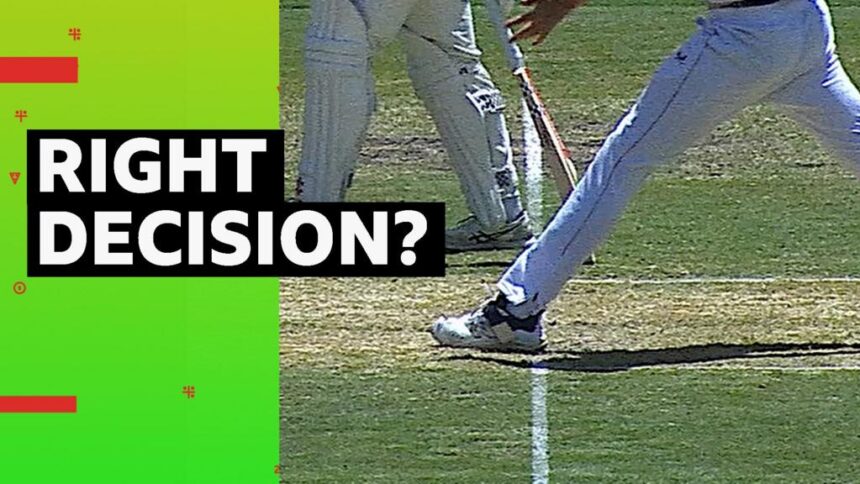
The roar that erupted from the MCG crowd was a familiar cocktail of English ecstasy and Australian despair. Ben Stokes, the talisman, had pulled off another miracle, a breathtaking, diving catch at gully to remove the dangerous Mitchell Starc. England, battered and bruised in this Ashes series, had a moment of pure, unadulterated brilliance. Yet, within seconds, the celebration curdled into uncertainty. The big screen, that modern arbiter of sporting truth, flashed not with replays of Stokes’ heroics, but with a forensic examination of bowler Brydon Carse’s front foot. The pivotal moment of day one at the Melbourne Test wasn’t the catch, but the centimetre that preceded it: did Brydon Carse bowl a no-ball?
A Pivotal Moment in the Melbourne Melodrama
Context is everything. Australia, having won the toss on a green-tinged MCG pitch, were reeling at 152-8. England’s bowlers, led by a relentless attack, had finally found the consistent line and length that had eluded them for much of the series. The crowd was buzzing, sensing a long-awaited English fightback. Enter Brydon Carse, the Durham seamer, in just his second Test. His delivery to Starc was full, angled in, and drew the thick edge. Stokes, anticipating everything, flung himself to his right, snatching the ball inches from the turf. The England players erupted. Starc trudged off. But cricket’s digital heartbeat—the TV umpire’s review for a front-foot no-ball—had already been triggered.
What followed was a tense, minute-long public trial. Ultra-edge confirmed the edge. Ball-tracking was irrelevant. All focus shifted to the crease line, magnified and super-imposed on every screen in the ground. The replay cycled again and again, each frame scrutinized by 60,000 fans and millions more worldwide. The front foot, clad in a white cricket shoe, landed with the heel precariously close to the popping crease. The question wasn’t about a huge overstep, but about the finest of margins: was any part of the heel behind the line?
- The On-Field Call: The umpire’s soft signal was out, meaning they believed the delivery was legal.
- TV Umpire’s Dilemma: With no conclusive evidence to overturn the on-field call of a fair delivery, the original decision had to stand.
- The “Umpire’s Call” for No-Balls: Unlike LBW, there is no margin of error. The foot must be conclusively behind the line. The benefit of any doubt goes to the bowler.
After an agonizing wait, the verdict flashed: OUT. Starc was gone. But the seed of controversy had been sown. The visual evidence, to many, appeared inconclusive at best. The decision sparked immediate debate across broadcasting teams and social media, splitting opinion along partisan and neutral lines alike.
Expert Analysis: The Millimeter Margin and Its Implications
As a sports journalist, it’s crucial to dissect not just the event, but its resonance. This incident is a microcosm of modern Test cricket, where athleticism and technology exist in an often-uneasy partnership.
Stokes’ Catch: A Testament to Will
Let’s first acknowledge the sheer quality of Ben Stokes’ catch. In a series where England have shelled chances, this was a moment of world-class fielding. It was a catch that changed the energy on the field, a statement that England were not down and out. It showcased the immense value of all-rounders whose impact transcends their primary skill. Without that catch, the no-ball question is irrelevant.
The No-Ball Conundrum: Technology’s Grey Area
The heart of the controversy lies in the limitations of technology. While Hawk-Eye and Ultra-Edge are remarkably precise for ball-tracking and edges, judging the front foot remains a 2D analysis of a 3D event. The angle of the camera, the compression of the shoe sole, and the exact moment the foot “lands” are all open to interpretation. The current protocol demands “conclusive evidence” to overturn. In this case, the lack of a camera angle looking directly down the line meant absolute certainty was impossible. This incident will inevitably reignite calls for automated no-ball technology using dedicated front-foot cameras, a system trialed but not permanently adopted.
Psychological Impact on Both Sides
Beyond the runs, such moments have a profound psychological effect. For Australia, it fuels a sense of injustice and a “them-against-us” mentality that can galvanize a lower order. For England, a potential breakthrough is momentarily tainted by doubt, potentially leaching momentum from their charge. For Brydon Carse, a young bowler in a massive spot, it places his action under a microscope for the rest of his spell.
Predictions: How This Moment Could Shape the Test
This single delivery could have ripple effects throughout the remainder of the Melbourne Test and perhaps the series narrative.
- Australia’s Tail-End Resurgence: Perceived injustice often stiffens resistance. We predict Australia’s lower order, now feeling aggrieved, will dig in even deeper. Every run from here will feel like a moral victory.
- England’s Focus Test: Can England park the controversy and maintain their discipline? If they let frustration creep in and bowl loosely, the momentum from their early wickets could evaporate. Their mental resilience will be scrutinized.
- Umpiring Under the Microscope: Every tight no-ball call for the remainder of this match, and possibly the series, will be hyper-analyzed. The pressure on the umpires has been ratcheted up significantly.
- Long-Term Change Catalyst: This is the kind of high-profile, tight-margin incident that accelerates change in cricket’s laws. The push for fully automated front-foot no-ball calls will gain substantial momentum from this moment in Melbourne.
Conclusion: A Catch for the Ages, Shadowed by a Line in the Sand
The story of day one at the MCG will be bifurcated. The highlight reels will forever show Ben Stokes’ phenomenal, game-changing catch. It was a moment of individual brilliance that defines Ashes contests. Yet, the narrative will be permanently footnoted by the millimetric scrutiny of Brydon Carse’s front foot.
This is the modern sporting paradox. We have the technology to see things the naked eye cannot, yet that same technology can create ambiguity as often as it provides clarity. The drama at the MCG encapsulates the tension between human endeavor and digital judgment. Stokes gave everything for that catch, a pure act of skill and desire. Yet, its validity was determined by a pixelated analysis of a bowler’s footfall.
Ultimately, the scoreboard records Mitchell Starc as out, caught Stokes, bowled Carse. History may remember Stokes’ leap. But those who witnessed it will always remember the pause, the zoom, and the line that was—or wasn’t—crossed. In the Ashes, where every run, every wicket, and every moment is etched into legend, this controversy has already secured its place. The battle is no longer just between bat and ball, but between certainty and doubt, played out on a screen for all to judge.
Source: Based on news from BBC Sport.