Cubs BCB After Dark: The Edward Cabrera Conundrum – Electric Arm or Enigmatic Gamble?
Welcome back to BCB After Dark, the grooviest get-together for night owls, early risers, new parents, and Cubs fans abroad. Come on in, shake off the chill. We’re glad you’re here. The coat check is open, the vibe is relaxed, and the conversation is always flowing. Last night, we sorted through the bullpen hierarchy. Tonight, we’re peering beyond the ivy to a tantalizing, perplexing arm who wasn’t on the Cubs yesterday: Miami’s Edward Cabrera. So, grab your beverage of choice and settle in. Let’s talk about one of baseball’s most electrifying and enigmatic pitchers.
The Siren Song of the “Stuff” Monster
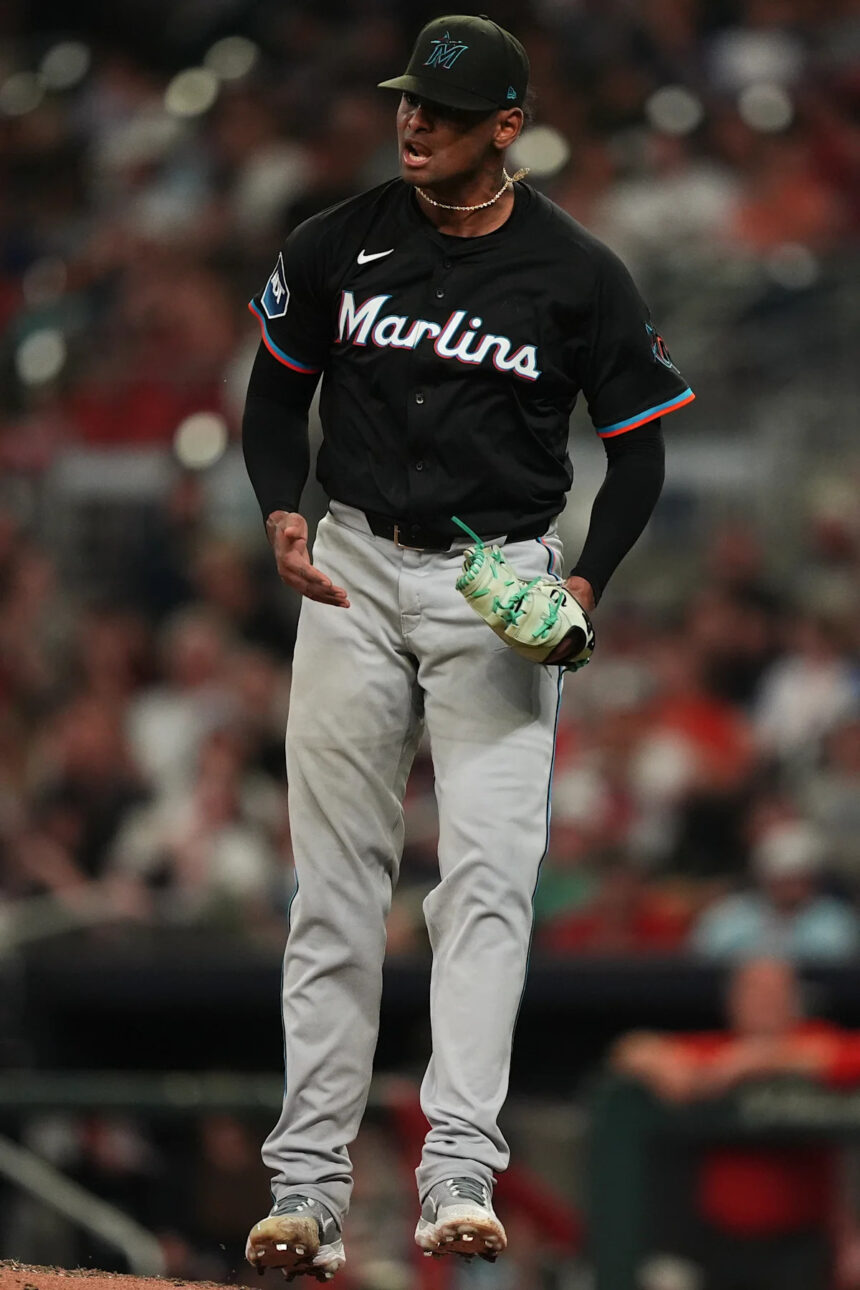
If you built a starting pitcher in a lab with the sole purpose of making batters look foolish, you might end up with Edward Cabrera. The raw ingredients are the stuff of pitching coach dreams and hitter’s nightmares. At 6-foot-5, the 25-year-old right-hander is a physical powerhouse whose arsenal is nothing short of elite.
We’re not talking about just good stuff; we’re talking about dominant, best-in-class pitch characteristics. His four-seam fastball doesn’t just sit in the upper-90s; it possesses a rare combination of velocity and “rise” that defies gravity at the top of the zone. Then comes the changeup—a legitimate “wiffle ball” pitch that dives off the table, generating a whiff rate that consistently ranks among the league’s best. He complements these with a sharp, high-80s slider and a curveball. In short, Cabrera has the swing-and-miss toolkit to be a perennial All-Star and Cy Young contender.
But here’s where the BCB After Dark discussion gets interesting. Why is a pitcher with this celestial stuff, under team control through 2028, even a speculative topic for a team like the Cubs? The answer lies in the frustrating gap between his astronomical potential and his earthly realities.
Decoding the Cabrera Enigma: Command, Health, and Consistency
For all his gifts, Cabrera remains a profoundly unfinished product. The concerns aren’t minor footnotes; they are bold, red-flagged chapters in his scouting report.
- Chronic Command Issues: This is the grand canyon in his profile. Cabrera has consistently ranked among the league leaders in walk rate, often flirting with or exceeding 15%. It’s not just missing the corners; it’s stretches of complete loss of the zone, leading to abbreviated outings, skyrocketing pitch counts, and unnecessary traffic on the bases. Elite stuff with below-average command is a maddening combination.
- Durability Questions: Cabrera has never thrown more than 100 innings in a major league season. Various shoulder and elbow issues have interrupted his development, raising valid concerns about his ability to hold up over a 162-game grind as a reliable rotation piece.
- The “One Bad Inning” Syndrome: Many of his starts follow a similar script: sheer dominance for three or four innings, followed by a sudden, catastrophic loss of control that turns a gem into a loss. The mental fortitude to work through trouble and maintain mechanics is still a work in progress.
So, the question for the Cubs—or any interested team—becomes a classic risk-reward calculation. Are you buying the high-ceiling arm with the hope your development staff can unlock what Miami couldn’t? Or are you avoiding the high-volatility project that could cripple a playoff push with untimely walks?
The Cubs Development Lens: A Perfect Reclamation Project?
This is where the conversation turns from abstract to acutely relevant for us here at BCB After Dark. The current Cubs regime, led by Jed Hoyer and Carter Hawkins, has built a reputation for identifying and correcting pitching flaws. They are not afraid of projects. Look at the transformation of Drew Smyly, the reclamation of Kyle Hendricks post-injury, or the rapid development of young arms like Javier Assad and Ben Brown. The organization’s pitching infrastructure is considered a strength.
Imagine Cabrera in that system. Could the Cubs’ focus on pitch sequencing, mechanical consistency, and mental approach help him find even marginal improvement in his command? Turning his walk rate from catastrophic to merely below-average, while maintaining his elite whiff rates, could transform him from a frustrating talent into a legitimate No. 2 or 3 starter.
The cost of acquisition is the other key factor. His value is at a fascinating crossroads. His stuff keeps his floor relatively high (he’s still a useful MLB pitcher), but his flaws significantly suppress his trade value. He wouldn’t command a top-50 prospect package. For the Cubs, a calculated gamble involving a couple of mid-tier prospects might be palatable, given the potential payoff and years of control.
BCB After Dark Verdict: Intrigue Over Immediate Answer
So, what do we think of Edward Cabrera in this late-night forum? The consensus, after much deliberation (and perhaps a second beverage), is one of intense intrigue but sober expectation.
He is not a solution for the top of the rotation as currently constructed. You cannot go into 2025 relying on him for 180 quality innings. However, as a high-variance, high-reward acquisition to slot into the middle or back end, he represents the kind of creative, upside play this front office has made before.
Prediction: The Cubs will likely do their due diligence. They will run his data through their models, talk to their scouts, and gauge the Marlins’ asking price. A move is far from guaranteed—the command issues are severe. But if the price drops to a level the Cubs deem acceptable, they could pull the trigger, betting on their environment to succeed where others have struggled. The dream of a refined Cabrera, pairing with Justin Steele, Shota Imanaga, and a resurgent Jameson Taillon, is incredibly seductive.
As the night winds down here at BCB After Dark, that’s where we land. Edward Cabrera is the ultimate “what if” pitcher. For a team with a strong development system and a need for rotation upside, he’s a flickering star worth watching. The potential is a blinding light; the risk is a deep shadow. In the end, the question isn’t just about his talent, but about which organization he walks into next. And that, friends, is a conversation worth having long into the night.
Source: Based on news from Yahoo Sports.