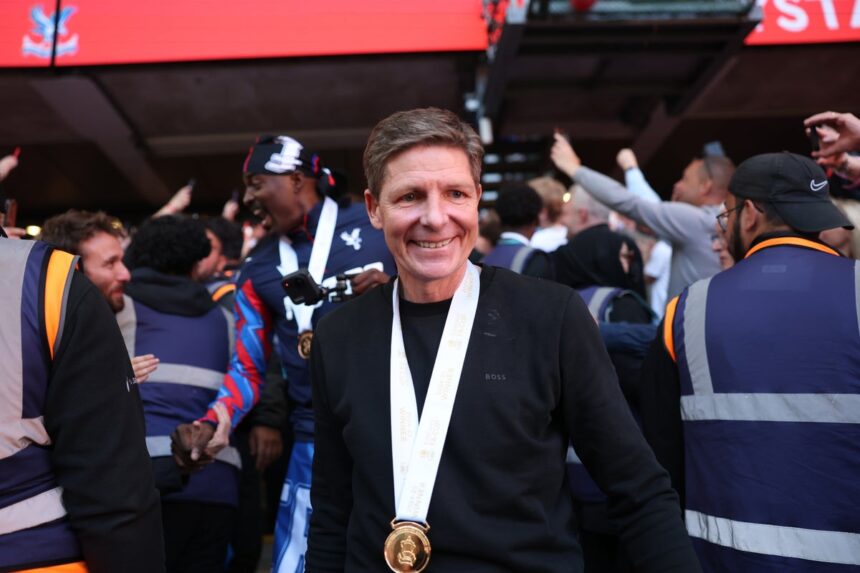
Oliver Glasner’s Crystal Palace Exit: A Calculated Departure Amid Manchester United Links
The winds of change are sweeping through Selhurst Park with a force not felt in years. Oliver Glasner, the architect of Crystal Palace’s greatest modern triumph, has confirmed his impending departure, setting the stage for a seismic shift in South London and sending ripples across the Premier League. In a stunning revelation, the Austrian manager disclosed that his decision to leave at the season’s end was made months ago, a strategic move that casts the club’s current struggles and his own soaring stock in a fascinating new light.
The October Ultimatum: A Decision Made in Calm, Not Crisis
Contrary to the narrative of a manager buckling under a poor run of form, Glasner’s announcement paints a picture of cold, calculated foresight. In October, during an international break, Glasner sat down with chairman Steve Parish for a “very long talk.” The outcome was definitive: he would not be signing a new contract. This timeline is crucial. It means Glasner steered Palace through the autumn knowing he was a lame duck, and the club’s hierarchy has been operating with this knowledge for over half the season.
This pre-meditated decision reframes the current context entirely. Palace’s alarming dip—winless in eight across all competitions and humiliated by non-league Macclesfield in the FA Cup—now occurs under the shadow of a manager already eyeing the exit. It also powerfully insulates Glasner from accusations of jumping ship amid trouble; his course was charted during the afterglow of the FA Cup win, suggesting ambitions that perhaps outgrew the club’s project.
The Manchester United Factor and a Manager in High Demand
Glasner’s confirmation comes amid intense speculation linking him to one of the world’s most prestigious managerial hot seats. With Manchester United’s pursuit of Ruben Amorim having collapsed, The Independent reports that Glasner emerged as the top target for a permanent role at Old Trafford. While Michael Carrick holds the interim reins, the allure of a proven, trophy-winning Premier League manager with a distinct tactical identity is undeniable for United’s new INEOS leadership.
Glasner’s credentials are compelling:
- Immediate Trophy Impact: Delivered Palace’s first major honour, breaking a decades-long drought.
- Tactical Identity: Installed a clear, aggressive 3-4-3 system that initially brought thrilling football.
- Player Development: Enhanced the profiles of stars like Michael Olise and Eberechi Eze, even amid injuries.
- Premier League Proven: Has navigated the unique pressures and demands of the English top flight.
For a Manchester United seeking structure, identity, and a return to winning ways, Glasner represents a sophisticated and available option. His pre-announced Palace exit allows United to conduct negotiations without the spectre of compensation, making him an even more attractive candidate.
A Palace Project Unraveling at the Seams
While Glasner’s future appears bright, the immediate picture at Crystal Palace is one of concerning flux. The manager’s departure coincides with the imminent loss of the team’s defensive cornerstone. Club captain Marc Guehi is finalising a move to Manchester City, a transfer Glasner confirmed by ruling the defender out of this weekend’s fixture. Losing both a transformative manager and a homegrown, elite-level centre-back in the same window represents a devastating one-two punch to the club’s sporting project.
The current eight-game winless run is symptomatic of a squad caught between cycles. The famed “Palace DNA” of resilience has faded, replaced by fragile defending and a lack of attacking cohesion. The Macclesfield defeat was not just an upset; it was a glaring symbol of a group whose collective focus may have been compromised by the swirling uncertainty. The task for Steve Parish and sporting director Dougie Freedman is now Herculean: they must recruit a new manager capable of rebuilding a squad likely stripped of its two most valuable assets (Guehi and potentially another star), while re-establishing a competitive identity.
What’s Next for Palace and the Glasner Legacy?
Oliver Glasner’s legacy at Selhurst Park will forever be bifurcated. He will be remembered as the manager who delivered the FA Cup, a feat that immortalises him in club folklore. Yet, his final season may also be recalled for a dramatic decline and a departure that felt increasingly inevitable. His candidness about the October decision, however, earns him a measure of professional respect—he provided the club with ample notice, avoiding a messy, last-minute divorce.
For Crystal Palace, the future is fraught with risk but also opportunity. Potential successors will range from ambitious up-and-comers to seasoned campaigners. Names like Steve Cooper, Paulo Fonseca, or even a return for Roy Hodgson on a caretaker basis will circulate. The club’s model of buying young talent and selling high remains, but the next appointment must be a unifying force, capable of reigniting the connection with a fanbase that has tasted glory and will not accept a slow slide.
For Oliver Glasner, the path leads upward. A move to a club of Manchester United’s stature is the obvious next step in a career marked by continuous ascent. His stock remains high precisely because the FA Cup win proved his ceiling. The Premier League’s elite will see a manager who, with greater resources, could achieve even more. His announcement timing, while painful for Palace, is a masterstroke in controlling his own narrative and positioning himself as the most stable, desirable candidate on the market.
Conclusion: A Farewell Forged in Forward Planning
The story of Oliver Glasner and Crystal Palace is no impulsive breakup. It is a tale of a manager who achieved his primary objective spectacularly and then, with clear-eyed vision, decided his journey at the club had reached its natural conclusion. The Manchester United links are both a cause and effect of his confirmed availability, turning the final months of his tenure into an extended audition for one of football’s biggest jobs.
As Palace brace for life without their trophy-winning boss and defensive stalwart, the Premier League is reminded of its relentless, transactional nature. Glasner’s departure, planned in the quiet of October and announced in the storm of January, is a stark lesson in modern football: even success is not always a guarantee of longevity. The true legacy of his tenure will be written not just by the silverware in the cabinet, but by how well—or how poorly—Crystal Palace navigates the daunting new era he leaves behind.
Source: Based on news from Yahoo Sports.