Sean McDermott’s Fiery Defense of Buffalo Bills Ignites Debate Over NFL Replay Integrity
The thin line between euphoria and agony in the NFL playoffs is often drawn by a single, split-second decision. For the Buffalo Bills and their legion of passionate fans, that line was etched in brutal fashion on Saturday night, not by a player, but by a replay official’s headset. In the wake of a season-ending 33-30 overtime loss to the Denver Broncos, Bills head coach Sean McDermott unleashed a raw, emotional tirade that transcended a single bad call and struck at the heart of competitive fairness, becoming a rallying cry for a city and a fanbase all too familiar with postseason heartbreak.
A Season Ends on a Controversial Whistle
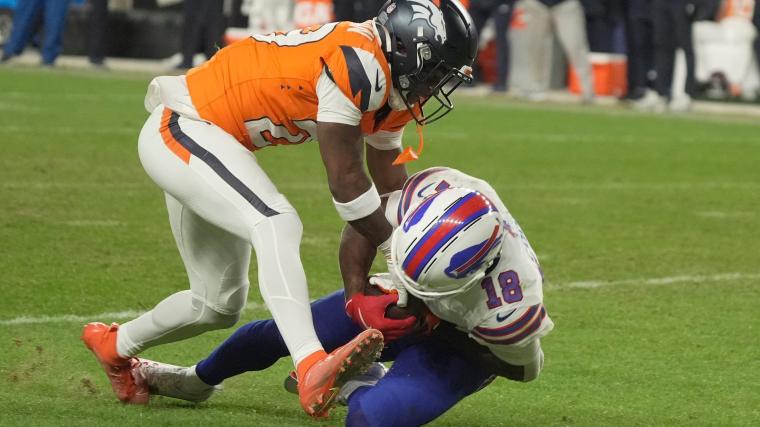
With the game knotted at 30-30 in the extra period, the Bills, facing a 3rd-and-8, unleashed a play designed to change their destiny. Quarterback Josh Allen launched a deep ball to veteran receiver Brandin Cooks, who leaped and appeared to secure the catch against Broncos cornerback Ja’Quan McMillian. The subsequent struggle for possession, with Cooks hitting the turf and McMillian wrestling the ball, created the kind of visual chaos that the NFL’s centralized replay system was built to adjudicate.
On the field, the ruling was immediate: interception. The Broncos’ sideline erupted. The Bills’ sideline pointed furiously, demanding a review. What happened next is the core of McDermott’s fury. The replay review, conducted by the NFL’s command center in New York, was deemed “rapid” and “not thorough” by the Bills’ staff. The call was confirmed, Denver took over, and Wil Lutz booted the game-winning field goal moments later, sending the Broncos to the AFC Championship and the Bills into a long, bitter offseason.
- Key Moment: Josh Allen’s deep pass to Brandin Cooks in OT.
- On-Field Ruling: Interception by Ja’Quan McMillian.
- Replay Outcome: Call was quickly confirmed, ending the game.
- Immediate Consequence: Denver Broncos advance with a game-winning field goal.
McDermott’s Stand: More Than Just a Coach’s Complaint
In his post-game press conference, a visibly seething Sean McDermott did not merely question a judgment call. He launched a pointed critique of the replay process itself, its opacity, and its perceived disrespect toward the effort of his players.
“It’s hard for me to understand why it was ruled the way it was ruled,” McDermott stated, his voice tight with emotion. He revealed a telling detail: he felt compelled to burn a precious timeout not for strategy, but in a desperate attempt to slow the officials down and force a more meticulous look. “What went on is not how it should go down,” he asserted, framing the issue as one of fundamental protocol. His most resonant line, however, was a full-throated defense of his team and its supporters: “I’m standing up for Buffalo, dammit.”
This statement resonates because it taps into a deeper narrative. For McDermott, this was about the principle of the thing. After his players “spent three hours pouring their guts out on that field,” he argued, they were owed a deliberate and transparent review process. The perceived hastiness of the confirmation felt like a dismissal of that effort, a failure of the system to provide the clarity and fairness it was designed to ensure in the season’s most critical moments.
Expert Analysis: Dissecting the Play and the Protocol
From a technical standpoint, the play was the epitome of a “bang-bang” call. NFL rules state that a receiver must complete the process of going to the ground with possession for a catch to be ruled complete. If the ball comes loose during that process, it is an incomplete pass. If a defensive player gains joint possession, the tie goes to the defense.
Multiple broadcast angles showed Cooks with his hands on the ball as he descended, with McMillian’s hands simultaneously prying at it. The crucial freeze-frame appears to show Cooks possibly having control with his elbow down, which would constitute him being down by contact before the ball came fully loose. However, this is where the ambiguity of “control” and the “process of the catch” creates a nightmare for officials.
The larger issue, as highlighted by McDermott and many analysts post-game, is the replay communication breakdown. Unlike in previous years where the on-field referee would go to the sideline monitor and explain his reasoning, the centralized system now delivers a final, often cryptic, verdict. The lack of explanation or visible deliberation fuels frustration and conspiracy theories. Was the call “confirmed” (indisputable visual evidence to overturn) or merely “stood” (not enough evidence to overturn)? That distinction, crucial to understanding the replay official’s judgment, is often lost in translation, leaving teams and fans in the dark.
Key Controversial Elements:
- Control vs. Process: Did Cooks ever truly secure possession through the ground?
- Down by Contact: Was his elbow down before the ball moved?
- Joint Possession: Did McMillian establish control simultaneously, granting him the interception?
- Replay Transparency: The rapid confirmation without detailed explanation is the core of McDermott’s grievance.
Predictions: Fallout and Future for the Bills and NFL Replay
The immediate fallout is a Buffalo Bills offseason steeped in “what if.” This loss will join the pantheon of painful playoff exits, from “Wide Right” to the “13 Seconds” game against Kansas City. For a team built to win now with Josh Allen in his prime, the margin for error is zero, and a controversial call magnifies every other mistake made in the game.
For Sean McDermott, this public stance, while likely drawing a fine from the league, will galvanize his locker room and the fanbase. He positioned himself not as a sore loser, but as a protector of his team’s dignity. This could strengthen his internal standing as a players’ coach who fights for them beyond the Xs and Os.
On a league-wide scale, this incident will become a case study for replay reform. The NFL’s competition committee revisits replay rules annually, and McDermott’s complaints about speed and transparency will be entered into the record. We may see renewed proposals for:
- Mandated Minimum Review Time for critical game-ending plays.
- Enhanced Communication from the New York command center to the broadcast and stadium, explaining the rationale.
- Coach-initiated Challenges on any play, regardless of turnovers or scoring plays, in the final two minutes (though this is less likely).
Conclusion: A Defining Moment of Principle
Sean McDermott’s venting was more than just post-game frustration. It was a calculated, passionate stand on behalf of what he sees as a fundamental breach of competitive trust. While the debate over whether it was truly a catch or an interception will rage on in bars and on social media, the more enduring question is about the process itself. In the NFL’s quest for efficiency and speed in replay, has it sacrificed the perception of thoroughness and fairness?
By “standing up for Buffalo,” McDermott gave voice to a frustration felt by every fanbase that has ever felt wronged by a quick-stopping replay graphic. He challenged the league to do better, to honor the “guts” poured out on the field with an officiating process that is as meticulous and relentless as the players themselves. The loss is permanent in the standings, but the echo of McDermott’s demand for accountability may yet lead to a change that benefits the entire league, ensuring that the next season-ending controversy is met not with rapid confusion, but with deliberate clarity.
Source: Based on news from Yahoo Sports.