Aryna Sabalenka Regroups After Mid-Set Scare, Powers Into Australian Open Third Round
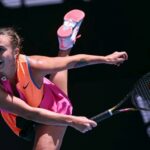
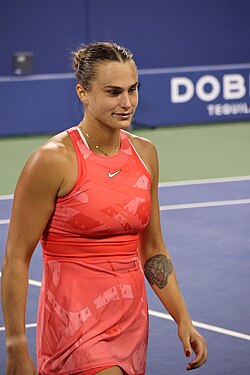
The roar that echoed through Rod Laver Arena was one of relief as much as triumph. Aryna Sabalenka, the indomitable force from Belarus, slammed a final forehand winner, sealing a 6-3, 6-1 victory over Chinese qualifier Zhuoxuan Bai. The scoreline suggests a routine day at the office for the two-time defending champion, but for a fleeting, fascinating moment in the first set, a ripple of uncertainty threatened to become a wave. Sabalenka’s second-round match was a masterclass in the art of the professional regroup, a demonstration of why her mental fortitude is now as formidable as her thunderous groundstrokes.
A Blistering Start and an Unexpected Stall
From the first ball struck, this appeared to be a classic case of Grand Slam champion meets inspired qualifier. Sabalenka, moving with predatory grace, unleashed her signature power, painting the lines with deep, penetrating drives. Bai, ranked a staggering 702nd in the world, was initially overwhelmed. Sabalenka’s aggression was surgical, and she raced to a seemingly unassailable 5-0 lead in a blur of winners. The match was proceeding with an air of inevitability, a mere formality on her march toward a potential three-peat.
Then, the script flipped. Finding her range and courage, Bai began to step inside the baseline, taking Sabalenka’s pace and redirecting it with startling precision. She held serve, broke Sabalenka’s at 5-1, and held again. Suddenly, it was 5-3, and Bai was fending off set points with fearless shot-making. The crowd, ever eager for a contest, stirred to life. Sabalenka’s unforced errors ticked up to 21 for the match, many clustering in this patch. The question hung in the Melbourne air: was this a momentary lapse, or the start of a monumental collapse?
The Champion’s Response: Composure and Controlled Aggression
This is where the modern Aryna Sabalenka separates herself from the player of years past. The old Sabalenka might have spiraled, her game crumbling under the weight of frustration. The 2024 model simply reset. On her third set point, she closed out the 40-minute opener with authority. The lesson had been learned, and the response in the second set was emphatic.
Sabalenka immediately broke Bai’s serve to open the second set, snuffing out any lingering hope. She began to mix up her patterns, using more slice to disrupt Bai’s rhythm and moving forward to cut off angles. Her serve, a weapon that was at 72% first-serve accuracy, became a hammer. The points grew shorter, the winners more frequent. In a merciless 34-minute closing act, Sabalenka reaffirmed the vast gulf in experience and power, surrendering just one more game.
“Tricky opponent, she really stepped in on the first set and for a moment I felt: what shall I do? She’s crashing it,” Sabalenka admitted in her post-match interview. “Super happy I was able to close that set, I think it gave me a little more confidence I’m there, that my game is there. Focus step by step.” This insight is crucial. Her ability to acknowledge the moment of doubt, process it, and use the successful resolution as fuel is the hallmark of a player at the peak of her powers.
Expert Analysis: What This Match Reveals About Sabalenka’s Title Defense
While the Bai match will not be remembered as a classic, it was an incredibly valuable test. For a defending champion, early rounds are about navigating, adapting, and building form without expending unnecessary physical or emotional energy. This match served all three purposes.
- Stress Test Passed: Sabalenka faced genuine in-match adversity—a loss of rhythm, a confident opponent, a murmuring crowd—and solved the problem within a single set. This is ideal preparation for the tighter matches ahead.
- Game Flexibility: She demonstrated she can win not just by brute force, but by tactical adjustment. The increased use of variety in the second set is a weapon she can deploy against bigger hitters.
- Serve as a Foundation: A 72% first-serve rate is a dominant platform. When that serve is firing, it sets up her entire aggressive game and protects her from prolonged baseline battles.
The minor blip, therefore, should be viewed not as a vulnerability, but as a necessary tune-up. It’s a reminder that no match is won on paper, and Sabalenka’s focus was sharpened under the mildest of pressures.
Looking Ahead: The Road Gets Tougher From Here
Sabalenka now awaits the winner between No. 28 seed Emma Raducanu, the 2021 US Open champion, and Russia’s Anastasia Potapova. This represents a significant step up in competition quality and narrative intrigue.
A potential Sabalenka vs. Raducanu clash would be a blockbuster, pitting the established powerhouse against the returning phenom. Raducanu possesses the flat, early ball-striking that could mimic Bai’s successful tactics but with far more consistency and pedigree. Potapova, a fierce competitor with her own brand of power, would offer a more familiar, fire-with-fire style of matchup.
Regardless of the opponent, Sabalenka’s keys to victory remain clear:
Impose her first-strike tennis from the outset.
Maintain a high first-serve percentage to control points.
Trust in the emotional resilience she displayed against Bai to handle pivotal moments.
Use her improved net game to finish points and keep opponents guessing.
The third round is often where tournaments truly begin. The draws open up, the opponents are all dangerous, and champions must elevate their games. Sabalenka, having successfully navigated her moment of regrouping, appears ready to do just that.
Conclusion: A Champion’s Blueprint for Success
Aryna Sabalenka’s victory over Zhuoxuan Bai was more than a simple advancement. It was a microcosm of a champion’s journey: dominance, doubt, adjustment, and ultimate deliverance. She did not play a perfect match, but she played a perfectly professional one. In years past, a lost lead might have derailed her. Now, it merely refocuses her. The 21 unforced errors will be noted, but so will the 72% first serves and the ruthless second-set response.
As the Australian Open progresses, the challenges will grow steeper and the spotlight hotter. Yet, Sabalenka has sent a clear message in her first two rounds: her game is physically imposing, and her mind is a fortress. She regrouped, recalibrated, and roared forward. For the rest of the women’s draw, that might be the most ominous result of all. The champion is not just present; she is prepared, battle-tested, and utterly determined to keep her crown.
Source: Based on news from Deadspin.
Image: CC licensed via commons.wikimedia.org