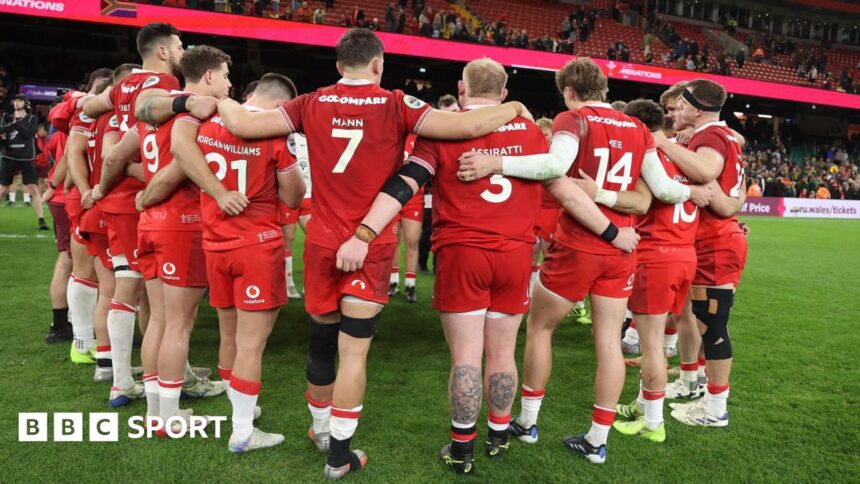
Welsh Rugby in Crisis: Players Issue Ultimatum as Six Nations Looms
The mood in Welsh rugby is one of profound uncertainty, a stark contrast to the usual pre-Six Nations buzz of anticipation. As the national squad prepares for their championship opener, a battle of far greater consequence is raging off the pitch. In an unprecedented move, the Welsh Rugby Players’ Association (WRPA) has handed the game’s governing bodies a hard deadline of 6 February for clarity on the future, casting a long shadow over the team’s campaign. This ultimatum, born from a perfect storm of administrative chaos and competitive decline, threatens to unravel Welsh rugby from within.
The backdrop is grim. Wales have not won a game in the Six Nations since March 2023, a stark statistic reflecting systemic issues. Meanwhile, the professional domestic game is in a state of flux so severe it has compelled the players to collectively demand answers. The immediate trigger was a meeting between the WRPA and the Professional Rugby Board (PRB), called to address what the players’ body termed “the significant challenges currently facing the professional game in Wales.” This diplomatic language belies a deep-seated frustration over job security, contractual limbo, and the very structure of the game.
A Ticking Clock: The 6 February Deadline Explained
The significance of the 6 February deadline cannot be overstated. It falls just days after Wales’ opening Six Nations fixture, meaning players will be navigating the intense pressure of international rugby while their professional futures hang in the balance. The WRPA is demanding concrete answers on several existential questions:
- Which region will be cut? The WRU’s October 2025 announcement to reduce men’s professional sides from four to three has created a climate of fear and instability.
- What is the future of Cardiff Rugby? The revelation that Ospreys’ owners, Y11 Sport & Media, are the WRU’s preferred bidder for rivals Cardiff—who entered administration in April 2025—has created a potential monopoly and raised serious concerns about competitive integrity and player welfare.
- What are the terms for player contracts? With the professional landscape shrinking, players need to know the framework for future deals, including salaries, duration, and release clauses for international duty.
This ultimatum is a clear signal that the patience of the playing corps has expired. They are no longer willing to be passive bystanders in a restructuring process that directly threatens their livelihoods.
Administrative Chaos: The Cardiff-Ospreys Merger Dilemma
The proposed involvement of Y11 Sport & Media in buying Cardiff Rugby is arguably the most controversial element of this crisis. The idea of one entity owning two of the four (soon to be three) professional regions strikes at the heart of sporting competition. For players, this creates a nightmare scenario:
- Reduced employment options: A merged entity would inevitably lead to squad consolidation, meaning fewer professional contracts available for Welsh talent.
- Compromised rivalry: The fierce, historic rivalry between the Ospreys and Cardiff would become a corporate facade, diminishing the derby’s meaning and commercial appeal.
- Conflict of interest: Selection and resource allocation between the two teams would be fraught with accusations of bias, creating a toxic environment for players and coaches alike.
This move, seen by many as a hastily arranged salvage operation rather than a strategic vision, exemplifies the short-term thinking that has plagued Welsh rugby governance. It has forced the players to step in and demand a coherent, sustainable plan.
On-Field Struggles Mirroring Off-Field Turmoil
The correlation between administrative instability and Wales’ dismal Six Nations record is direct and undeniable. Players cannot be expected to perform at their peak for the national team when their club careers are in jeopardy. The psychological toll is immense. How can a player focus on a defensive system or a set-piece move when he doesn’t know who will employ him in six months’ time, or if his region will even exist?
This environment breeds distraction and erodes the foundational trust between the Union and its most valuable assets: the players. The current Welsh squad is attempting to build cohesion and a winning mentality while the ground is literally shifting beneath their feet. The 6 February deadline ensures that these off-field anxieties will be a central, unavoidable narrative throughout their championship campaign, a distraction no top-tier sportsperson needs.
Expert Analysis: A Crossroads for Welsh Rugby
From a journalistic and historical perspective, this moment represents a critical crossroads. The players’ decision to issue a deadline is a watershed; it is the professional workforce organizing to demand accountability from management. This is not a strike threat, but it is a powerful collective action that shifts the dynamic.
The WRU and PRB now face a test of leadership. Meeting the deadline with vague assurances or further delays will irrevocably damage player-Union relations, potentially leading to an exodus of talent and deepening the on-field crisis. Conversely, providing clear, albeit difficult, answers on 6 February could be the first step toward rebuilding trust. It would allow players to make informed decisions about their futures and, perhaps, clear mental space to focus on the national jersey.
The proposed regional consolidation, while financially driven, risks a catastrophic narrowing of the player pathway. With fewer professional slots, emerging talent may look elsewhere, to rugby league or other nations’ union setups, draining Wales’ future lifeblood. The Y11 bid for Cardiff only intensifies this risk.
Predictions and The Path Forward
The immediate future is fraught. Predictions hinge entirely on the WRU’s response by 6 February.
- If clarity is provided: Expect a short-term sigh of relief, but intense scrutiny on the details. Which region is cut? How are players compensated or relocated? The answers will be painful but could stabilize the environment. The Six Nations campaign may see a galvanized “us against the world” mentality, or it may remain fractured.
- If the deadline is missed or fudged: Prepare for escalation. The WRPA’s options could include legal challenges, public relations campaigns, or even discussions about action during summer tours. Player morale would hit rock bottom, making a winless Six Nations campaign a distinct possibility.
The long-term path forward must involve genuine partnership with the players. The WRPA has proven it is a force to be reckoned with. Sustainable solutions require their buy-in. This means transparent financial planning, a commitment to preserving competitive integrity (which likely means finding an alternative, independent buyer for Cardiff), and a razor-sharp focus on regenerating the talent pipeline.
Conclusion: More Than a Game at Stake
The 6 February deadline set by Wales’ players is more than a contractual negotiation; it is a plea for the soul of Welsh rugby. The sport is woven into the nation’s cultural fabric, and its current state of disarray feels like a national betrayal. The players, as the custodians of the jersey and the professionals whose careers are on the line, have taken a stand where governance has faltered.
As Wales runs out at the Principality Stadium for the Six Nations, the cheers will be tinged with anxiety. The outcome of this off-field battle will define Welsh rugby for a generation. Will it be a story of managed decline and corporate consolidation, or can this player-led intervention spark the decisive, transparent leadership required for a renaissance? The clock ticks to 6 February. The future of Welsh rugby awaits its verdict.
Source: Based on news from BBC Sport.