Bruce Pearl Blasts Tim Walz, Democrats Over Border Patrol Shooting: A Sports Figure’s Foray into Political Firestorm
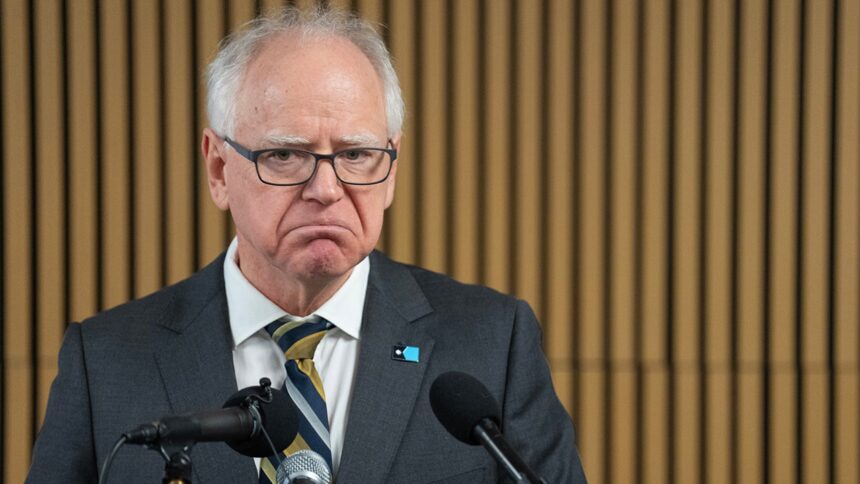
The arena of political commentary has a new, and unexpectedly vocal, entrant. Bruce Pearl, the charismatic and often controversial former college basketball coach, has slammed Minnesota Governor Tim Walz and the Democratic Party, attributing partial blame to them for a deadly Border Patrol-involved shooting in Minnesota. Pearl’s incendiary comments, made on OutKick’s “Don’t @ Me with Dan Dakich,” represent a significant moment where the worlds of sports media, immigration policy, and heated political rhetoric violently collided, sparking debate far beyond the hardwood.
- From the Sidelines to the Front Lines: Pearl’s Political Play
- Unpacking the Incident and the Ensuing Uproar
- The Growing Trend of Sports Personalities in Political Commentary
- Expert Analysis: What Pearl’s Comments Reveal About the Current Climate
- Predictions and Lasting Implications
- Conclusion: A Controversial Crossover with Real-World Stakes
From the Sidelines to the Front Lines: Pearl’s Political Play
Bruce Pearl is no stranger to the spotlight, but his appearance on Dan Dakich’s show shifted the focus from pick-and-rolls to policy and protest. The context was the fatal shooting of 37-year-old Alex Pretti during an encounter with U.S. Border Patrol agents in Minneapolis, an incident that has ignited local and national fury. While details of the shooting remain under investigation, Pearl bypassed the specifics of the case to launch a broadside against Democratic leadership.
Pearl’s core argument was one of political rhetoric and its consequences. He asserted that Governor Walz and other Democrats had “raised the temperature” surrounding immigration enforcement. In Pearl’s view, this created an environment where federal officials, tasked with a difficult job, faced heightened antagonism and danger. This framing places the former coach squarely within a larger conservative narrative that often criticizes Democratic officials for what they describe as undermining law enforcement authority.
This is not merely a retired coach sharing an opinion. It’s a calculated entry into the culture wars by a figure with a dedicated platform. OutKick, the conservative sports media outlet founded by Clay Travis, has become a megaphone for sports figures turned political commentators. Pearl’s decision to voice this critique there signals a deliberate alignment and an understanding of his audience.
Unpacking the Incident and the Ensuing Uproar
The shooting itself occurred in a state far from the U.S.-Mexico border, highlighting the expansive jurisdiction and national presence of federal immigration authorities. The death of Alex Pretti immediately triggered massive protests, like the one captured in Los Angeles where demonstrators held signs decrying the action. The key points of public contention include:
- Border Patrol Presence in Interior States: The deployment of federal immigration agents in cities like Minneapolis is a flashpoint in the debate over immigration enforcement strategies.
- Use of Force Protocols: The circumstances leading to the fatal shooting are under intense scrutiny, with calls for full transparency from federal agencies.
- Community Trauma and Response: The incident has reopened wounds in communities already skeptical of policing, leading to widespread demonstrations demanding accountability.
Into this volatile mix stepped Bruce Pearl. His commentary did not address these nuanced policy or procedural questions. Instead, he offered a top-down political analysis, arguing that the climate created by Democratic officials contributed to the tragedy. This perspective shifts the focus from the immediate actions of the agents involved to the broader political discourse, a move that has been both praised by allies and condemned as deflection by critics.
The Growing Trend of Sports Personalities in Political Commentary
Bruce Pearl’s outburst is part of a much larger, and increasingly polarized, trend. The era of athletes and coaches sticking solely to sports is effectively over. Platforms like OutKick, Fox News, and others on the right, alongside counterparts on the left, actively recruit sports personalities to lend their celebrity to political arguments. This phenomenon has several key drivers:
- Audience Capture: Sports media is built on passionate, tribal followings. Translating that loyalty into political viewership is a powerful business model.
- Cultural Credibility: Figures like Pearl, seen as authentic and outspoken, carry a credibility with certain demographics that career politicians lack.
- The Blurring of Entertainment and News: The line between commentary, entertainment, and hard news has dissolved, creating spaces where sports talk and political activism merge seamlessly.
Dan Dakich’s show is a prime example. Once a pure basketball analyst, Dakich now regularly hosts conversations that are explicitly political, with guests like Pearl who are willing to leverage their sports fame for political impact. For Pearl, this is a natural extension of his persona—a coach known for intense, emotional engagement now applying that same energy to the political field.
Expert Analysis: What Pearl’s Comments Reveal About the Current Climate
Political communication experts see Pearl’s intervention as a textbook case of modern narrative framing in a hyper-partisan era. “He is not offering a policy alternative or a detailed critique of Walz’s governance,” notes Dr. Evelyn Shaw, a professor of media and public affairs. “He is performing a symbolic act: connecting a tragic, complex local incident directly to national Democratic Party rhetoric. This simplifies a messy reality into a clear, emotionally resonant story for a specific audience.”
Furthermore, Pearl’s status as a sports figure grants him a degree of perceived insulation. Criticism of his comments can be framed as “attacking a coach for having an opinion,” allowing his supporters to defend the messenger rather than debate the message’s merit. This dynamic is crucial to understanding why sports platforms have become such fertile ground for political combat and messaging.
The response from Minnesota Democrats and Walz’s office has been predictably dismissive, labeling Pearl’s comments as irresponsible and a distraction from the necessary investigations. However, the very fact that a former basketball coach is commanding headlines and forcing a response from a governor’s office underscores the shifted media landscape.
Predictions and Lasting Implications
The fallout from this incident, and Pearl’s role in amplifying a particular viewpoint, will likely shape several areas moving forward:
- Increased Politicization of Sports Media: Expect more coaches and athletes with conservative leanings to use outlets like OutKick as a primary platform for political speech, mirroring the activism seen from progressive athletes on other platforms.
- Local vs. National Narrative Battle: The story of Alex Pretti’s death risks becoming a pawn in a national political fight. Local activists seeking justice may find their cause overshadowed by broader debates about border security and partisan blame.
- Pressure on Figures Like Walz: Governors in states where federal immigration actions occur will face intensified pressure from both sides—to condemn federal enforcement aggressively or to fully support it—making nuanced governance extremely difficult.
- Bruce Pearl’s Evolving Role: Pearl has now firmly planted a flag as a cultural commentator. This will likely lead to more frequent political appearances, potentially affecting his legacy in sports and his opportunities within it.
Conclusion: A Controversial Crossover with Real-World Stakes
Bruce Pearl’s decision to rip Tim Walz and Democrats in the wake of a tragic shooting is more than a hot take. It is a reflection of a deeply divided America where every event is instantly filtered through a partisan lens, and where the voices commenting are as diverse as their platforms are polarized. By moving from analyzing zone defenses to assigning political blame, Pearl has underscored that the playing field for national debate now includes sports talk shows.
The core tragedy—the loss of a life in Minneapolis—remains. The protests continue, the investigations inch forward, and a family grieves. Yet, the conversation, as shaped by voices like Pearl’s, has rapidly expanded into a meta-debate about rhetoric, responsibility, and the very role of sports figures in our political discourse. In this game, the stakes are infinitely higher than any championship, and the final score, in terms of national cohesion and understanding, remains very much in doubt. One thing is certain: the crossover between sports and politics is no longer a occasional event; it is the main event.
Source: Based on news from Fox Sports.