Cricket’s Coaching Conundrum: Is On-Field Influence Innovation or Interference?
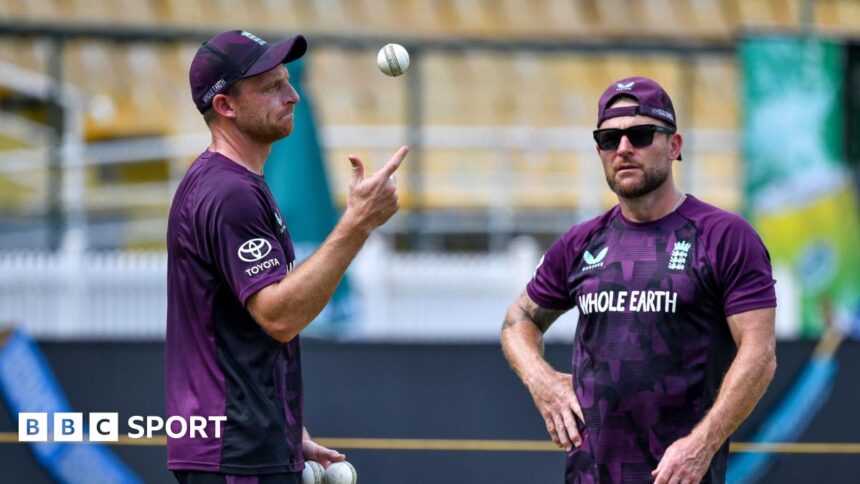
The image was a striking departure from tradition. During England’s T20 World Cup victory over Nepal, head coach Brendon McCullum, a headset clamped to his ear, was seen relaying messages from the dressing room. Those instructions travelled via walkie-talkie to the dugout, then were passed onto captain Harry Brook in the middle. For purists, it was a jarring sight. For England’s Jos Buttler, it was a glimpse of a future that cricket is still nervously tip-toeing towards. In a candid assessment, the former white-ball captain suggests the sport may be “behind the times” on coaches’ real-time influence, sparking a crucial debate about innovation, tradition, and the very essence of leadership on the field.
The Walkie-Talkie Moment: A Signal of Change
The incident in St. Vincent was not an isolated experiment. It was a visible manifestation of a quiet revolution brewing in coaching boxes worldwide. Jos Buttler, who resigned as England’s white-ball captain after last year’s Champions Trophy, provided crucial context. He referenced his experience in the Indian Premier League with the Gujarat Titans, where coach Ashish Nehra was famously—and vocally—active from the boundary rope. “The game has evolved,” Buttler observed, highlighting the contrast between the free-flowing, data-infused environments of franchise leagues and the more rigid structures of international cricket.
This practice raises immediate questions:
- Is this strategic augmentation or captaincy erosion? Does the feed from the coach complement the captain’s feel for the game, or does it undermine their authority and instinct?
- Where is the line between preparation and participation? Coaches have always shaped plans, but transmitting them mid-play feels like a new frontier.
- Does technology demand this evolution? With vast real-time data on match-ups, bowling lengths, and fielding placements available, is refusing to use it a competitive disadvantage?
The walkie-talkie is merely a tool. The real shift is philosophical: moving from a model where the captain is the sole decision-maker on the field to one where they are the conductor of a symphony composed in the analyst’s room.
Tradition vs. Transformation: The Heart of the Debate
Cricket has long cherished the sanctity of the captain’s role. The leader is mythologized—a lone strategist battling wits with their counterpart, making pivotal calls under intense pressure. Introducing a live, vocal coach into that dynamic challenges a core romantic ideal of the sport. Critics argue it infantilizes the captain and creates a confusing chain of command. What happens if the coach’s message and the captain’s gut instinct conflict in a crucial moment?
However, Buttler’s point about being “behind the times” is compelling when viewed through a wider sporting lens.
- American Sports: In the NFL, coaches call every play directly to the quarterback via helmet radio. In the NBA, timeouts are often for coaches to draw up specific, immediate tactical plays.
- Football: Managers and their benches are constantly shouting instructions, with structured set-pieces drilled from the training ground.
In these sports, the head coach is an active, in-game tactician. Cricket has resisted this, but the hyper-fast, high-stakes nature of T20 cricket, in particular, is applying immense pressure to that resistance. The on-field decisions in T20s—a bowling change, a fielding tweak, a promotion in the batting order—can have match-defining consequences in the space of a few balls. The argument for leveraging every possible resource, including the coach’s detached, data-informed perspective, has never been stronger.
The IPL as the Incubator of Innovation
Buttler’s reference to the Indian Premier League is telling. The IPL has consistently acted as cricket’s primary laboratory for innovation. The league’s commercial intensity and condensed format demand cutting-edge tactics and leave no room for sentimental attachment to tradition. Coaches like Ashish Nehra, Stephen Fleming, and Ricky Ponting are not just man-managers; they are proactive tacticians.
The environment fosters this. With smaller grounds, bigger bats, and constant pressure, the margin for error is minuscule. Franchises invest heavily in real-time data analytics, tracking everything from a bowler’s release point under fatigue to a batter’s preferred scoring zones against specific spin types. It is logical, perhaps inevitable, for the coach to become a conduit for this information to the captain in real-time. The IPL’s success has proven that this model can work, creating a cultural export that now challenges the norms of the international game. The walkie-talkie in St. Vincent is a direct import from Ahmedabad or Chennai.
The Future: Integration, Regulation, and the Evolving Captaincy
So, where does cricket go from here? The genie is unlikely to go back into the bottle. The drive for competitive advantage will push teams to explore the limits of allowable communication. The future will likely hinge on three key developments:
- Official Regulation: The ICC and other governing bodies will be forced to clarify the rules. Is walkie-talkie communication acceptable? Can it be used in all formats, or just T20s? Establishing clear parameters will be essential to maintain a level playing field and preserve the spirit of the sport.
- The Hybrid Captain-Coach Model: The role of the captain will evolve, not diminish. Future leaders will need to be expert filters—able to synthesize the stream of information from the bench with their own reading of conditions, player psychology, and match momentum. The skill set shifts from pure instinct to instinctive data management.
- Format-Specific Approaches: We may see a divergence. Test cricket, a battle of endurance and nuanced strategy, may fiercely protect the captain’s isolated autonomy. The white-ball games, especially T20, may embrace the coach as a live tactician, much like a pit wall in Formula One.
Prediction: Within the next two years, we will see formalized protocols for coach-to-captain communication in major T20 leagues. International cricket will follow, albeit with more heated debate. The coaches’ on-field influence will become a standard, if regulated, part of the tactical arsenal.
Conclusion: Embracing the Inevitable Without Losing the Soul
Jos Buttler has shone a light on a friction point at the heart of modern cricket. The sport is grappling with its identity, caught between its cherished past and an increasingly professionalized, data-driven future. Resistance to change is understandable; the captaincy is a sacred trust. But outright rejection of innovation risks making the sport an anachronism.
The solution lies not in banning the walkie-talkie, but in intelligently integrating its potential. The goal should be to enhance decision-making, not replace the captain. Cricket’s soul resides in the contest between individuals under pressure. If technology and communication can heighten that contest—making strategies sharper and mistakes more costly—then the game evolves for the better. The challenge for custodians of cricket is to navigate this new world, ensuring that even as coaches find their voice from the boundary, the captain’s heart and mind remain decisively in the middle.
Source: Based on news from BBC Sport.