‘Costly and Devastating’: How a Single Stumble Shattered GB’s Olympic Ice Dance Dream
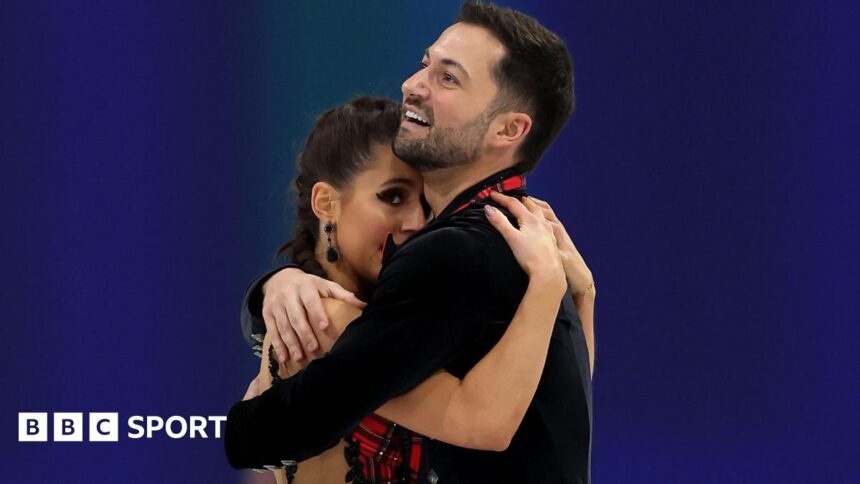
The ice dance free dance at the Winter Olympics is a symphony of athleticism and artistry, a five-minute narrative told on steel blades. For Great Britain’s Lilah Fear and Lewis Gibson, their program at Milan-Cortina 2026 was a story of soaring ambition, brutally interrupted. In a heartbreaking turn, a fleeting misstep on their second element transformed their medal dream into a nightmare, leaving the duo and a nation to ponder what might have been.
Entering the final in a promising position, the British champions carried the weight of a 32-year Olympic medal drought in British figure skating. Their performance, set to a dramatic and powerful soundtrack, began with characteristic precision and passion. Then, in a blink, it happened. As Fear transitioned into the second element—a complex transitional step sequence—her blade caught an imperfection in the ice, or perhaps her own momentum betrayed her. She stumbled, a loss of balance that lasted less than a second but echoed for a lifetime. The recovery was instant, the remainder of the program skated with a defiant, clean brilliance. But in a field where margins are measured in hundredths of a point, the damage was irrevocable. The pair finished seventh overall, their podium hopes vanished into the cold Italian air.
The Agony of the Instant: Dissecting a “Costly and Devastating” Error
In the high-stakes theatre of Olympic competition, the line between legend and heartbreak is paper-thin. For Fear and Gibson, that line was a tiny groove in the ice. Speaking through tears in the mixed zone, Lilah Fear’s words were raw and unequivocal: “costly and devastating.” This was no mere slip; it was a catastrophic deduction in the eyes of the judges, impacting both the technical element score (TES) and, crucially, the program components score (PCS).
Expert analysis reveals why this single error proved so fatal:
- Technical Score Impact: The stumble occurred during a key transitional movement, likely negating the level and Grade of Execution (GOE) for that element. In ice dance, where base values are tightly bunched, losing even two or three points here is a monumental setback.
- Artistic Perception Penalty: Perhaps more damaging is the subconscious effect on judges. A visible error, especially so early, can shatter the program’s illusion of effortless flow, causing judges to become more critical and conservative in awarding the all-important PCS marks for composition and performance.
- Momentum Killer: While the pair showcased immense mental fortitude to complete the program flawlessly, the psychological blow is immense. The pristine skating that followed was, in essence, a damage limitation exercise, not the triumphant attack needed to vault into medal contention.
“You train for four years to make every second perfect,” said a former Olympic ice dancer. “When an error happens that early, it’s like running a marathon with a stone in your shoe from the first mile. You finish, but you know the race for gold is over.”
Burden of History: The 32-Year Wait Goes On
The context of this miss amplifies its devastation. Fear and Gibson were not just skating for themselves; they were carrying the ghost of Jayne Torvill and Christopher Dean’s 1994 bronze—the last Olympic medal won by a British figure skating duo. For three decades, British skaters have chased that legacy, coming agonizingly close but never quite replicating that podium moment.
The pair had been Britain’s brightest hope in a generation. With world-class programs, consistent top-six finishes at World Championships, and a unique, crowd-pleasing style, they had built a compelling narrative leading into Milan-Cortina. The weight of expectation, both external and self-imposed, is a unique pressure in Olympic sports. To have the culmination of that journey undone not by a lack of skill or preparation, but by a cruel twist of fate on the sport’s biggest stage, is a particularly bitter pill to swallow.
Their seventh-place finish, while respectable in a deep field, will feel like a hollow consolation. The question now shifts from “what if?” to “what next?”
The Road to Redemption: What Comes After the Heartbreak?
Olympic heartbreak often writes the opening chapter of an athlete’s defining story. For Fear and Gibson, both in their late twenties, the immediate future will be a crucible of character. The path forward presents several distinct possibilities:
- The Four-Year Grind: The most direct route is a recommitment to the 2030 Winter Games. This requires a staggering level of physical and mental resilience. They must reinvent their competitive material, manage aging bodies, and, most difficultly, bury the ghost of Milan to build a new narrative.
- Professional Pursuits: The lucrative world of professional skating tours and shows beckons. Their dynamic performance style is tailor-made for productions like “Stars on Ice.” This path offers a celebratory, less punitive environment to showcase their talents.
- A Strategic Pivot: They may choose to target the intervening World Championships with renewed vigor, seeking global gold as ultimate validation, while taking an Olympic cycle year-by-year.
Mental recovery will be their first and most crucial opponent. The memory of the stumble will linger. Working with sports psychologists to reframe the experience—not as a failure, but as evidence of their ability to perform under duress—will be essential if they choose to continue.
Legacy Beyond the Podium: A Story of Resilience
While the record books will show a seventh-place finish, to reduce Fear and Gibson’s Olympic journey to that statistic would be a profound injustice. Their legacy from Milan-Cortina may ultimately be defined not by a medal, but by the moment of raw humanity in their aftermath, and the grace they displayed in the face of shattered dreams.
Their story is a brutal reminder of the unforgiving nature of elite sport, where a lifetime of work can hinge on a millisecond. Yet, it is also a testament to professionalism. Completing a four-and-a-half-minute free dance with that level of error at the start requires a champion’s heart, even if the title was denied.
For British skating, the quest for an Olympic medal continues. But in Lilah Fear and Lewis Gibson, the nation saw a pair who dared to believe they could end the drought. They skated on the edge required for glory, and for one heartbreaking instant, that edge gave way. The image of their flawless performance after the fall will endure as a powerful symbol of resilience. The podium eluded them, but their courage in Cortina, forged in the fire of a “costly and devastating” error, has carved its own unique mark in the ice.
Source: Based on news from BBC Sport.