LeBron James Shatters Age Barrier, Becomes Oldest NBA Player with Triple-Double in Lakers’ Rout of Mavericks
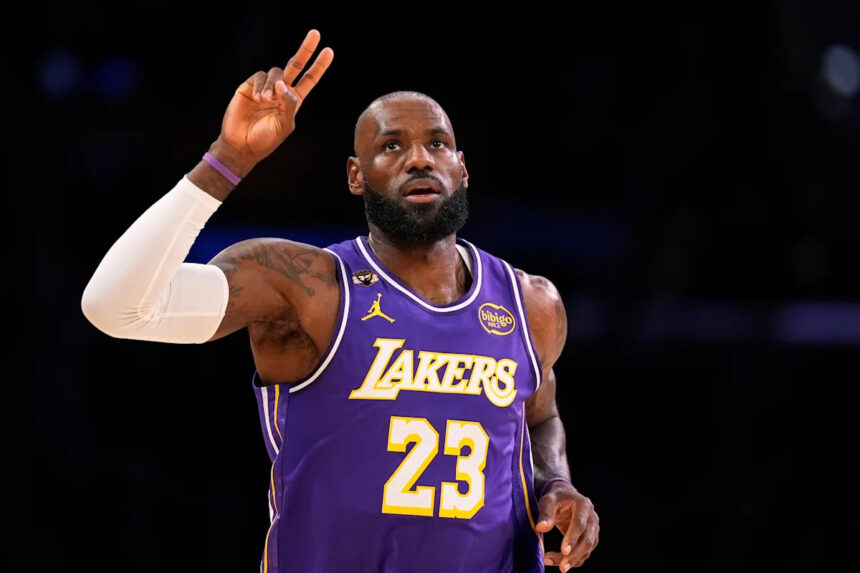
In a league obsessed with the next big thing, the greatest constant just authored another historic chapter. On Thursday night at Crypto.com Arena, LeBron James didn’t just lead the Los Angeles Lakers to a commanding 124-104 victory over the reeling Dallas Mavericks. He performed a breathtaking act of chronological defiance, becoming the oldest player in NBA history to record a triple-double. At 41 years and 44 days old, the King, in his 23rd season, rewrote the record books with a masterful 28 points, 12 assists, and 10 rebounds, reminding the basketball world that his reign is governed by a timeline of his own making.
A First-Quarter Statement and a Record-Breaking Night
The tone was set from the opening tip. With the Lakers needing momentum, James delivered a first-quarter masterpiece, pouring in 14 points with a blend of powerful drives, feathery jumpers, and authoritative finishes. This wasn’t a veteran pacing himself; it was a superstar imposing his will. By the time he headed to the bench for the fourth quarter, he already had 22 points and 12 assists, needing just one more rebound to etch his name into history.
The moment came with 2:06 remaining. A missed Mavericks shot caromed off the rim, and James secured his 10th rebound, officially surpassing the legendary Karl Malone, who held the previous record at 40 years and 127 days. The arena erupted, acknowledging the magnitude of the achievement. James checked out moments later to a roaring ovation, having broken a record many thought would stand for generations.
- Record Broken: Oldest NBA triple-double, surpassing Karl Malone (40 years, 127 days).
- Stat Line: 28 points, 12 assists, 10 rebounds in 32 minutes.
- Historical Context: Achieved in his unprecedented 23rd NBA season.
Expert Analysis: Decoding LeBron’s Unprecedented Longevity
From a basketball analyst’s perspective, this record is less about a single game and more about the culmination of a two-decade-long project. LeBron James’ triple-double at 41 isn’t a fluke; it’s the dividend of an unprecedented investment in his mind and body. What we witnessed against Dallas was a clinic in basketball IQ and physical preservation.
His scoring is no longer reliant solely on athletic explosions. It’s now a calculated mix of post-up savvy, elite floor spacing as a three-point threat (he hit multiple key threes), and an almost psychic understanding of when to cut for easy baskets. His 12 assists were a symphony of court vision, finding cutters and shooters with pinpoint passes that dismantled the Mavericks’ defense. Perhaps most impressively, his 10 rebounds showcased his relentless positioning and basketball instinct, proving that you don’t need to be the highest jumper to be in the right place.
This performance underscores a critical shift in how we evaluate NBA longevity. James isn’t just hanging on; he’s evolving, adapting his game to compensate for any minor physical depreciation while his mental grasp of the sport reaches new heights. He is playing a different, more efficient game than the 25-year-old LeBron, and it’s just as effective.
The Broader Impact: Lakers’ Momentum and Mavericks’ Freefall
While James’ individual feat rightfully headlines the night, the game carried significant weight in the standings. The Lakers secured a crucial victory to solidify their positioning in a crowded Western Conference playoff race. The win demonstrates that when James is operating at this level, they remain a formidable opponent for any team, capable of overwhelming even talented squads.
Conversely, the loss paints a dire picture for the Dallas Mavericks. The defeat marks their ninth consecutive loss, their longest skid in 28 seasons. Despite 19 points apiece from role players Naji Marshall and Max Christie, the team looked disjointed and defensively porous, unable to counter the Lakers’ offensive flow orchestrated by James. This freefall raises urgent questions about lineup chemistry, defensive schemes, and the pressure mounting on the entire organization as they tumble down the conference standings.
Predictions: What’s Next for LeBron and the Lakers?
As James heads to Indianapolis for his 22nd All-Star Game selection, the basketball world is left to wonder: what’s the next ceiling to break? Based on this performance, several predictions come into focus:
- Playoff Threat: A healthy, playmaking-focused LeBron makes the Lakers a dangerous lower-seed playoff team capable of winning any series.
- More Records to Fall: The “oldest to…” record book is now squarely in his sights. Expect more age-defying milestones.
- Contract Implications: This level of play strengthens his leverage and value as he navigates future contract decisions, potentially including playing alongside his son, Bronny.
- Mavericks’ Crossroads: Dallas faces a critical front-office decision before the trade deadline: make a major move to salvage the season or risk wasting a year of their superstar’s prime.
Conclusion: A Legacy That Grows With Time
LeBron James’ record-setting triple-double against the Mavericks is more than a statistical novelty. It is a powerful symbol of sustained excellence. In a sport where age 35 is often considered “veteran status,” James at 41 is not just competing but dominating in a way that redefines the possible. He has moved the goalposts of longevity, turning what was once considered a remarkable twilight into a period of continued peak performance.
This victory was a statement to the league: the King’s court is still in session. As he continues to blend otherworldly talent with a scientific approach to maintenance, each game becomes a living history lesson. The record once held by The Mailman has been delivered to a new address, and the recipient shows no signs of closing up shop. The greatest story in modern sports continues, and with each passing game, LeBron James isn’t just chasing history—he’s extending it.
Source: Based on news from Yahoo Sports.