RIP to the NFLPA’s Team Report Cards: The End of an Era for Player Transparency
The NFL’s annual cycle is built on tradition. The draft, training camp, and the Super Bowl are all pillars of the calendar. For two brief years, a new, disruptive tradition emerged: the NFL Players Association’s team report cards. That experiment is now over. In a decisive legal victory for the league, an arbitrator has ordered the union to cease and desist, silencing a unique public voice for players and leaving fans, especially those of the injury-plagued San Francisco 49ers, with more questions than answers about the inner workings of their favorite franchises.
The Grievance That Grounded the Grades
The news broke not with a press conference, but with a tweet from ESPN’s Adam Schefter. The NFL had prevailed in its grievance against the NFLPA, arguing the union’s conduct in creating and publishing the report cards violated the Collective Bargaining Agreement. A league memo sent to all 32 teams laid out the damning case. While the NFLPA publicly framed the report cards as an objective survey, the arbitration hearing revealed a different story. Union officials admitted the exercise was, at its core, “union speech.”
The league’s memo detailed a process far from the neutral “scientific exercise” it was portrayed as. According to the findings, union staffers, not players, controlled the narrative from start to finish. They cherry-picked survey topics and player responses, drafted all accompanying commentary, selected anonymous quotes to fit a predetermined narrative, and unilaterally determined the weighting for the controversial alphabetical grades. In essence, the NFL successfully argued the report cards were a strategic public relations tool designed to pressure teams, not an impartial referendum on workplace conditions.
San Francisco’s Lingering Questions Go Unanswered
The shutdown of the report cards hits particularly hard in the Bay Area. For two consecutive seasons, the 49ers’ football operations received glaringly poor marks, even as the team competed at the highest level on the field. Last year’s report card painted a concerning picture:
- Training Staff: Ranked 25th in the league (D+ grade)
- Training Room: Ranked 21st (C- grade)
- Treatment of Families: Received an F grade
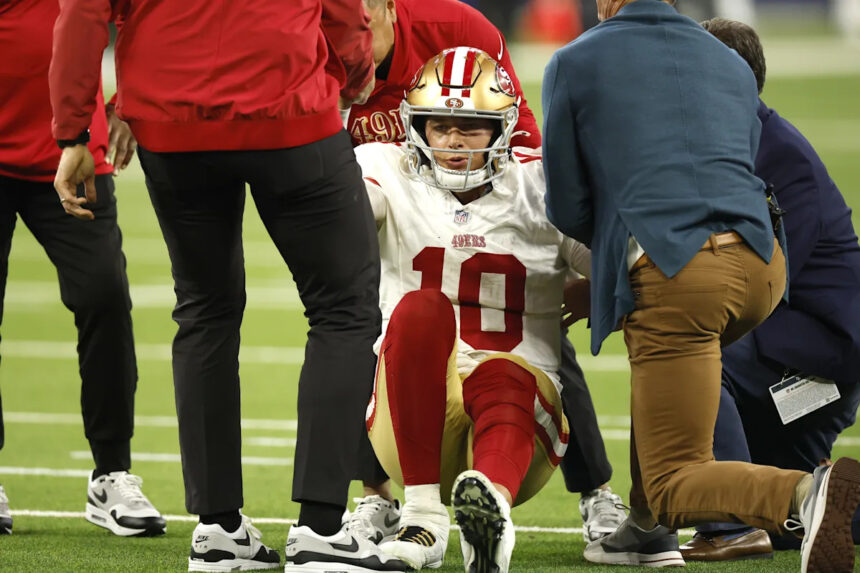
These grades took on a haunting significance as the 49ers, yet again, finished near the top of the league in starters lost to injury. The correlation between the survey’s criticism and the team’s injury misfortune became a central topic of discussion. With another brutal season in the books, the 2024 report card—scheduled for a late February release—was poised to be a seismic event for the franchise. Would the grades have improved? Would they have provided a data point to explain another year of medical turmoil? That transparency is now gone, leaving fans to speculate in a vacuum. The 49ers training staff ranking will remain a frozen, and potentially misleading, snapshot from 2023.
The Player Voice Dilemma: Empowerment or Propaganda?
The arbitrator’s ruling exposes the fundamental tension at the heart of the report card project. The NFLPA’s stated goal was noble: to give players a collective voice on working conditions, empowering them to spur positive change. High-performing teams like the Miami Dolphins and Minnesota Vikings, who consistently earned top marks, used the reports as a recruiting tool and a badge of honor.
However, the legal findings reframe the initiative. If the union was selectively curating responses and crafting commentary, was it truly amplifying the authentic player voice, or was it wielding that voice as a blunt instrument? The loss of the report cards eliminates a platform, but it also eliminates what the league deemed a manipulated one. As former star JJ Watt pointedly commented on the process, the idea of not letting the players—the individuals who live the day-to-day reality of nutrition, rehab, and schedule—drive the narrative “makes little sense.” The ruling ensures the conversation, for better or worse, moves back behind closed doors.
What the NFLPA Got Right and Wrong
What They Got Right: The report cards generated immense public and media pressure. They named and shamed underperforming franchises on issues fans rarely consider. They created a tangible metric for player satisfaction beyond salary.
Where It Faltered: The grading system was overly simplistic. Calling the exercise a “report card” implied an academic objectivity it lacked. By admitting to curating data to support a narrative, the union undermined its own credibility and provided the NFL with the exact ammunition needed to shut it down.
The Future of Player Conditions and Public Scrutiny
So, what happens now? The direct public shaming campaign is over, but the underlying issues it highlighted are not. The demand for transparency from a fanbase increasingly interested in team operations will not vanish. We can predict several consequences:
- Behind-the-Scenes Leverage: The NFLPA will likely use survey data internally as leverage in private discussions with teams and the league, rather than publishing grades.
- Agent-Driven Scrutiny: Player agents, who always gathered intel on franchises, will place even greater emphasis on private networks to assess working conditions for their clients in free agency.
- Media Investigation: Investigative reporters will now be the primary channel for exposing substandard conditions, relying on anonymous player leaks rather than a centralized, union-sanctioned report.
- Team PR Push: Organizations with strong facilities, like the Dolphins, will aggressively market these advantages themselves, controlling the narrative directly.
For teams like the 49ers, the immediate pressure is off. The annual public reckoning is gone. However, the NFLPA grievance outcome does not heal injured players or upgrade a training room. The franchise must now address its operational reputation through actions, not just crisis management around a yearly grade. The incentive to improve for the sake of player recruitment and retention remains, but the spotlight has been dimmed.
Conclusion: A Short-Lived Experiment with a Lasting Impact
The NFLPA’s team report cards were a bold, flawed, and ultimately unsustainable experiment. They provided a fascinating, if imperfect, window into the NFL’s inner sanctum for two years, forcing conversations about player welfare beyond the sidelines. Their demise at the hands of an arbitrator CBA violation ruling is a win for league control and a lesson for the union in the perils of mixing advocacy with perceived objectivity.
While the report cards are dead, their legacy lingers. They proved players care deeply about workplace conditions and that fans are hungry for this insight. They embarrassed powerful franchises and celebrated progressive ones. Moving forward, the dialogue they sparked will continue, but it will retreat to the shadows—in private meetings, agent whispers, and anonymous sourcing. The report cards are gone, but the report on the state of NFL teams, for players and fans alike, is now permanently incomplete.
Source: Based on news from Yahoo Sports.