U.S. Women’s Hockey Reclaims Olympic Glory in Overtime Thriller Against Canada
The frozen canvas of the Olympic final was painted once more with the deepest hues of a historic rivalry. In a moment of breathtaking tension that felt both instantaneous and eternal, American defender Megan Keller unleashed a shot that sliced through the Milan air, past a maze of bodies, and into the net. In that second, the United States women’s hockey team didn’t just score a goal; they reclaimed a throne, exorcised demons, and authored a new, golden chapter in the sport’s greatest saga. Their 2-1 overtime victory over Canada on Thursday wasn’t merely a win; it was a testament to resilience, a masterpiece of tactical grit, and the culmination of a four-year journey defined by an unyielding response to past heartbreak.
A Rivalry Forged in Ice: The Weight of the Moment
To understand the magnitude of this third Olympic gold medal for the United States, one must first appreciate the razor-thin margins that have defined this clash of titans. For over two decades, every Olympic final has been a border war, a psychological chess match played at breakneck speed. The Americans’ triumph breaks a pattern of recent Canadian dominance at the Games, re-establishing a crucial parity at the very pinnacle of the sport. This victory was earned not with flashy, wide-open play, but with the kind of disciplined, defensive fortitude often associated with their rivals. The U.S. weathered early storms, managed a relentless Canadian forecheck, and showcased a goaltending performance for the ages. The single goal they allowed stands as a monument to their structural integrity under fire.
The game’s narrative was a classic of the genre:
- Early Pressure: Canada came out with typical physicality, controlling pace and territory in the first period.
- Strategic Adjustment: The U.S. settled in, leveraging their transition game and using their speed on the wings to create chances.
- Goaltending Duel: Both netminders were spectacular, turning away high-danger chances and keeping the scoreline tense.
- The Climactic Release: Overtime, a format familiar to these teams, delivered the inevitable dramatic conclusion, this time with an American hero.
Expert Analysis: The Pillars of an American Triumph
Breaking down this victory reveals a blueprint built on three core pillars that shifted the balance of power back to the United States.
Defensive Cohesion as an Offensive Weapon: In past meetings, the U.S. was sometimes guilty of over-pursuit, leaving themselves vulnerable to Canada’s lethal counter-attacks. This time, their defensive structure was impeccable. The center-lane was consistently clogged, forcing Canada to the perimeter. Blocked shots were a key statistic, with players like Lee Stecklein and Savannah Harmon sacrificing their bodies to shut down lanes. This commitment allowed them to transition from defense to offense quickly, turning stops into rushes.
The Keller Catalyst: Leadership from the Blue Line Megan Keller’s game-winner was the headline, but her overall performance symbolized this team’s evolution. Once primarily known for her offensive prowess, Keller has matured into a complete, two-way force. Her poise with the puck under intense forechecking pressure, her ability to quarterback the power play, and her decisive shot in overtime showcase a player at the peak of her powers. She embodied the “next play” mentality crucial in beating a team like Canada.
Winning the Mental Battle: The psychological warfare in a U.S.-Canada final is immense. After falling short in recent Olympic meetings, a shadow of doubt could have crept in. Instead, the Americans played with a palpable sense of belief and controlled emotion. They didn’t get drawn into after-the-whistle scrums that could drain energy or lead to penalties. They focused on the process, shift by shift, demonstrating a mental toughness that matched their physical skill. This was a team that learned from the past without being haunted by it.
The Road Ahead: Predictions for a New Cycle
This gold medal doesn’t end the rivalry; it resets it. The victory in Milan will reverberate through the next four-year Olympic cycle, setting the stage for an even more intense buildup to the 2030 Games.
We can expect several key developments:
- Canadian Retooling: Canada will undergo a period of intense evaluation. Their golden generation from the 2022 and 2026 triumphs will see some turnover, forcing a new wave of talent to step into the cauldron of this rivalry. Their response will be fierce and focused.
- U.S. Program Depth: The American victory validates their development system. The infusion of new, younger players who contributed significantly in Milan proves the pipeline is robust. This depth will create intense internal competition, raising the overall level of the national team.
- The Global Chase: While the North American duopoly remains, the gap to nations like Finland, the Czech Republic, and Switzerland continues to narrow. These teams are no longer just hopeful spoilers; they are legitimate medal threats capable of beating anyone on a given day, adding a thrilling new dimension to world championships and the Olympic landscape.
- Legacy and Growth: This win, achieved in dramatic fashion on the global stage, is a monumental boost for the growth of women’s hockey worldwide. It provides a new iconic moment to inspire the next generation of players across all nations.
Conclusion: More Than a Medal, A Defining Legacy
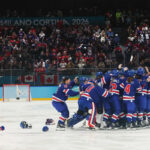
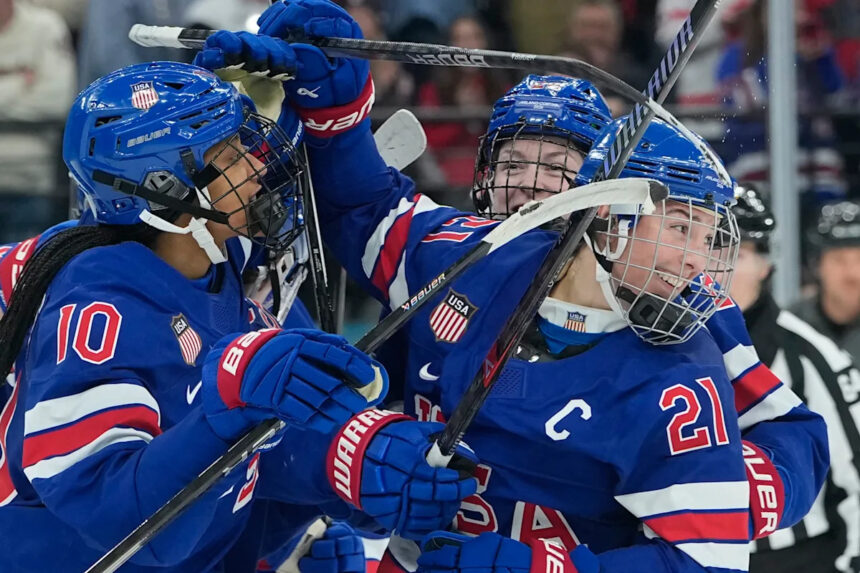
The photograph of Megan Keller, arms raised, helmet flung, surrounded by a sea of ecstatic teammates in red, white, and blue, is more than a celebration of a goal. It is the portrait of a program that stared down the summit, saw its rival already there, and climbed anyway. This United States triumph in women’s hockey is a story of tactical evolution, mental fortitude, and legendary execution. It reinforces the truth that in the furnace of this unparalleled sports rivalry, greatness is not given; it is forged in the white-hot pressure of overtime, with the world watching and history waiting to be written. The gold medal hangs around their necks, but the true prize is the indelible mark they have left on the sport—a reminder that in the eternal dance between the United States and Canada on ice, the next step is always the most anticipated one. The final whistle in Milan was not an end, but a glorious new beginning for the greatest show in women’s sports.
For continued coverage of the athletes and stories from the Games, visit AP’s dedicated hub: AP Olympic Coverage.
Source: Based on news from Yahoo Sports.