Calcio’s Continental Crisis: Italian Football Stares at a Champions League Abyss
The echoes of Madrid in 2010 grow fainter with each passing season. That night, when Diego Milito’s brace for Inter Milan vanquished Bayern Munich, was supposed to be a renaissance, not a requiem. Yet, fourteen years later, Italian football finds itself teetering on the edge of a continental humiliation not seen this century. For the first time since the modern knockout format began, Serie A is staring down the barrel of having zero representatives in the Champions League last 16. The unthinkable is now a tangible, looming possibility, threatening to expose a deep-seated structural malaise beneath the surface of a league enjoying a commercial resurgence.
The Unraveling of a Continental Power
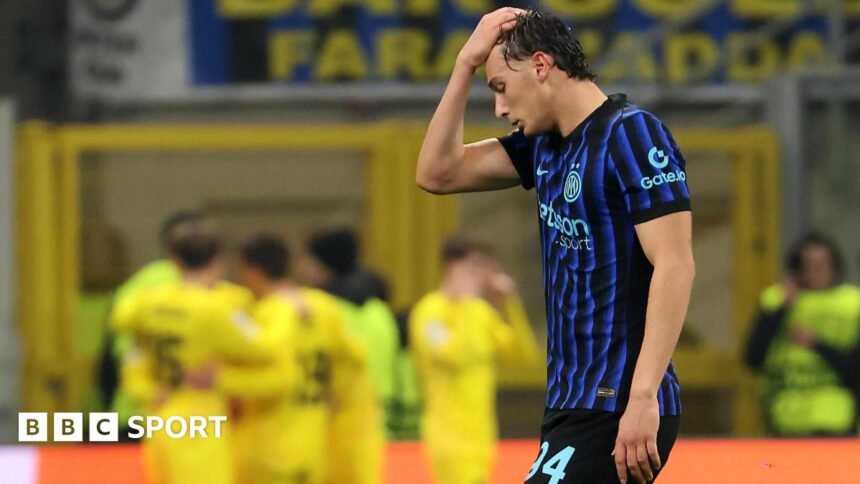
The statistics paint a stark picture of decline. Since the Champions League last-16 format was reintroduced in 2003-04, Italy’s presence has been a constant. In over two decades, there has always been at least one Serie A club in the knockouts; on twelve occasions, there were three. This record was a bedrock of Italy’s historic European pedigree, a buffer against the financial superpowers of England and Spain. That buffer has now utterly evaporated. The shockwaves began not in Turin or Bergamo, but in the Arctic Circle. Inter Milan’s shock exit to Norwegian debutants Bodo/Glimt in the playoff round was more than an upset; it was a portent. The reigning Serie A champions and last season’s finalists, stripped of their safety net, are already consigned to the Europa League, a competition that has become an uncomfortable familiar landing spot for Italian giants.
This early catastrophe set a domino effect in motion, placing an unbearable burden on the two remaining contenders, both of whom are on the ropes. The situation is dire:
- Juventus trail Galatasaray 5-2 after a chaotic first leg in Istanbul. The Old Lady’s defense, once her fortress, was breached with alarming ease, leaving a mountain to climb in Turin.
- Atalanta are 2-0 down to a savvy Borussia Dortmund side. La Dea’s famous attacking verve was nullified in Germany, and they must now overturn a deficit against one of Europe’s most experienced tournament teams.
The simultaneous fragility of Juventus (the domestic dynasty) and Atalanta (the modern model of overachievement) speaks to a crisis that is both financial and philosophical.
Anatomy of a Decline: More Than Just Bad Luck
To dismiss this potential historic Champions League embarrassment as a bad year would be to miss the forest for the trees. The roots of this predicament are multifaceted and have been growing for years. First, the financial disparity with the Premier League is now a chasm. Serie A clubs simply cannot compete in the transfer market for the world’s elite talent, nor can they retain their own brightest stars against offers from England, Spain, or even the state-backed projects in France and Saudi Arabia. The sale of a key player to balance the books has become an annual ritual for every club outside of Juventus, and often for them as well.
Secondly, there is a tangible tactical stagnation. While coaches like Gian Piero Gasperini have been revolutionary domestically, the European game has evolved. The intense, high-pressing, physically dominant models employed by the continent’s best have repeatedly exposed Italian sides who are technically proficient but sometimes lacking in athletic intensity and strategic flexibility. Italian teams often seem a step slower in thought and deed on the biggest nights, unable to impose their famed *catenaccio* or control games against elite opposition.
Finally, the Serie A schedule and infrastructure play a role. The relentless grind of a 38-game league, often with midweek fixtures, on pitches that are sometimes below par, takes a physical toll that English clubs, with their greater squad depth and superior facilities, are better equipped to handle. The “Italian tax” is real—teams arrive at crucial European moments physically and mentally depleted.
The Stakes: More Than Just Pride
The ramifications of a complete last-16 blackout would be severe and immediate. Italy’s UEFA coefficient, which determines the number of Champions League spots, is under threat. Currently sitting in a coveted top-four position, a failure this profound would accelerate the gains made by leagues like the Netherlands and Portugal. The financial blow would be monumental. The prize money and broadcast revenue from the knockout stages are essential for clubs operating under tight financial constraints. Missing out weakens them further, creating a vicious cycle where they are less able to build squads capable of competing next season.
Perhaps most damaging of all would be the psychological impact. Serie A has worked hard to rebrand itself as “The Most Beautiful League in the World,” attracting new investors and global viewers. This potential continental debacle would be a stark contradiction to that narrative, reinforcing an outdated but persistent stereotype of a league in permanent decline. It would be a marketing disaster and a blow to the morale of a nation that views calcio as a core component of its identity.
Predictions and the Path to Redemption
Can the unthinkable be avoided? The odds are long. Juventus, despite their legendary comebacks of the past, look psychologically shattered and tactically confused. Overturning a three-goal deficit against a Galatasaray side fueled by ferocious support and the quality of Mauro Icardi seems a bridge too far. Atalanta, at home in Bergamo, have a puncher’s chance. Their high-octane attack is capable of blowing any team away, but Dortmund’s tournament experience and counter-attacking threat make them favorites to advance.
The most likely scenario is a complete wipeout. If it happens, it must serve as the ultimate wake-up call. Redemption will not come from nostalgic longing but from systemic change:
- Infrastructure investment in youth academies and stadiums to generate revenue and develop talent.
- A pragmatic reassessment of tactical approaches in Europe, blending Italian defensive intelligence with modern athleticism.
- Serie A must finally streamline its calendar and improve operational efficiency to help its clubs compete on a level physical playing field.
Conclusion: A Crossroads for Calcio
Italian football stands at a precipice. The next 48 hours could confirm its worst fears—a season of European irrelevance. The era of Sacchi’s Milan, Lippi’s Juventus, and Mourinho’s Inter feels like ancient history. The potential absence from the Champions League last 16 is not a blip; it is a symptom. It reveals a league that has been lapped financially, is struggling to adapt tactically, and is paying the price for chronic short-termism. Whether through a miraculous comeback in Turin or Bergamo, or through the painful introspection that failure will demand, this moment must be a catalyst. Otherwise, the proud legacy of Italian football in Europe risks becoming little more than a museum exhibit, with the 2010 Champions League trophy its last, lonely artifact.
Source: Based on news from BBC Sport.