Jurrien Timber’s Candid Warning: Arsenal’s Late-Game Anxiety Threatens Premier League Dream
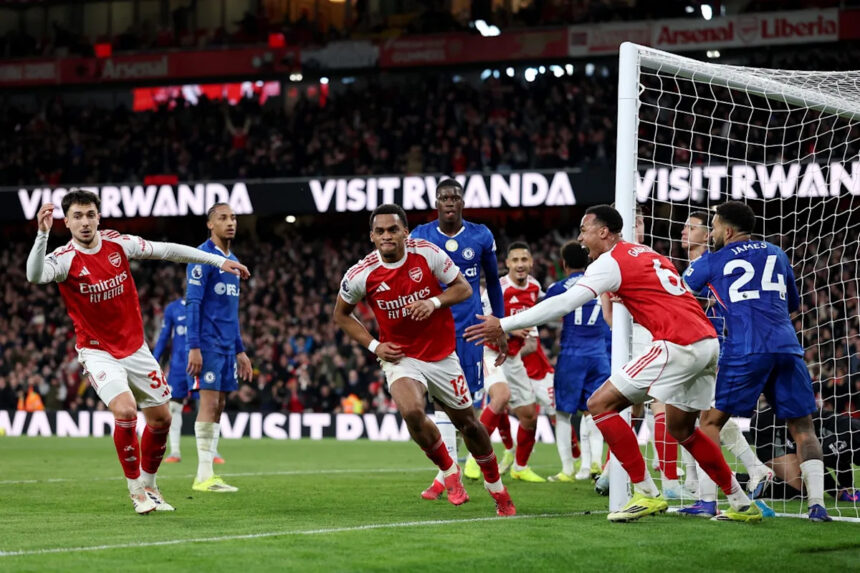
The Emirates Stadium exhaled a collective, seismic sigh of relief. The final whistle blew, Arsenal had secured a vital 2-1 victory over Chelsea, but the narrative was not one of serene dominance. It was a story of grit, a moment of individual brilliance from returning defender Jurrien Timber, and a palpable, nerve-shredding tension that gripped the final minutes. In the aftermath, the match-winner didn’t just bask in the glory; he issued a stark, internal warning that cuts to the heart of Arsenal’s title credentials. The Gunners, Timber admits, must urgently address the anxiety that threatens to unravel their Premier League charge.
The Pattern of Panic: From Command to Crisis
Arsenal’s ascent under Mikel Arteta has been built on a foundation of relentless control and emotional discipline. For the first half of this campaign, they were masters of the match state, dropping a mere two points from winning positions. It was the hallmark of champions. However, the psychological landscape of a title run-in is different. The pressure amplifies, every pass carries weight, and the clock seems to slow down. Since the turn of the year, a concerning trend has emerged.
Arsenal have already dropped seven points in 2024 from positions of strength: a 2-2 draw with Brentford, a 2-1 defeat to Manchester United where they led, and a costly 2-2 draw at Wolves. In each instance, a pattern of retreat and reactive football replaced their usual proactive control. Against Chelsea, despite playing against ten men for over 30 minutes, the same nervous energy returned. “You feel it, especially at the end,” Timber confessed. “We stopped playing a bit, which was unnecessary – especially with a man up. It’s something we need to work on.”
This shift from command to crisis management reveals a psychological hurdle. The team is not being outplayed tactically in these moments; they are being overwhelmed by the occasion. The connection between the players’ anxiety and the crowd’s nervous energy creates a feedback loop that can paralyze their signature style.
Timber’s Diagnosis: A Rare Moment of Public Introspection
Jurrien Timber’s comments are significant not just for their content, but for their source and timing. For a player to publicly acknowledge a collective psychological frailty in the heat of a title race is uncommon. It signals a self-awareness within the squad that the issue is real and cannot be ignored. His analysis was precise:
- Nervousness is palpable: He openly acknowledged feeling the tension on the pitch and in the stands.
- A tactical retreat: He identified the specific symptom – “We stopped playing” – a shift to passive, hopeful defending.
- A recurring problem: He stressed this “happened a couple of times this season already,” framing it as a pattern, not a one-off.
This honesty is a double-edged sword. It shows a mature dressing room capable of self-critique, but it also publicly names the dragon they must slay. The challenge for Mikel Arteta is to transform this acknowledgment from a point of anxiety into a point of focus. The resilience Timber praised in seeing out the Chelsea win is the baseline; the next step is eliminating the need for last-ditch resilience altogether through composed control.
The Arteta Equation: Managing Minds as Well as Tactics
The final stretch of a Premier League season is as much a test of a manager’s psychological management as his tactical acumen. Arteta, a disciple of Pep Guardiola, has instilled a magnificent structure and style. Now, he faces his biggest man-management test. How does he address the “late-game anxiety” his own player has highlighted?
First, it requires proactive in-game management. Substitutions must not only be fresh legs, but calm heads—players who can receive the ball under pressure and make simple, possession-retaining decisions. The instructions in the final 15 minutes may need to shift from “see it out” to “control it through our football.”
Second, Arteta must work on the team’s emotional regulation. This involves scenario training, perhaps using sports psychologists to equip players with mental tools to stay present. The focus must remain on the next pass, the next trigger, not the league table or the ticking clock.
Finally, there is a communication task with the fanbase. The Emirates has become a fortress, but fortresses can feel tense under siege. The synergy between team and supporters is Arsenal’s superpower; managing the collective emotional state in these high-stakes moments is crucial.
The Run-In: Can Arsenal Convert Anxiety into Assurance?
With a five-point lead over Manchester City (who have two games in hand), Arsenal’s destiny is still in their hands, but the margin for error is psychological as much as mathematical. The run-in includes tricky away fixtures and the ever-present shadow of City’s relentless machine. Timber’s warning is a crucial inflection point.
We predict two potential paths from here:
The Positive Path: Timber’s candid remarks act as a cathartic release. By naming the fear, the squad can address it directly. The Chelsea win, despite its nerves, becomes a blueprint for grinding out results even when not at their fluid best. This experience hardens them, and they navigate the final games with a newfound, steely composure that sees them over the line.
The Perilous Path: The anxiety becomes a self-fulfilling prophecy. In a tight game against a rival, the first sign of pressure triggers the same retreat, leading to a costly mistake and dropped points. This could hand the initiative to a Manchester City side that has mastered the art of the cold-blooded finish.
The key differentiator will be whether Arsenal can use their technical quality to manage games, rather than their emotions managing them. Players like Martin Ødegaard, Declan Rice, and the returning Timber himself must become on-pitch psychologists, demanding the ball and setting a tempo that soothes rather than stokes the nerves.
Conclusion: The Final Hurdle is Between the Ears
Jurrien Timber did more than score a winning goal against Chelsea. He provided the most honest analysis of Arsenal’s title race. The Gunners have proven they have the talent, the tactics, and the teamwork to be champions. The only question that remains is whether they have the temperament. The late-game anxiety is now the acknowledged opponent in the final weeks of the season.
History shows that title winners are not those who play without fear, but those who control it. Manchester United’s Fergie-time grit and Manchester City’s icy stoppage-time routines are testaments to this. Arsenal’s journey under Arteta has been about restoring belief. The final, crucial lesson is mastering tension. How they respond to Timber’s public call to arms will define their season. If they can convert that anxiety into focused assurance, the Premier League trophy’s long-awaited return to North London will be built on a foundation of mental strength as much as footballing brilliance.
Source: Based on news from Yahoo Sports.