From Netflix to the Garage: How ‘Drive to Survive’ Fueled a Williams F1 Engineer’s Dream
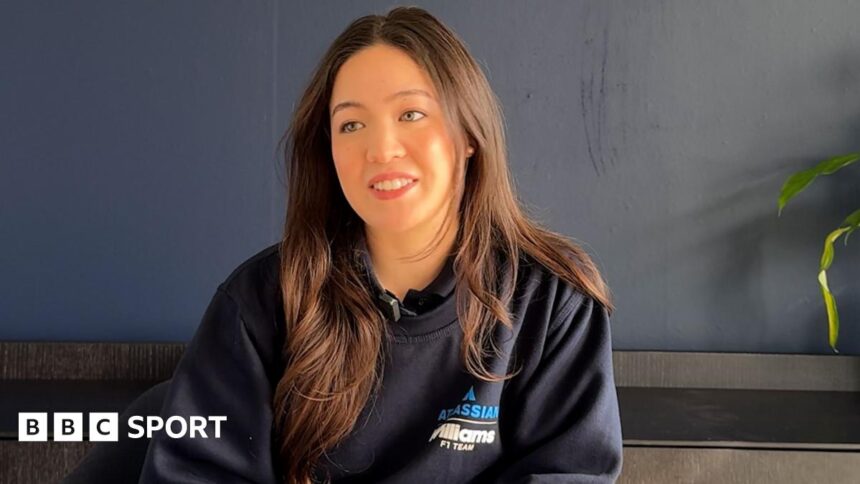
Five years ago, Christina Sullivan’s world had no roar of V6 turbos, no scent of high-octane fuel, and no concept of aerodynamic wash. At 22, her career path seemed set on a conventional track, far removed from the high-speed, high-stakes paddock of Formula 1. Today, at 27, she walks into the hallowed, high-tech corridors of Williams Racing, not as a fan on a tour, but as a vital cog in the machine: a wind tunnel systems engineer. Her unprecedented journey from F1 novice to insider is a modern parable of inspiration, proving that the gateway to the pinnacle of motorsport is no longer just a racetrack—it can be a Netflix subscription.
- The Netflix Catalyst: When Entertainment Becomes a Career Blueprint
- The Engineering Pivot: From Casual Viewer to Qualified Candidate
- Expert Analysis: The “Drive to Survive” Effect on F1’s Talent Pipeline
- The Future of F1 Recruitment: Predictions for a New Era
- Conclusion: The Starting Line is Where You Find It
The Netflix Catalyst: When Entertainment Becomes a Career Blueprint
Christina’s story is inextricably linked to a cultural phenomenon. “I definitely wasn’t into motorsport,” she admits of her perspective just half a decade ago. Like millions around the globe, her introduction was the binge-worthy docuseries ‘Drive to Survive.’ But for her, it was more than just compelling television; it was a revelation of human endeavor. The show’s genius, she notes, wasn’t in simplifying the engineering, but in humanizing the competition.
“It peeled back the helmet visor,” she explains. “Suddenly, it wasn’t just cars going in circles. It was a story of strategy, of immense pressure, of teamwork, and of fascinating personalities—both in the cockpit and on the pit wall. I saw the passion of the engineers, the intensity of the team principals, the drivers’ vulnerability. I realized Formula 1 was a massive, global project of human and technical excellence. That’s what hooked me.” This narrative depth transformed a distant sport into a tangible, and incredibly attractive, professional landscape.
The Engineering Pivot: From Casual Viewer to Qualified Candidate
Inspired but not naïve, Christina understood that fandom wasn’t a resume. With a background in mechanical engineering, she possessed the raw toolkit. ‘Drive to Survive’ provided the vision. Her journey from viewer to Williams employee was a masterclass in targeted ambition.
- Deep-Dive Education: She moved beyond the show, consuming technical podcasts, reading race analyses, and studying F1’s complex regulations to understand the “why” behind the drama.
- Skill Alignment: She audited her own engineering skills against the publicized work of F1 teams, identifying wind tunnel operations and data systems as an area where her aptitude and the sport’s needs intersected.
- Strategic Networking: Leveraging platforms like LinkedIn, she connected with professionals in the industry, seeking advice and learning about the various pathways into the fiercely competitive field.
- Persistence in Application: She applied relentlessly, facing inevitable rejections but using each as feedback to refine her approach, ultimately landing her pivotal role at the historic Williams team.
Her role now involves managing the complex data systems within Williams’ state-of-the-art wind tunnel, a critical facility where every millisecond of aerodynamic performance is fought over. It’s a far cry from her couch, but the through-line is the passion first ignited on screen.
Expert Analysis: The “Drive to Survive” Effect on F1’s Talent Pipeline
Christina Sullivan is not an anomaly; she is a leading indicator. The ‘Drive to Survive’ effect has been widely discussed in terms of booming ticket sales and U.S. audience growth, but its most profound long-term impact may be on the sport’s human capital. Teams are now receiving applications from a new generation of engineers, marketers, and logistics experts who were first captivated by the series.
This influx is transformative. It broadens the talent pool beyond traditional motorsport hubs, injecting diverse perspectives and fresh enthusiasm. For a team like Williams, in the midst of a historic rebuild, this new wave of mission-driven talent is invaluable. These recruits aren’t just looking for any engineering job; they are bought into the narrative of the comeback, the underdog story, and the team legacy—narratives that ‘Drive to Survive’ excels at framing.
However, the show also creates a challenge: managing expectations. The series, by necessity, dramatizes. The day-to-day work in F1, while thrilling, involves immense grind, meticulous attention to detail, and pressures that aren’t always televisable. Candidates like Christina, who bridge the gap between inspired fan and dedicated professional, succeed because they looked past the glamour to the gritty reality of excellence.
The Future of F1 Recruitment: Predictions for a New Era
Looking ahead, the Christina Sullivan pathway is likely to become more established. We can predict several key trends:
- Diversification of Roles: Interest will expand beyond pure engineering into data science, simulation, sustainability, and advanced manufacturing, all framed by the sport’s newfound storytelling.
- Emphasis on Soft Skills: As the sport’s profile raises, teams will value communication, media savvy, and adaptability as highly as technical grades, seeking employees who can thrive in the global F1 spotlight.
- Academic Tailoring: Universities will increasingly offer motorsport-focused modules and degrees, formalizing the pipeline that currently exists through individual passion projects.
- Team Brand Narratives: Constructors will leverage their unique stories—like Williams’ heritage or a newcomer’ disruptive approach—as a key recruitment tool, much like tech companies sell culture.
The ultimate prediction is a virtuous cycle: compelling content attracts diverse talent, which fosters innovation and competition on the track, which in turn creates more compelling content. The sport’s future champions may be discovered not just in karting rings, but in university labs by students who found their calling through a streaming service.
Conclusion: The Starting Line is Where You Find It
Christina Sullivan’s office is a wind tunnel, her workweek defined by aerodynamic maps and data correlation. Her journey dismantles the old guard’s notion of how one must earn a place in Formula 1. There is no single route. In the modern era, passion can be catalyzed anywhere—even on a television screen. Her story validates that with the right blend of inspiration, relentless self-education, and strategic effort, the gap between fan and participant is bridgeable.
For Williams and for F1, her presence is a symbol of renewal. It proves the sport’s evolving appeal and its ability to attract brilliant minds from unexpected places. As the lights go out on future Grands Prix, the race behind the scenes—to innovate, to optimize, to compete—will be driven by a new generation of professionals. And for more and more of them, the starting signal was the opening theme of a Netflix show. The legacy of ‘Drive to Survive’ won’t just be measured in ratings, but in the careers it launched and the futures it engineered, one inspired viewer at a time.
Source: Based on news from BBC Sport.