Bears’ Calculated Gamble: How Trading for Garrett Bradbury Shapes Their 2026 Salary Cap Landscape
The Chicago Bears, a franchise perpetually in search of stability in the trenches, made a decisive and pragmatic move ahead of the legal tampering window. In a trade with the New England Patriots, they acquired veteran center Garrett Bradbury, sending a 2027 fifth-round pick to Foxborough. On the surface, it’s a straightforward transaction to fill a sudden, gaping hole. But dig deeper, and this deal reveals a meticulously calculated financial strategy, one that specifically positions the Bears for flexibility in the critical year of 2026. This isn’t just about snapping the ball today; it’s about preserving capital for the quarterback of tomorrow.
A Sudden Void and a Swift, Surgical Response
The Bears’ offensive line plans were thrown into disarray earlier this week with the shocking retirement of center Drew Dalman after just five seasons. Dalman’s departure wasn’t just a loss of a starter; it created an immediate $10 million dead cap hit for 2026, a figure that would have simply vanished from the books with nothing in return. General Manager Ryan Poles, known for his cap-conscious team building, moved with remarkable speed. Instead of diving into a frenzied and overpriced free agent market for a center next week, he identified a cost-controlled, proven solution in Garrett Bradbury.
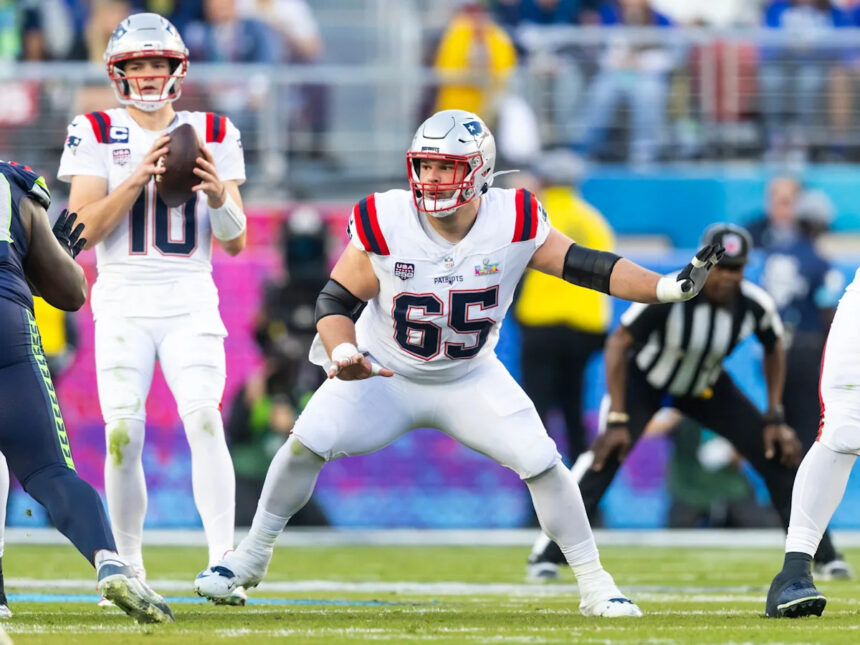
Bradbury, a former first-round pick, is coming off arguably his best professional season. Reuniting with his former North Carolina State teammate, guard Joe Thuney, in Chicago, he brings a season of impeccable pass protection. According to Pro Football Focus, Bradbury started all 17 games for the Patriots in 2025 and didn’t allow a single sack while committing zero penalties over 642 pass-blocking snaps. This level of clean, reliable play is the exact foundation the Bears’ offense needs.
The 2026 Cap Math: A Masterclass in Affordable Stability
Here is where the trade transitions from good football move to shrewd financial planning. The Bears didn’t just acquire a starting center; they acquired one on a team-friendly contract that perfectly aligns with their competitive window.
- Bradbury’s 2026 Cap Hit: $4.6 million.
- Dalman’s 2026 Cap Hit Was: Approximately $14.6 million before retirement.
- Net Cap Impact for 2026: The Bears effectively replaced a $14.6M obligation with a $4.6M one, creating a potential $10 million in functional savings at the position for that year.
Let’s examine the broader cap picture. Before Dalman’s retirement, Over the Cap projected the Bears with $31.38 million in space for 2026. The retirement cleared Dalman’s hefty salary, adding roughly $10 million and bumping the projected space to $41.38 million. Swapping in Bradbury’s $4.6 million hit brings the current 2026 projection to approximately $36.78 million in available cap space. And this is before any other potential restructures, extensions, or releases. Poles has maintained a clean, forward-thinking cap sheet, and this trade is a testament to that philosophy.
This affordable contract is a strategic asset. In 2026, the Bears will likely be deep into the contract of their franchise quarterback (whether that’s a veteran extension or a rookie deal). Every dollar saved on a competent starting center is a dollar that can be allocated to a premium edge rusher, a lockdown cornerback, or a dynamic weapon. Bradbury’s deal provides elite-level cost certainty at a pivotal position.
Ripple Effects and Future Roster Construction
The Bradbury acquisition sends waves through the Bears’ entire offseason blueprint. First, it removes center from the list of “desperate needs” heading into free agency and the draft. This allows Ryan Poles to allocate resources—both monetary and draft capital—elsewhere. The focus can now shift overwhelmingly to positions like edge rusher, defensive tackle, and wide receiver depth.
Second, it provides crucial continuity. The Bears’ offensive line, with Braxton Jones at left tackle, Teven Jenkins at left guard, Bradbury at center, Thuney at right guard, and Darnell Wright at right tackle, now projects as a solidified, veteran unit. This consistency is invaluable for a developing quarterback and a rushing attack that aims to be the team’s identity.
Furthermore, this move exemplifies a “value over splash” mentality. The Bears avoided the trap of paying top-dollar for the best available center in free agency, which could have resulted in a long-term deal with a much larger average annual value. Instead, they secured a perfect scheme fit and high-level performer for less than half the likely market price, preserving future flexibility.
Expert Analysis: The Poles Doctrine in Action
Ryan Poles has consistently operated with one eye on the present and one firmly fixed on the future. The Bradbury trade is a hallmark of his team-building doctrine: identify specific, affordable talent that fits the system, and never compromise long-term financial health for short-term gratification.
“What Poles has done here is turn a crisis into an opportunity,” says a veteran NFL cap analyst. “Losing Dalman was a football and financial blow. But by acquiring Bradbury, he not only filled the hole with a more than capable player, he actually improved the team’s cap posture for 2026. He turned dead money into productive, cost-controlled play. It’s a front-office win on multiple levels.”
The reunion with Joe Thuney cannot be overstated. The chemistry and communication between a center and his guard are vital. Having a trusted former teammate next to him should accelerate Bradbury’s integration into the offense, potentially leading to peak performance from Day 1 of offseason activities.
Looking Ahead to 2026 and Beyond
With Bradbury’s contract expiring after the 2026 season, the Bears have set themselves up with multiple options. If he performs at a high level, they can attempt to re-sign him, likely at a higher number, but with the benefit of two years of evaluation within their system. If they choose to move on, they will have enjoyed two seasons of stable, affordable play and can draft his successor without pressure.
More importantly, the $36+ million in projected 2026 cap space (a number that will grow) is a treasure chest. It will allow the Bears to:
- Extend key young stars entering their prime.
- Be aggressive in free agency to fill any remaining roster holes.
- Absorb the inevitable larger cap hits from a quarterback’s second contract.
- Maintain the depth necessary to contend for a Super Bowl.
The trade for Garrett Bradbury is far more than a simple line item. It is a statement of intent and a lesson in fiscal responsibility. The Chicago Bears didn’t just find their starting center; they secured a financial building block for their most important season on the horizon. In the high-stakes game of NFL roster construction, Ryan Poles just executed a quiet, brilliant move that will resonate loudly in the seasons to come.
Source: Based on news from Yahoo Sports.