Kyle Pitts’ Raw Grief Exposes NFL’s “Fake Emotion” in Wake of Rondale Moore’s Tragedy
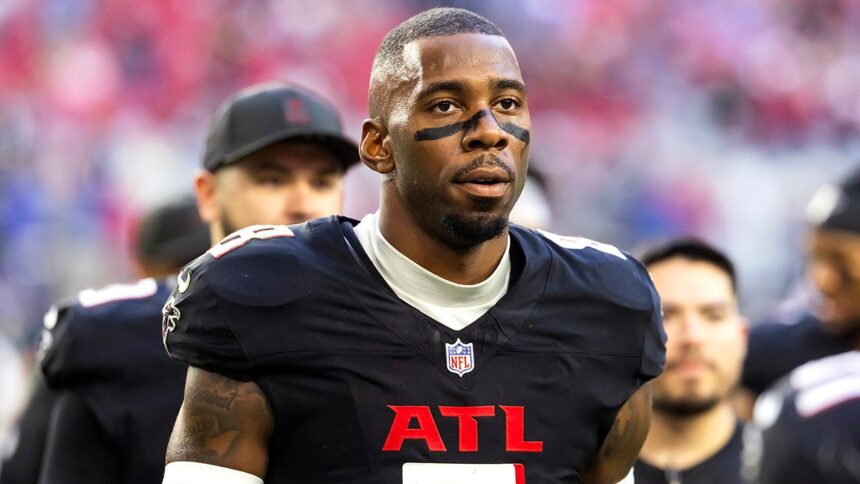
In the meticulously curated world of the NFL, where public personas are often polished to a shine, raw, unfiltered emotion cuts through the noise like a thunderclap. That’s exactly what happened when Atlanta Falcons star tight end Kyle Pitts, grieving the loss of a friend, dropped a sobering truth bomb on the league’s culture of performative solidarity. His target: the stark absence of former teammates at the celebration of life for the late Rondale Moore, whose tragic death last month has left the football community heartbroken and searching for answers.
A Celebration of Life, A Chorus of Silence
The facts are as heartbreaking as they are straightforward. Rondale Moore, the dynamic 25-year-old wide receiver who played for the Arizona Cardinals and Atlanta Falcons, was found dead in his Indiana home on February 21 from a suspected self-inflicted gunshot wound. The news sent shockwaves through the league, prompting a flood of social media tributes from players, coaches, and fans. The public mourning was immediate and widespread.
Yet, when it came time for the most intimate and final act of remembrance—Moore’s celebration of life service this past Friday—the crowd told a different story. According to Kyle Pitts, who was in attendance, only a “handful” of Moore’s former NFL teammates showed up to pay their respects. The disconnect between the online eulogies and the physical presence in a time of profound grief was not lost on Pitts. He took to social media with a searing indictment, calling out the “fake emotion” displayed by those who posted tributes but failed to appear.
This story discusses suicide. If you or someone you know is having thoughts of suicide, please contact the Suicide & Crisis Lifeline at 988 or 1-800-273-TALK (8255).
Pitts’ Call-Out: A Mirror Held Up to NFL Culture
Kyle Pitts’ comments are more than just a venting of personal frustration; they are a piercing critique of a pervasive sports culture. In an era where a tweeted prayer hands emoji or a brief “RIP” story can be mistaken for genuine condolence, Pitts highlighted the cavernous gap between digital gesture and tangible support.
“It’s easy to be a teammate in the highlight reels and the locker room celebrations,” said Dr. Alana Perkins, a sports psychologist who has worked with professional athletes. “The true test of those bonds often comes in the darkest moments, away from the cameras. What Pitts is pointing to is the uncomfortable reality that in a transient, high-pressure business like the NFL, relationships can be situational. His anger is rooted in a demand for authenticity—that the emotion shown publicly should match private action.”
Pitts’ blast forces us to examine the nature of NFL camaraderie. Consider the realities of the league:
- High Player Turnover: Rosters change constantly; a “teammate” one season can be a rival the next.
- Geographic Dispersion: The offseason scatters players across the country and globe.
- Performance Pressure: The all-consuming focus on football can sometimes overshadow personal relationship building.
While these factors explain logistical challenges, they don’t excuse emotional abandonment, which is how Pitts clearly perceived the situation. His statement challenges the very definition of what it means to be part of a “football family.”
The Broader Crisis: Mental Health and the NFL’s Evolving Role
This incident cannot be separated from the NFL’s ongoing, and often fraught, relationship with player mental health. Rondale Moore’s suspected suicide is a devastating reminder of the silent battles athletes face. The league has made strides in recent years, promoting resources and destigmatizing the conversation, but Pitts’ outrage suggests a gap between institutional policy and grassroots, peer-to-peer culture.
“Having a 988 number on a locker room wall is essential, but it’s not sufficient,” notes former NFL executive Michael Lombardi. “The culture must be one where teammates feel a deep, accountable connection to one another beyond the field. Showing up at a funeral is the ultimate, non-negotiable testament to that connection. Pitts is essentially asking, ‘If we don’t show up for each other in death, what does that say about our support in life?'”
The outpouring of support after Moore’s death was real and likely well-intentioned. But Pitts’ comments reveal a hierarchy of grief: the public, shareable kind versus the private, difficult, and inconvenient kind. For true mental wellness to take root, the latter must be valued just as highly.
Predictions: Will This Spark a Cultural Shift?
Kyle Pitts has ignited a conversation that is uncomfortable but necessary. The predictions for its impact are varied:
- Short-Term Awkwardness: Players who posted but did not attend may feel compelled to address Pitts’ comments privately or re-evaluate their own actions. The public narrative will focus on the specific individuals involved for a news cycle.
- Long-Term Cultural Examination: More importantly, Pitts has given voice to an unspoken expectation. This could lead to stronger, more intentional bonds within teams. Veteran leaders may emphasize the importance of “showing up” in all facets of life, making it part of a team’s unwritten code.
- Agent and Team Response: Player agents and team support staff may become more proactive in coordinating and facilitating attendance at such events for former teammates, understanding that their client’s legacy is partly defined by these human moments.
- Mental Health Advocacy: Pitts, by speaking so bluntly, may become an unexpected but powerful advocate for authentic connection as a cornerstone of mental health support, pushing the league’s conversation beyond hotlines and into the realm of actionable brotherhood.
The prediction here is not of widespread shame, but of a potential recalibration. In a league that markets itself on loyalty and toughness, Pitts has redefined toughness as the courage to be present in pain—both your own and others’.
Conclusion: The Unforgettable Measure of Authenticity
The tragic loss of Rondale Moore will forever be a point of sorrow for the NFL community. But in its wake, Kyle Pitts has provided a jarring, crucial lesson in authenticity. Grief is not a content opportunity; it is a sacred, demanding human experience. His condemnation of “fake emotion” is a call to arms for a more genuine, accountable, and present form of camaraderie in professional sports.
Ultimately, this moment transcends football. It asks a universal question: how do we show up for each other when it truly matters, when there are no cameras, no contracts, and no glory—only loss? The measure of a player, and indeed of any professional community, may not be found in the touchdowns or the trophies, but in the quiet, solemn rows of a celebration of life. Pitts, in his raw and righteous anger, has reminded the NFL—and all of us—that real emotion isn’t posted. It’s present.
Source: Based on news from Fox Sports.