Piastri’s Pain: A Recon Lap Nightmare Dashes Australian Hopes at Home Grand Prix
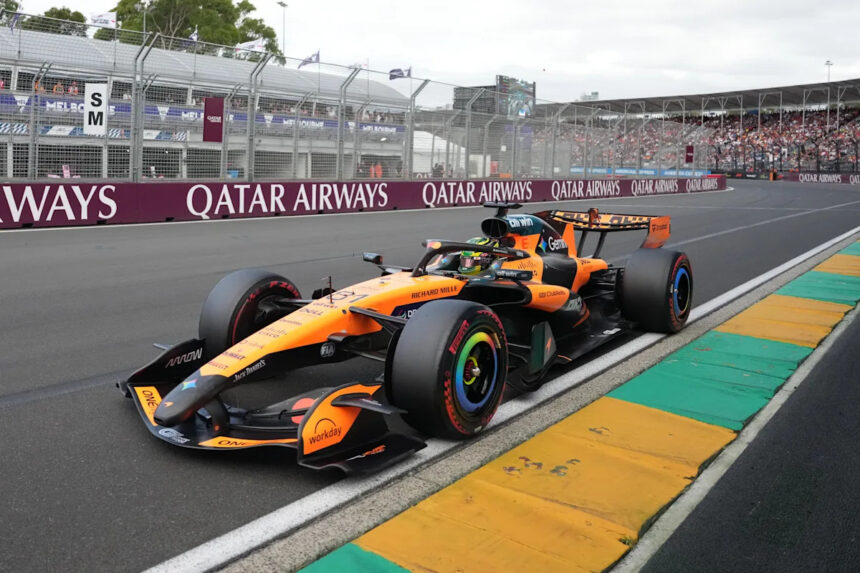
The deafening roar of the Albert Park crowd was still an hour away, the pre-race tension still building, when the 2026 Formula 1 season took its first, shocking turn. In a moment of cruel, heart-stopping irony, Oscar Piastri’s Australian Grand Prix ended not with a chequered flag, but with the sickening crunch of carbon fibre against concrete wall—before the race had even formally begun. The local hero, carrying the weight of a nation’s expectation on his shoulders, was out, victim of a freak accident on a routine reconnaissance lap that left his McLaren destroyed and the paddock in stunned silence.
A Routine Lap Turns Catastrophic: The Moment It Unraveled
Reconnaissance laps are the calm before the storm. Drivers leave the pit lane not to duel, but to perform a final systems check, warm their tires and brakes, and acquaint themselves once more with the track conditions. It’s a procedural, almost meditative part of the Grand Prix ritual, conducted at a fraction of racing speed. For Oscar Piastri, that calm shattered in the blink of an eye at Turn 4.
According to the initial team radio and McLaren’s swift analysis, the incident was a brutal combination of minor factors with major consequences. As Piastri navigated the corner, his right-side tires rode over the outside curb—a common practice in F1 used to straighten a line and gain milliseconds. Simultaneously, he executed a gear shift. In that precise millisecond, the car’s rear snapped loose with violent unpredictability. The result was instantaneous and irreversible: a loss of control that sent the McLaren slewing across the track and into the unforgiving barrier on the driver’s left. The impact was heavy, focusing on the front-left corner and suspension, rendering the car a immobile wreck.
The Ripple Effect: Team Anguish and Fan Devastation
The immediate aftermath was a scramble of disappointment and logistical despair. The McLaren pit wall, moments earlier a hub of focused strategy discussion, fell into a hollow quiet. The reality was stark and non-negotiable: with less than 60 minutes until lights out, the damage was far too extensive for any repair. The call was made—Piastri would not start. The key repercussions were immediate:
- Strategic Upheaval: McLaren’s entire race strategy, built around having two cars to play tactical games with rivals, evaporated. The burden now fell solely on reigning world champion Lando Norris.
- Financial and Championship Cost: A total loss of points potential from a car starting P5, coupled with the immense cost of rebuilding a brand-new 2026 chassis, struck a dual blow to the team’s title defense.
- Emotional Letdown: For the thousands of fans clad in Papaya orange and Australian flags, the anticipation of cheering their homegrown star was replaced by a collective groan of disbelief. The “Oscar” chants were preemptively silenced.
This incident brutally highlights the razor-thin margins in Formula 1. As one team principal noted off the record, “There are no unimportant moments in this sport. From the moment the car leaves the garage, it’s on the edge.”
Expert Analysis: Freak Accident or a Warning Sign?
To classify Piastri’s crash as a simple driver error would be a profound misreading. This was a complex, unfortunate convergence of variables. We spoke to a former F1 race engineer (who wished to remain anonymous) for technical insight. “The 2026 regulations, with their new aerodynamic profiles and simplified power units, are still revealing their character,” they explained. “A curb strike during a gear shift can momentarily upset the rear differential and traction control mappings in a way the driver isn’t expecting. Combine that with a possible track evolution—less rubber laid down on a recon lap—and you have a perfect storm of low-grip instability.”
This analysis points to a critical theme for the new season: car development and driver adaptation. The 2026 cars, while faster in a straight line, are rumored to be more sensitive in certain low-speed mechanical grip scenarios. Piastri, a driver renowned for his sublime car control and technical feedback, fell victim to a trait of his machine that may not have been fully understood. It serves as a stark data point for every team on the grid, a warning that these new generation cars demand respect in all phases of a race weekend.
Looking Ahead: Piastri’s Resilience and McLaren’s Response
For Oscar Piastri, the mental test is now as significant as the physical one. Coming off a career-best third in the 2025 championship, and with the momentum of a dominant McLaren team behind him, this is a monumental setback. However, his temperament has always been his strength. “He will be absolutely furious, but he won’t show it,” observed a veteran F1 journalist. “He’ll internalize it, analyze the data with his engineers relentlessly, and use it as fuel. The danger for rivals is a hyper-focused Piastri at the next round.”
Predictions for the short-term future now carry a new dimension:
- McLaren’s Recovery: The team’s ability to quickly build and homologate a new chassis will be tested. Their operational strength, however, is second-to-none, making a full recovery by China or Japan likely.
- Title Implications: While a single DNF does not define a season, losing a near-certain points haul from one car in a tight constructor battle can be decisive in November. The pressure on Lando Norris to deliver flawless results immediately has multiplied.
- Piastri’s Comeback: History shows that drivers often produce their most driven performances after public adversity. Expect Piastri to return with a quiet, simmering intensity, determined to reclaim the narrative.
Conclusion: The Unforgiving Nature of Formula 1
The 2026 Australian Grand Prix will go on, but it will be forever marked by the crash that happened before the start. Oscar Piastri’s recon lap nightmare is a brutal reminder of the sport’s core truth: in Formula 1, the edge is everywhere. It exists not just in Qualifying Q3 or a last-lap overtake, but in the quiet moments of preparation, in the interaction between curb and gearbox, in a split-second where fortune turns its back.
For McLaren, it is a call to arms and a deep dive into data. For the fans, it is a story of what might have been. And for Oscar Piastri, it becomes the defining challenge of his early career—a moment of profound frustration that must be forged into a foundation for an even stronger comeback. The season’s story has begun not with a roar, but with a gasp, proving once again that in the high-stakes theater of F1, drama is never confined to the race itself.
Source: Based on news from Yahoo Sports.