India’s T20 World Cup Triumph: A Dynasty Cemented, But Can Anyone Close the Gap?
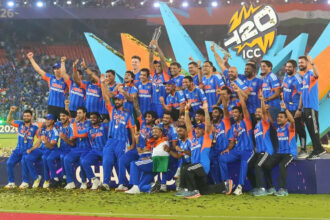
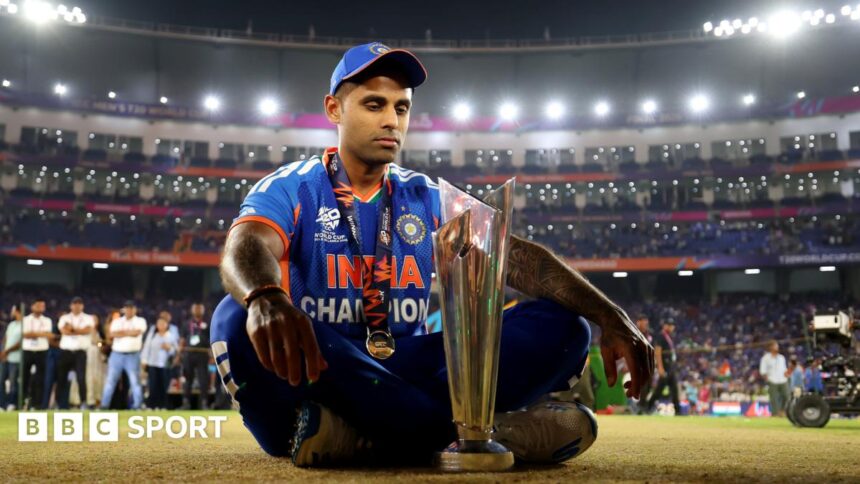
The Kensington Oval pitch was a tapestry of Indian blue. Fireworks shredded the Caribbean night sky, not in celebration of a host nation, but in coronation of a cricketing colossus. As Virat Kohli, the prince who became a king again, and captain Rohit Sharma, the architect of this modern juggernaut, embraced with tears and trophies, a singular, deafening truth echoed across the globe: India are the undisputed kings of world cricket. Their clinical dismantling of a formidable New Zealand side wasn’t just a victory; it was a statement of supremacy so profound it begs the existential question for every other nation: Do the rest have any hope of catching them?
The Ghosts of Bridgetown: From Heartbreak to Hegemony
Two years ago, at the MCG, India faltered. The weight of a billion dreams, the roar of 100,000 voices, and the shadow of a decade-long ICC trophy drought proved too heavy. They flinched. That haunting memory of the 2023 World Cup final loss was the forge upon which this 2024 T20 title was tempered. This time, in Barbados, the narrative was rewritten not with reckless abandon, but with cold, calculated dominance. Rohit Sharma’s fearless leadership set the tone, his blistering innings a masterclass in assertive captaincy. Kohli, who struggled through the tournament, chose the final to play an innings of timeless, anchoring class. The bowlers, led by the peerless Jasprit Bumrah, operated with the precision of surgeons. This victory was a triumph of mentality over memory, proving this Indian team had evolved from brilliant contenders into relentless finishers.
The contrast with their previous final appearance is the clearest indicator of their growth:
- 2023 ODI Final (Loss): Tentative batting, tactical hesitation under pressure, visible burden of expectation.
- 2024 T20 Final (Win): Aggressive powerplay, fearless shot-making, razor-sharp bowling plans executed flawlessly.
They didn’t just win a trophy; they conquered their own psychological frontier. The team that once seemed burdened by its nation’s hope now draws an unstoppable power from it.
The Blueprint of Dominance: Anatomy of a Cricket Superpower
India’s victory is no accident. It is the inevitable output of a cricketing ecosystem operating at a level of depth and sophistication unmatched in the sport’s history. To understand the scale of the challenge facing other nations, one must dissect the pillars of Indian cricket’s empire.
The IPL Engine: The Indian Premier League is more than a tournament; it is a yearly finishing school and talent incubator without parallel. Young Indian players are battle-hardened in high-pressure, high-scoring environments against the world’s best. A player like Arshdeep Singh learns death bowling under MS Dhoni’s tutelage at Chennai; a Shivam Dube evolves into a six-hitting monster. The IPL doesn’t just find talent; it forges complete, pressure-proof cricketers.
Depth Beyond Comprehension: India’s second XI could challenge for World Cup semi-finals. The fact that they won this title without a major contribution from superstar Suryakumar Yadav speaks volumes. When one champion stumbles, two more rise. This creates an internal competition so fierce that complacency is impossible.
Strategic Symphony: The leadership trio of Rohit Sharma, coach Rahul Dravid, and the influential figure of Virat Kohli has fused aggressive intent with technical discipline. They have moved beyond archaic templates, embracing flexibility—using Axar Patel as a floating pinch-hitter in the final was a stroke of genius. Their game is now a multi-dimensional puzzle for opponents.
The Chasing Pack: Who Can Bridge the Chasm?
So, is the era of competitive world cricket over? Not quite. But the path for challengers is narrow and fraught. Here’s the state of the pursuit:
England & Australia: The Systemic Challengers
These are the only nations with domestic structures and athletic cultures capable of mounting a consistent challenge. England’s white-ball revolution, though currently in a transitional phase, has a deep blueprint. Australia’s relentless competitive DNA always makes them dangerous. They have the resources and history to innovate and adapt, but they lack India’s endless conveyor belt of talent.
New Zealand, South Africa, Pakistan: The Occasional Threat
These teams possess the individual brilliance and on their day, can beat anyone. New Zealand’s consistency is remarkable, South Africa’s talent is undeniable, and Pakistan’s mercurial nature is always a threat. However, they often lack the sustained depth or mental fortitude in consecutive high-stakes games to navigate a full tournament against India’s might. Their peaks are high, but their troughs are lower.
The Others: The Distance Grows
For the West Indies, Sri Lanka, and others, the gap is becoming a chasm. Financial disparities, board mismanagement, and player drain mean they increasingly rely on individual moments of magic rather than systemic strength. Competing in bilateral series is one thing; winning four consecutive high-pressure games against India’s machinery in a World Cup is another.
The Future: An Indian Era of Unprecedented Scale
The prediction is not that India will win every tournament. The unpredictability of short-format cricket and the knockout nature of events guarantee shocks. The prediction is that India will start every single ICC tournament as the overwhelming favorite for the foreseeable future. Their dominance is built on foundations too solid to crumble quickly.
The next generation is already knocking: Yashasvi Jaiswal, Rinku Singh, and a legion of fast bowlers are waiting. The financial might of the BCCI ensures infrastructure and investment will only grow. The IPL’s global gravitational pull will continue to skew the sport’s economy and talent development towards India.
For other nations, hope lies in radical thinking. It lies in privatizing leagues, investing in data science and athletic development at the grassroots, and finding a unique, disruptive style of play—as England did in 2015. They must find a way to create their own sustainable systems, because trying to out-India India is a futile pursuit.
The final image from Barbados was of Rohit Sharma and Virat Kohli, two titans of their age, announcing their T20I retirement on the ultimate high. It was a passing of the torch in the most glorious setting imaginable. But unlike for other nations, the departure of legends does not signal a decline for India. It simply opens the door for the next wave of prodigies from the world’s most powerful cricket machine. The rest of the world isn’t just playing catch-up; they are in a race against a system that is accelerating faster than anyone can follow. The dynasty is here. The question is no longer if they can be caught, but how long the rest can stay in sight.
Source: Based on news from BBC Sport.