F1’s New Era: A Thrilling Sport or a High-Speed Computer Game?
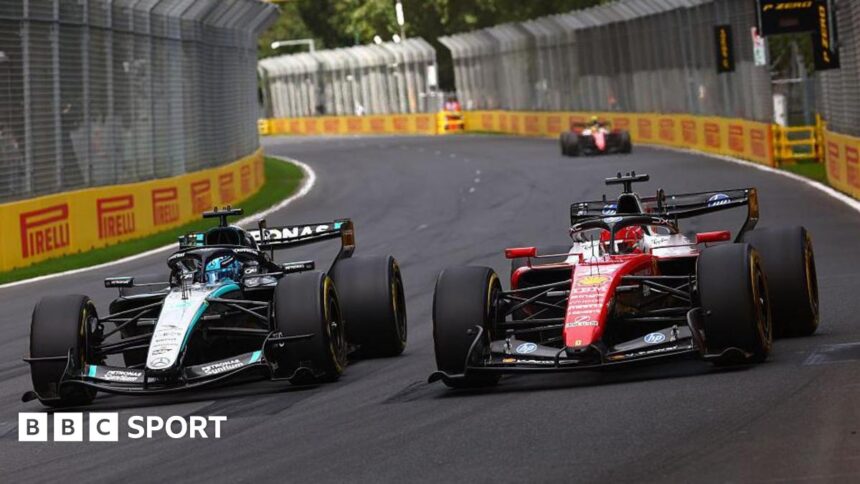
The checkered flag fell on the Australian Grand Prix, but the debate was just getting the green light. George Russell stood atop the podium, a maiden win for Mercedes in Formula 1’s revolutionary new era secured after a scintillating, knife-edge duel with Ferrari’s Charles Leclerc. Yet, the taste of victory was curiously complex. The opening race of the season, anticipated with a potent mix of excitement and trepidation, had delivered a spectacle that left even its winner questioning the very fabric of the sport. Was this the pinnacle of motorsport, or had it morphed into something else entirely—a hyper-realistic, billion-dollar computer game played out on the asphalt of Albert Park?
The Melbourne Laboratory: Anxiety Meets Adrenaline
Arrival in Melbourne was fraught with nervous energy. After years of development, F1’s new technical regulations—centered on ground-effect aerodynamics—and a radical new power unit formula were finally facing their first true test. The paddock buzzed not just with competitive tension, but with fundamental uncertainty. Drivers and engineers were navigating a complete reset, moving from known quantities into uncharted territory.
The core of the anxiety stemmed from the revolutionary power units. The shift to a 50-50 split between internal combustion and electrical power was not just an engineering challenge; it demanded a new driving psychology. Key concerns included:
- Wildly Different Launch Speeds: The potential for a chaotic, dangerous start as cars deployed their electrical energy reserves at different rates.
- Massive Speed Differentials: The fear of one car barreling down a straight at full electrical deployment while another, in recovery mode, became a sitting duck.
- Unpredictable Racing Lines: The new aerodynamics, sensitive to following another car, promised closer racing but required drivers to relearn overtaking.
As the lights went out, these fears didn’t vanish; they simply became the new variables in a high-stakes equation.
The Russell-Leclerc Duel: Sport or Strategy Simulation?
What unfolded in the opening laps was both a dream and a dilemma. Russell and Leclerc swapped the lead multiple times in the first ten laps, their battle a mesmerizing display of skill and aggression. From the outside, it was classic F1: wheel-to-wheel combat, daring late-braking moves, and strategic positioning. But inside the cockpit, the battle was being fought on two parallel tracks: the physical circuit and a digital dashboard.
Each pass and counter-pass was a calculated risk governed by energy management. Drivers were no longer just battling an opponent; they were battling a battery state-of-charge graphic. “You’re constantly managing, constantly looking at your dash,” Russell noted post-race. “You have to decide: do I deploy energy now to defend, or harvest to attack later? It’s a continuous chess game.” This layer of strategy added profound complexity, but it also inserted a buffer between raw instinct and racing action. The visceral, foot-to-the-floor aggression of old was tempered by a necessary, constant cognitive load.
This duality is what fuels the “computer game” comparison. Modern F1 drivers operate a system of intricate macros—preset modes for deployment, recovery, and overtake—activated at precise moments. The skill is immense, but it is as much about systems management and strategic resource allocation as it is about pure car control. The Leclerc-Russell duel was a masterpiece, but a masterpiece of a new, hybrid art form.
The Drivers’ Verdict: A Symphony of Mixed Feelings
The podium reactions were telling. Russell’s joy was genuine but laced with introspection. “It’s a different kind of satisfaction,” he admitted. Leclerc, the valiant runner-up, echoed the sentiment, praising the closeness of the racing but acknowledging the mental toll. Even veterans like Lewis Hamilton, who struggled further back, spoke of the season as a “journey of discovery” rather than a pure sporting contest.
The consensus? The racing is undoubtedly closer and more frequent. The dreaded “dirty air” that prevented following has been reduced. Yet, a significant portion of the driver’s focus has been redirected inward. The primary opponent is no longer just the rival in the red car; it is the optimization of a complex machine’s finite resources. This creates a fascinating, cerebral challenge that rewards intellect and foresight, but it arguably distances the driver from the raw, mechanical connection that defined generations past.
Has it made them less like athletes and more like elite e-sports competitors? That’s an oversimplification. The physical demands remain brutal. But the definition of their expertise has undeniably expanded. They are now hybrid athlete-engineer-strategists, a evolution that mirrors the technology they command.
The Road Ahead: Evolution or Identity Crisis?
So, where does F1 go from its revelatory, confusing opening act? The 2023 season is not just a championship battle; it is a live beta test for the sport’s future identity. Several key predictions and questions will define the narrative:
- The Learning Curve Will Steepen: Teams and drivers who adapt fastest to the strategic depth of energy management will pull ahead. Races may be won in simulation labs as much as on track.
- Fan Engagement Dichotomy: Purists may long for a bygone era of simplicity, while a new generation of fans might be drawn to the high-tech, data-rich spectacle. The broadcast’s ability to visualize the “invisible” energy battle will be crucial.
- The Danger Paradox: The feared speed differentials did cause tense moments in Melbourne. The FIA must vigilantly monitor safety as this unpredictable racing style develops.
- Regulatory Tweaks are Inevitable: If the energy management aspect is deemed too dominant, rules may evolve to promote a more aggressive, energy-liberated driving style.
The ultimate question is one of balance. Can F1 retain its soul—the essence of man and machine at the limit—while fully embracing its destiny as a technological vanguard?
Conclusion: The Game is Real, But the Rules Have Changed
The Australian Grand Prix provided a clear, compelling, and contradictory answer. Yes, this is real racing. The courage, the precision, and the competitive fire displayed by Russell and Leclerc were undeniably authentic. The consequences are material, the risks are life-altering, and the glory is eternal. This is no simulation.
However, the framework within which this racing occurs has undergone a seismic shift. The new era has introduced a metagame of energy strategy that overlays the traditional contest. It has made Formula 1 more complex, more strategic, and in many ways more impressive as a feat of coordinated human and technological excellence.
Labeling it a “computer game” dismisses the profound human elements at play. But ignoring the radical new cognitive and strategic demands would be equally naive. Formula 1 has not become a computer game; it has become a sport where the driver must master the game within the machine. The heart of racing still beats, but its rhythm is now dictated by a powerful, electric pulse. The season has begun, and we are all learning the new rules together.
Source: Based on news from BBC Sport.