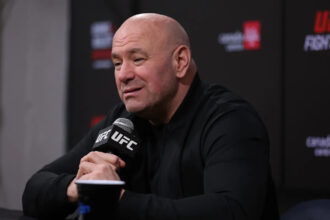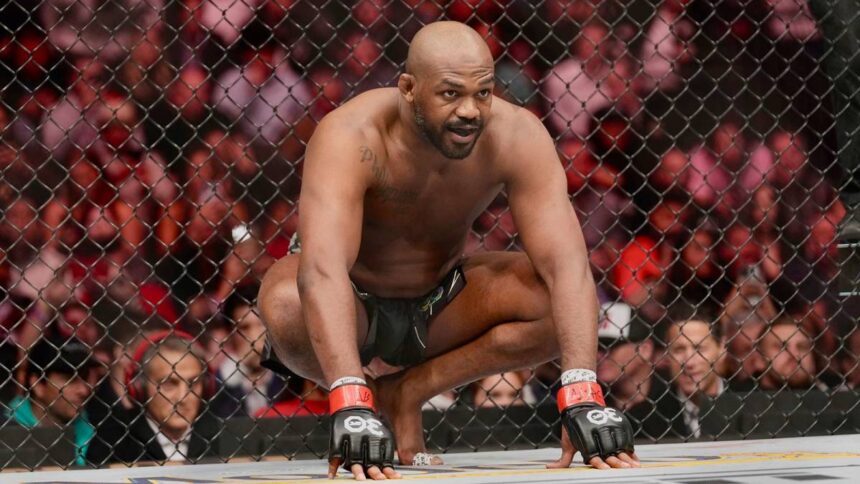
Dana White Shuts Door on Jon Jones for White House UFC Event: “Never Remotely Considered”
The UFC’s historic June 14 event on the White House lawn, a centerpiece of the America 250 Freedom celebration, promises to be a spectacle unlike any other. Yet, the official fight card announcement this past Saturday has ignited a firestorm of debate, not just for the bouts confirmed, but for the one superstar whose absence speaks volumes. In unequivocal terms, UFC CEO Dana White has declared that former two-division champion Jon Jones was never a candidate for the landmark event, citing a combination of physical decline and a fractured professional history.
The Illusion of Negotiations and a Swift Retirement Reversal
The saga began last July when President Donald Trump revealed plans for the White House event. Just days prior, Jon Jones, widely regarded as the greatest mixed martial artist of all time, had announced his retirement. The timing seemed to close the book on his legendary career. However, the prospect of headlining at 1600 Pennsylvania Avenue proved irresistible. Jones quickly reversed course, exiting retirement and re-entering the US Anti-Doping Agency testing pool, publicly positioning himself for a spot on the card.
For months, a narrative of potential negotiations swirled. Jones himself fueled the speculation, telling reporters he was in talks for the fight. This created a public expectation clash, setting the stage for White’s blunt clarification. “I’m not saying they weren’t talking to Jon Jones and that Jon Jones wasn’t interested in the fight,” White stated at the UFC 326 post-fight press conference. “And what was even crazier is Jon Jones came out and was like, ‘I’m in negotiations right now for the White House fight’ after I had already sent a text to his lawyer saying it’s never going to happen, ever.” This revelation paints a picture of misaligned communications, with Jones campaigning for a fight that, in White’s mind, was never on the table.
Dana White’s Unwavering Stance: A Multifaceted Rejection
White’s reasoning for excluding Jones is twofold and leaves little room for interpretation. First, he points to a history of incidents that make Jones, in his view, an unsuitable ambassador for such a politically charged, nationally symbolic event. While White didn’t enumerate specifics, Jones’ career has been marred by out-of-competition controversies, including legal issues and anti-doping policy violations. For an event meant to celebrate American freedom and strength, the UFC CEO clearly prioritized a different brand of representation.
Secondly, and perhaps more decisively, White pointed to the champion’s physical state. He referenced a video where Jones, wearing Meta glasses, discussed significant hip issues. “He retired because of his hips. He’s got arthritis. Apparently, he’s been, you know, doctors say he should have a hip replacement,” White explained. This assessment was compounded by footage of Jones in a flag football game, where he appeared to struggle with mobility. For a promoter responsible for fighter safety and event integrity, the evidence of Jones’ degeneration was a deal-breaker.
- Legacy Concerns: White likely wanted to avoid a scenario where a diminished Jones tarnishes his own legacy on a massive stage.
- Event Reliability: A fighter requiring major surgery poses a high risk for a last-minute cancellation, a nightmare for a logistically complex event.
- Competitive Integrity: The White House card features title fights; putting a compromised athlete in such a bout raises ethical questions.
Analysis: The End of an Era and a New UFC Chapter
This public dismissal marks a significant moment in UFC history. Jon Jones has long been the sport’s most dominant yet problematic figure. White’s comments suggest a definitive pivot. The UFC is moving forward with its new generation of stars—like the athletes featured on the White House card—and is unwilling to let the past, or a fading legend, dictate its most important showcases.
From a business perspective, White’s decision is defensible. The White House event is a unique crossover opportunity to attract mainstream and political attention. The card needs to be pristine: competitive, compelling, and free from the shadow of potential controversy or injury withdrawal. Jones, in his current state, represents all three risks. Furthermore, by shutting down the Jones narrative so forcefully, White regains control of the event’s storyline, redirecting focus to the confirmed matchups.
The underlying message is clear: the UFC’ future is now. While Jones’ achievements are immortal, his active role as the centerpiece of the promotion’s biggest events appears to be over. This is a conscious choice to protect the event’s symbolism, the athletes currently competing, and the company’s reputation as it steps onto one of the world’s most visible platforms.
What’s Next for Jones and the UFC’s Political Foray?
For Jon Jones, the path forward is murky. His public campaigning for the White House fight has ended in a very public rejection. The focus now shifts to his health. If a hip replacement is indeed necessary, his fighting future is in serious jeopardy, potentially making his retirement from late 2023 a permanent reality. The greatest “what if” of his career may now be, “What if he had stayed healthy enough to earn that White House call?”
As for the UFC, the June 14 event proceeds without its most famous fighter. The success of the card will now be judged on its own merits. Can it deliver the historic moments worthy of the venue without a name like Jones? This is a gamble, but one White is confident in taking. The event itself will be a litmus test for the UFC’s drawing power in the post-Jones era and its ability to craft narratives that resonate beyond the traditional fight fan base.
Prediction: The White House event will be declared a success based on spectacle and novelty, justifying White’s hardline roster decisions. Jon Jones will undergo major surgery and, after a long rehabilitation, may attempt a comeback, but it will be for a standard UFC pay-per-view, not a national monument. The relationship between fighter and promoter may be permanently fractured.
Conclusion: A Historic Event Defined by a Historic Omission
The UFC’s White House event will forever be linked to the absence of Jon Jones. Dana White’s unequivocal statements have transformed this from a rumor into a defining storyline. It was a decision rooted in practical concerns about a fighter’s health and philosophical concerns about a fighter’s fit for a national celebration. In choosing to sideline its greatest talent, the UFC has made a powerful statement about its present and its future. It is betting that the institution of the UFC, and its current roster, is now bigger than any single individual—even the once-untouchable Jon Jones. The lawn of the White House will host a new chapter of UFC history, one written intentionally without the sport’s most complex legend.
Source: Based on news from Yahoo Sports.