Australia Urged to Protect Iranian Team After Asian Cup Exit: A Footballing Crisis
The beautiful game has collided with a stark geopolitical reality on the sun-drenched Gold Coast. As the dust settles on the 2022 AFC Women’s Asian Cup, a chilling shadow looms over the departure of one eliminated squad. Football’s governing bodies and Australian authorities are facing urgent, impassioned calls to ensure the safety of Iran’s women’s national team as they prepare to fly home. Their sporting journey has ended, but a far more perilous chapter may be beginning, triggered not by a missed penalty, but by a profound act of silent protest that has reverberated from Brisbane to Tehran.
The Silent Protest That Echoed Around the World
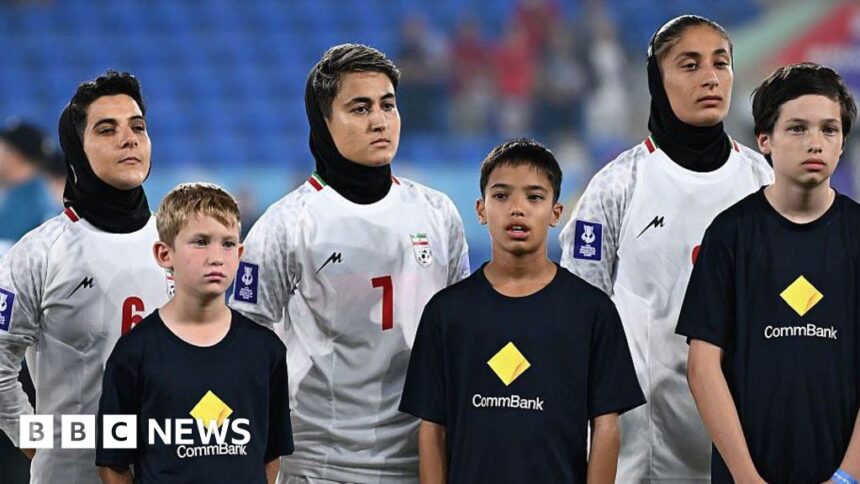
The crisis began not with a loss on the pitch, but with a powerful statement off it. Ahead of their opening match against South Korea last week, the Iranian Lionesses, in a move that captured global attention, declined to sing the national anthem. This act of silent solidarity with protests back in Iran was a breathtaking display of courage, echoing the bravery of their male counterparts at the 2022 FIFA World Cup. In the context of sport, it was a poignant moment. In the context of the Iranian regime’s crackdown on dissent, it was a potentially perilous act of defiance.
The reaction from hardliners in Iran was swift and venomous. Conservative media outlets labeled the players as tools of foreign powers. One prominent commentator went so far as to brand them “wartime traitors,” a dangerously loaded term that carries the threat of severe reprisal. This rhetoric transformed a sporting contingent into political targets, raising immediate and grave concerns for their welfare upon return. The football pitch had become a platform for human rights, and the players, perhaps knowingly, had stepped into a firestorm.
“Save Our Girls”: The Emotional Gold Coast Send-Off
The tangible fear for the players’ safety was palpable following their tournament elimination. On Sunday evening, as the team’s coach attempted to leave the Gold Coast stadium, hundreds of supporters surrounded the bus, their voices united in a desperate, chanting plea: “Save our girls.” This raw, emotional scene, filmed and shared globally, was no ordinary fan farewell. It was a public vigil, a direct appeal to the international community and Australian authorities to recognize the acute danger facing these athletes.
This public demonstration underscored a critical point: the threat is perceived as real and imminent by the diaspora and human rights observers. The chants were not just about football; they were an acknowledgment of the grim precedents set by the Iranian regime in dealing with dissenters, including athletes. The bus, momentarily trapped in a sea of concern, became a powerful symbol of the clash between sporting freedom and political oppression.
Key Immediate Concerns for the Players:
- Retribution and Punishment: Fear of interrogation, imprisonment, or bans from sport and public life.
- Safety of Families: Potential for pressure and intimidation to be applied to players’ relatives in Iran.
- Psychological Toll: The immense stress of returning to an uncertain and hostile environment.
- Career Termination: The likelihood of being ostracized from Iranian football permanently.
The Calls for Protection: Diplomacy and Duty of Care
Leading the charge for action is Craig Foster, former Socceroos captain and now a renowned human rights advocate. His voice carries significant weight in both football and political circles. “We all have very reasonable and serious concerns for their safety,” Foster stated bluntly. He has explicitly called upon Football Australia, the Asian Football Confederation (AFC), and the Australian government to intervene. This isn’t just a moral plea; it’s a demand for the duty of care that sporting bodies owe to athletes competing in their events.
The argument hinges on a principle of responsibility. Australia, as host nation, and the AFC, as tournament organizer, invited these athletes into their jurisdiction. By competing, the Iranian players subjected themselves to the regulations and spirit of the competition, which includes an implicit promise of safety. Advocates argue this duty does not evaporate at the airport departure gate, especially when the perceived threat is a direct result of actions taken within the sporting arena itself. The question now is whether diplomatic channels, temporary asylum options, or direct assurances from Iranian authorities can be secured.
Expert Analysis: A Precedent at the Crossroads
This situation sits at a complex intersection of international sport, diplomacy, and human rights. Sports law experts point to the precarious balance FIFA and continental federations must strike. While sports organizations are traditionally reluctant to engage in overt political acts, the duty to protect players is enshrined in their own statutes regarding safety and integrity.
“This is a litmus test for the ‘football as a force for good’ doctrine,” notes one analyst who wished to remain anonymous due to the sensitivity of the topic. “The AFC and FIFA have consistently promoted the women’s game in Asia. To stand idly by while pioneers of that very game face potential persecution for a peaceful protest would be a catastrophic betrayal of that mission.” The precedent set here will resonate far beyond this single team. It will signal to athletes worldwide from oppressive regimes whether the global football community will be their shield or a silent bystander.
Furthermore, the Australian government faces its own test. It has a history of granting temporary visas on humanitarian grounds. The forceful public appeal by Foster and the visible distress of the diaspora community places political pressure on Canberra to explore every possible option, even as it navigates the delicate complexities of international relations.
Predictions and the Path Forward
Predicting the outcome is fraught with difficulty. Several scenarios are possible:
- Quiet Diplomacy & Assurances: The most likely immediate path is behind-the-scenes lobbying by football bodies to secure guarantees from Iranian football authorities for the players’ safe passage. However, the value of such assurances is questionable given the political climate.
- Public Pressure & Stalemate: Continued global media spotlight may delay their return or force the Iranian regime to publicly commit to no punishment, though internal reprisals could still occur.
- Asylum Requests: Should players individually or collectively seek asylum, a protracted legal and humanitarian situation would unfold, with Australia at the center.
- Ostracization & Silent Punishment: The grim ‘business as usual’ outcome: players return, disappear from public view, and are quietly removed from the sport without formal charges, a tactic used before.
The ultimate prediction is that this incident will leave permanent scars. It has already irrevocably politicized the Iranian women’s team. Whether they play again under the current flag is uncertain. Their brave silence has spoken volumes, exposing the brutal constraints under which they are forced to compete and live.
Conclusion: More Than a Game, a Fight for Freedom
The final whistle on Iran’s Asian Cup campaign has blown, but the most critical match is just beginning—a match for basic safety, dignity, and freedom. The Iranian Lionesses, through their silent protest, performed an act of extraordinary courage that transcended sport. They used their platform to tell a truth that powerful forces wish to suppress. The world of football, and the host nation Australia, now have a moral and ethical obligation to respond.
To ignore the chants of “save our girls” is to be complicit in what may follow. This is a moment that defines the soul of sport. It is a test of whether the bonds of global football fellowship are strong enough to protect those who embody its most progressive and courageous ideals. The eyes of the world are watching, not just the fate of a football team, but the measure of our collective humanity. The beautiful game must now prove it has a conscience.
Source: Based on news from BBC Sport.