Iraq’s World Cup Dream in Peril: Manager’s Desperate Plea to FIFA Amid Regional War
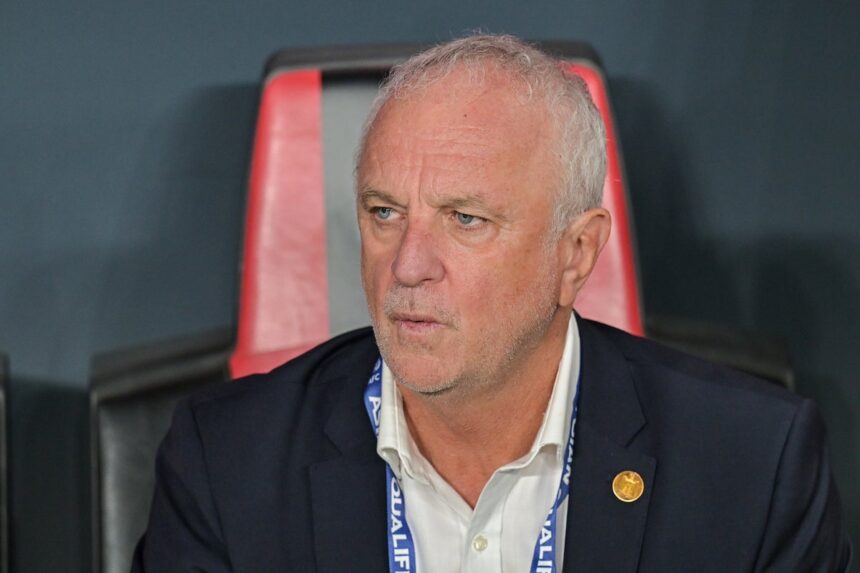
The final, feverish sprint to the 2026 FIFA World Cup has been plunged into geopolitical chaos, with Iraq’s national team caught in the crossfire. In an unprecedented move, head coach Graham Arnold has issued a desperate public plea to FIFA, begging football’s global governing body to postpone a critical qualifier as the escalating conflict between Iran and the United States paralyzes his squad’s preparations. With Iraqi airspace shut down and embassies closed, a dream shared by millions hangs in the balance, exposing the fragile intersection of elite sport and international conflict.
A Logistical Nightmare: Stranded Players, Closed Skies, and Vanishing Visas
The scenario facing Graham Arnold and the Iraqi Football Association is not merely a sporting inconvenience; it is an operational impossibility. The core of the issue stems from the closure of Iraqi airspace, a direct security response to the regional hostilities. This shutdown, currently in effect until at least April 1, has trapped the majority of Arnold’s squad inside the country. Unlike nations with squads primarily based in European leagues, Iraq’s roster is heavily reliant on domestic league players from the Iraqi Premier League. These athletes are now unable to travel to a central gathering point, let alone to the playoff venue in Monterrey, Mexico.
Compounding the crisis are two other critical failures:
- Visa Acquisition Collapse: With foreign embassies in Baghdad scaling down operations or closing entirely due to security concerns, players and staff have been unable to secure the necessary travel documents for Mexico. This bureaucratic deadlock is absolute; without visas, travel is illegal.
- A Coach in Exile: Graham Arnold himself is reportedly stranded in the United Arab Emirates, unable to enter Iraq to oversee final preparations or even to unite with whatever fraction of his team might escape. This leaves the squad leaderless at the most crucial hour.
“Please help us with this game because right now we are struggling to get our players out of the country of Iraq,” Arnold’s stark message to the Australian Associated Press underscores a profound helplessness. The scheduled date of March 31 is not just a tight deadline; it is a wall they cannot scale under current conditions.
FIFA’s Precedent and the Stark Reality of “Force Majeure”
FIFA’s statutes contain provisions for such extraordinary circumstances, often falling under the umbrella of force majeure—unforeseeable circumstances that prevent an obligation from being fulfilled. Historically, FIFA has postponed matches due to natural disasters, civil unrest, or, as seen during the COVID-19 pandemic, global health crises. The current situation in Iraq presents a clear-cut case. The argument from the Iraqi FA will be straightforward: the actions of sovereign states in a military conflict have directly and materially prevented them from fielding a team.
However, FIFA’s decision is fraught with complexity. The intercontinental playoff tournament is a meticulously scheduled global event involving multiple confederations. Delaying Iraq’s match against the winner of Suriname vs. Bolivia creates a domino effect, impacting the preparation of their opponent and the broader qualification calendar. FIFA must weigh sporting integrity—the principle that a match must be contested on fair terms—against the logistical inertia of its own mammoth event.
Expert analysis suggests FIFA will likely view the airspace closure and visa blockade as legitimate, insurmountable barriers. The alternative—forcing Iraq to forfeit or field a severely weakened, hastily assembled squad of diaspora players—would be a terrible optic for a world governing body that consistently promotes unity and fair play. The precedent favors Iraq, but the urgency of the decision is paramount. Every day of delay in announcing a postponement further erodes any chance of alternative planning.
Potential Outcomes and the Ripple Effect on World Cup Qualifying
The coming days will be critical for Iraq’s World Cup destiny. Several scenarios are now on the table, each with significant consequences.
- Most Likely: A FIFA-Mandated Postponement. FIFA will likely work with CONCACAF and the involved federations to find a new date, possibly in the early June international window. This would be the most equitable solution, allowing time for airspace to reopen, visas to be processed, and a proper preparation camp.
- High-Risk: A Last-Minute Exodus. If airspace reopens on April 1 as currently scheduled, a frantic and disjointed travel scramble would ensue. Players would arrive in Mexico with severe jet lag and zero collective training. This scenario almost guarantees a subpar performance and could be deemed unsafe from a player welfare perspective.
- Worst-Case: Forfeit or Disqualification. Should FIFA take an unexpectedly hardline stance, Iraq could be forced to withdraw, handing their opponent a walkover to the next round. This would trigger outrage in Iraq and across the football world, viewed as punishing a team for circumstances far beyond its control.
The ripple effect on World Cup qualifying is immediate. The opponent, waiting in sporting limbo, faces disrupted preparation. A postponement into June congests the calendar for all subsequent rounds, creating a backlog that could affect other teams in the Asian and global qualification pathways. The integrity of the entire process is now subtly tied to the stability of the Persian Gulf.
Conclusion: More Than a Game in a Time of Conflict
Graham Arnold’s plea to FIFA transcends a simple request for a schedule change. It is a stark reminder that the arena of international sport does not exist in a vacuum. The beautiful game, for all its power to unite, remains vulnerable to the world’s oldest and most destructive divisions. For the players in Iraq, this playoff represents a lifetime of dedication and a nation’s hope—a chance to bring joy to a homeland often synonymous with turmoil.
FIFA now holds more than a sporting decision in its hands. It has an opportunity to demonstrate that its principles of fairness and solidarity are not merely empty slogans. To grant Iraq a postponement is to acknowledge that some forces—like war and closed borders—are bigger than football. To deny it would be to prioritize commercial and logistical convenience over the fundamental right of a nation to compete on equal footing. The world is watching, not just to see who advances in World Cup qualifying, but to see if the global football family can navigate a real-world crisis with humanity and common sense. Iraq’s dream deserves its fair shot, no matter the storms raging outside the touchlines.
Source: Based on news from Yahoo Sports.