McLaren’s 2026 Conundrum: Championship Contenders or Perennial Podium Chasers?
The champagne had barely dried on George Russell’s race suit in Melbourne, but the question echoing through the Formula 1 paddock was already shifting from the victors to the hunters. Mercedes’ commanding one-two at the Australian Grand Prix, with rookie sensation Kimi Antonelli shadowing Russell home, emphatically declared their early mastery of F1’s revolutionary 2026 regulations. Yet, just a few garages down, a more nuanced story unfolded. McLaren, the plucky challengers of the previous era, secured a solid double-points finish. But in the stark light of a new dawn, their result prompted a familiar, aching question: Is this team built to compete for championships, or are they destined to be the brilliant “best of the rest”?
The Melbourne Litmus Test: Promise Amidst a Mercedes Masterclass
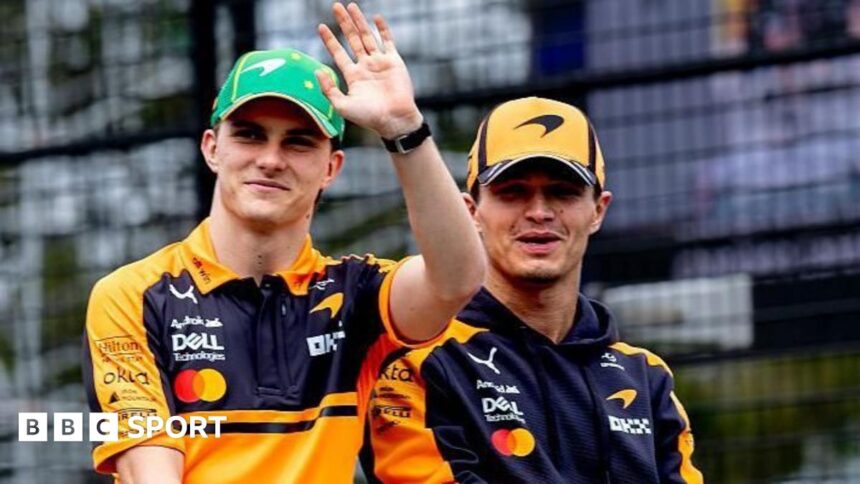
The Albert Park circuit served as the first true litmus test for the sport’s seismic technical shift. The new power units, with their near 50-50 split between internal combustion and electrical power, have rewritten the strategic playbook. Russell’s quip on the podium—“Maybe these new regulations aren’t so bad”—was the understatement of the weekend, coming from the cockpit of the clearly dominant W15. For McLaren, the race was a tale of controlled execution. Lando Norris and Oscar Piastri delivered clean, efficient drives, capitalizing on others’ misfortunes while lacking the sheer grunt to challenge the silver arrows or the raw race pace of Charles Leclerc’s Ferrari.
Their performance was characteristically McLaren: professional, fast, and ultimately, just shy of the ultimate prize. The MCL60 possesses clear strengths—its aerodynamic efficiency in medium-speed corners remains a hallmark—but early data suggests a deficit in electrical energy deployment and combustion engine driveability out of slow corners compared to Mercedes. This gap, however small, is the chasm between winning and settling for a “respectable” P4 and P6.
Anatomy of a Challenger: McLaren’s Strengths and Glaring Vulnerabilities
To understand McLaren’s potential trajectory, we must dissect their core competencies and admitted weaknesses under these new rules.
- Technical Leadership & Culture: The team, under Andrea Stella, is arguably the most cohesive and analytically sharp operation outside the top two. Their development curve is historically steep. They have a proven ability to dissect regulations and find performance where others stall.
- Driver Line-Up Par Excellence: In Norris and Piastri, they boast the most complete, hungry, and synergistic pairing on the grid. Both are capable of winning races and extracting 110% from the machinery. This is a monumental asset.
- Financial & Infrastructural Muscle: With full backing from the Bahraini sovereign wealth fund and the state-of-the-art McLaren Technology Centre coming online, they lack for no resource. The “indie” underdog tag no longer applies.
Yet, vulnerabilities persist:
- The Power Unit Question: While their Mercedes customer engine is strong, the 2026 rules amplify the PU’s role as a chassis-integrated system. The works teams (Mercedes, Ferrari, Red Bull Powertrains) have an inherent advantage in this harmonization. McLaren’s fate is partially tied to Mercedes’ genius.
- Regulatory Reaction vs. Proaction: There is a lingering sense that McLaren perfects an existing concept brilliantly but can sometimes miss the initial, radical innovation that defines an era’s early dominance (see Mercedes’ 2014 turbo-hybrid or their current 2026 package).
- The Psychological Hurdle: After years of knocking on the door, the final step from consistent podium threat to consistent winner is the hardest in sport. It requires a ruthless, title-or-bust mentality that permeates every department.
The 2026 Development War: Can McLaren Bridge the Gap?
The 2026 season is not a sprint; it’s a marathon where the development race will be more ferocious than ever. The new rules have a wider scope for innovation, and this is where McLaren’s true test lies. Mercedes has thrown down a staggering opening hand. Ferrari is clearly in the mix. Red Bull, despite a puzzlingly off-pace start, has the aerodynamic wizardry to rebound.
McLaren’s path to competing—not just being “best of the rest”—hinges on three critical factors:
1. Exploiting the Aero-Energy Nexus: The 2026 cars are as much about energy management as they are about downforce. McLaren’s aero department must work in lockstep with their power unit engineers (from Mercedes) to optimize the complex dance between battery deployment, regenerative braking, and mechanical grip. Any silo here will be punished.
2. Aggressive In-Season Evolution: They cannot afford to be reactive. The upgrade packages brought to Imola, Silverstone, and beyond must be bold and performance-transformative, not merely incremental. The team that best understands the new tire wear patterns under different energy modes will gain a strategic goldmine.
3. Operational Flawlessness: When the car is fast enough to win, every pit stop, strategy call, and software setting must be perfect. McLaren’s operational sharpness has improved dramatically, but title fights demand perfection under pressure, a realm where Mercedes and Red Bull have long resided.
Verdict: The Tightrope Between Podiums and Glory
So, can McLaren compete, or will they just be the best of the rest? The evidence points to a team standing on the precipice of greatness, but still needing to make that final, fearless leap.
Prediction for 2026: McLaren will win races this season. The combination of their driver talent, technical depth, and the inherent volatility of new regulations all but guarantees it. Norris or Piastri will likely stand atop the podium, perhaps even on pure pace. They will finish a clear third in the constructors’ championship, and may even harass Ferrari for second.
However, competing for the championship—sustaining a 24-race challenge against the might of a works Mercedes operation that has hit the ground running—seems a bridge too far for this inaugural season of the new era. The gap, while small on the timesheet, is significant in the holistic integration of a brand-new formula.
The true answer lies in 2027. This year is McLaren’s learning year at the sharp end of a new rulebook. If they can take those lessons, leverage their new infrastructure, and produce a dominant conceptual leap for next year’s car, then the championship conversation changes entirely. For now, they are the thrilling, brilliant vanguard of the chase pack—the team most likely to capitalize on any top-team stumble and the team that makes the podium celebrations honest. They are no longer just “best of the rest”; they are the primary threat waiting for an opening. But in Formula 1, you must often create your own openings, and that is McLaren’s final, and most daunting, challenge.
Source: Based on news from BBC Sport.