Beyond the Fairway: Gary Woodland’s Raw Revelation on PTSD and the Invisible Battle After Brain Surgery
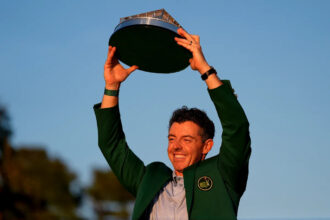
The image of Gary Woodland, muscles rippling under a Sunday polo, clutching the U.S. Open trophy at Pebble Beach in 2019, is one of pure athletic triumph. It embodies power, resilience, and the culmination of a lifetime of work. This week, a different, more vulnerable image of Woodland emerged—one that may prove to be his most courageous act yet. In an emotional interview, the PGA Tour veteran pulled back the curtain on a harrowing, invisible struggle, revealing a profound battle with post-traumatic stress disorder stemming from the brain surgery that saved his life.
The Diagnosis and the Daunting Road to Recovery
In September 2023, Gary Woodland underwent surgery to remove a lesion on his brain, a procedure that successfully put an end to the partial seizures he had been experiencing. Medically, the operation was a success. By January, the Kansas native was back competing on the PGA Tour, a timeline that itself seemed to signal a miraculous recovery. Fans, fellow players, and media celebrated his return, viewing his presence on the course as the final chapter of a scary health scare. However, as Woodland courageously disclosed, the physical healing was only the beginning.
“I can’t waste energy anymore hiding this,” Woodland told Golf Channel, his voice thick with emotion. He described the dissonance between public perception and private reality. “Every week I come out and everyone’s so excited and happy that I’m back… But inside, I feel like I’m dying, and I feel like I’m living a lie.” This stark admission highlights a critical, often overlooked aspect of major medical trauma: the psychological aftermath can be as debilitating as the physical ailment. For Woodland, the brain surgery was not just a medical event; it was a traumatic one, leaving deep psychological scars diagnosed as PTSD.
The Invisible Triggers: When the Course Becomes a Minefield
Woodland provided a chilling example of how PTSD manifests in his new reality, far from the comfort of a therapist’s office. He recounted an incident at a tournament in Napa, California, last fall. A tournament staffer, simply doing his job, walked near Woodland on the golf course. This innocuous action triggered an overwhelming physiological and psychological response.
His brain, rewired by trauma, perceived a potential threat. The hypervigilance, a core symptom of PTSD, kicked in. His heart raced. Anxiety spiked. The golf course—his office, his sanctuary, the stage for his greatest triumphs—suddenly felt unsafe. This incident powerfully illustrates that for Woodland, the challenge is no longer just reading a green or shaping a shot; it’s managing a nervous system that is constantly on high alert, reacting to everyday stimuli as if they are dire threats. The emotional toll of pretending to be “100%” while navigating this internal minefield became unsustainable.
Expert Analysis: The Trauma of Facing the “Abyss”
Sports psychologists and trauma experts note that Woodland’s experience is, tragically, not uncommon for patients who undergo major neurological procedures. “We often focus on the surgical success—the lesion is gone, the seizures have stopped—and we view that as the finish line,” explains Dr. Elena Rodriguez, a clinical psychologist specializing in sports trauma. “But for the patient, that’s when a new race begins. The body has been through an invasion. The mind has confronted its own mortality, the fragility of the very organ that makes you, *you*. That confrontation with the abyss can leave a profound imprint.”
Woodland’s case sheds light on several key aspects of trauma:
- The Pressure of the “Hero’s Return” Narrative: The sports world loves a comeback story. This external pressure to be the “miracle man” can force athletes to suppress their very real struggles, exacerbating feelings of isolation and fraudulence.
- Trauma is Not Exclusive to Combat: PTSD is often associated with military service, but it can result from any life-threatening event or serious injury, including major medical crises.
- The Courage in Vulnerability: In the hyper-masculine, stoic environment of professional sports, Woodland’s disclosure is a radical act of strength. It redefines toughness as the willingness to confront one’s deepest fears publicly.
Forecast for the Future: Impact on Woodland and the Golf World
Gary Woodland’s revelation is more than a personal confession; it is a watershed moment for professional golf and sports at large. His path forward will be multifaceted, and his journey will be closely watched.
For Woodland Personally: The immediate prediction is that this admission will be the first step toward a more authentic and sustainable recovery. By shedding the exhausting burden of secrecy, he can now channel energy into targeted, intensive therapy for his PTSD. His performance on the course may become more variable as he prioritizes mental health, but his quality of life—the ultimate metric—stands to improve dramatically. The goal shifts from winning tournaments to winning back a sense of safety and peace.
For the PGA Tour and Fellow Pros: Woodland has opened a door for conversation. Other players who may be silently grappling with the psychological aftermath of injury, illness, or other trauma may feel empowered to seek help. The Tour’s player support programs will likely see increased engagement, and a new level of peer understanding may develop in locker rooms. The culture is poised to become more empathetic.
For the Broader Sports Landscape: This story continues the vital normalization of mental health discussions in athletics. Following in the footsteps of stars like Simone Biles, Michael Phelps, and Naomi Osaka, Woodland adds a crucial layer: the discussion of post-traumatic stress following physical trauma. It sends a message to weekend warriors and fans alike that healing is not linear, and that the mind deserves the same care and attention as a torn ligament or a surgical incision.
A New Definition of Victory
Gary Woodland’s legacy will forever include that iconic U.S. Open victory. But his legacy may now be deepened and humanized by this period of profound struggle. The trophy at Pebble Beach was a testament to his physical talent and competitive grit. His decision to speak out about his PTSD is a testament to his character and courage.
His battle is no longer against the bunkers of Augusta or the winds of Shinnecock. It is against the invisible echoes of a scalpel, the memory of fear, and the anxiety of a triggered nervous system. By choosing to fight this battle in the light, Woodland has achieved a different kind of victory. He has replaced the isolating lie of being “100%” with the liberating, if painful, truth of his experience. In doing so, he has given a voice to countless others who suffer in silence after medical trauma, proving that true strength isn’t about hiding the struggle, but about having the fortitude to share it, and through sharing, to begin to heal.
Source: Based on news from Deadspin.
Image: CC licensed via www.wallpaperflare.com