Trump’s World Cup Welcome to Iran: A Political Pass or a Genuine Gesture?
In the high-stakes arena of international football, geopolitics and sport are perpetually entangled in a tense midfield battle. The latest development comes not from a training ground, but from the intersection of diplomacy and the beautiful game. FIFA President Gianni Infantino has revealed that former U.S. President Donald Trump, during a meeting on World Cup preparations, stated Iran is “welcome to compete” in the 2026 tournament hosted across North America. This statement, delivered amidst a devastating Middle East war, throws a spotlight on the immense political pressures facing the world’s most popular sporting event and raises critical questions about the future of sport in a fractured global landscape.
The Unprecedented Intersection of War, Sport, and Diplomacy
The context for Infantino’s Instagram revelation is as grim as it is complex. The ongoing Middle East conflict, triggered by US-Israeli strikes in late February, has cast a long shadow over global institutions, with sport being no exception. Iran’s participation in a tournament hosted in part by the United States was already a topic of intense speculation. Geopolitical tensions between Washington and Tehran have been a constant for decades, and the active war introduced a severe layer of uncertainty, involving visa logistics, security protocols, and the very principle of sporting exchange.
Infantino’s post is significant for several reasons. Firstly, it marks the first public acknowledgment by the FIFA chief of the ongoing war in relation to the World Cup. Secondly, it strategically cites a figure, Donald Trump, known for his “maximum pressure” campaign against Iran during his presidency. The message is clear: FIFA is working at the highest political levels to insulate the tournament. The subtext, however, is even more telling: the situation is so precarious that such public assurances are deemed necessary.
- Visa Guarantees: A primary practical hurdle for any Iranian delegation.
- Security Concerns: Unprecedented measures would be required for team and fan safety.
- Political Protests: The potential for demonstrations, both for and against Iran’s presence, is high.
Analyzing the “Trump Card”: Strategic Messaging from FIFA
Gianni Infantino is no stranger to navigating political minefields. His tenure has been defined by expanding the World Cup and leveraging football’s soft power. By invoking Trump’s statement, Infantino is executing a multifaceted communications strategy. He is applying political pressure on current U.S. administrations by publicly stating a precedent set by a former president and potential future one. He is also sending a message to Iran and the global football community: the door to participation is being held open, politically, from the highest level.
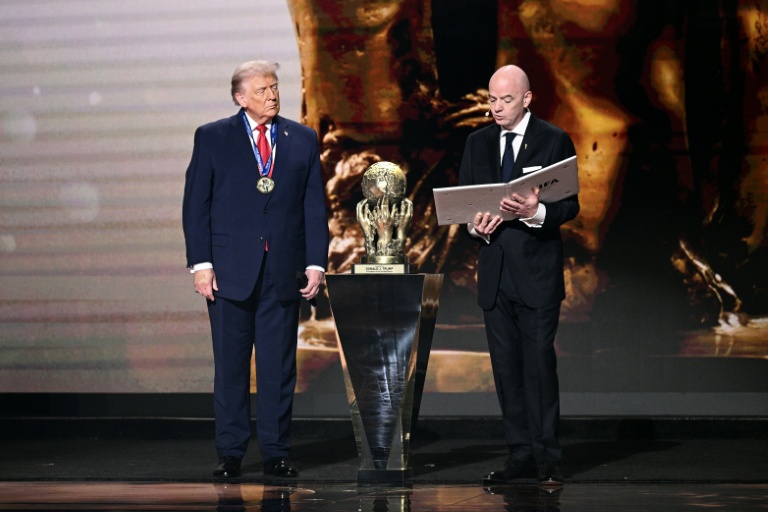
This move cannot be divorced from Infantino’s controversial decision in December to award Donald Trump the inaugural FIFA “Pelé Prize” for peace. That award was widely criticized as a politicized gesture. This latest revelation suggests a continuing, and perhaps deepening, alliance. Infantino appears to be using Trump’s enduring influence within certain U.S. political circles as a strategic asset to preemptively solve a looming crisis for 2026. The calculation seems to be that bipartisan U.S. support for Iranian participation is not guaranteed, and Trump’s endorsement could help secure it.
Sporting integrity is the stated goal, but the methods are intensely political. FIFA’s mantra of “football uniting the world” is being tested, and its president is responding not just with platitudes, but with calculated diplomatic maneuvers, leveraging relationships with controversial global figures to achieve his organization’s aims.
Expert Predictions: The Rocky Road to 2026
While the welcome mat has been rhetorically rolled out, the path for Team Melli (Iran’s national team) to actually step onto U.S. soil remains fraught with potential obstacles. The geopolitical climate between now and the summer of 2026 will be the ultimate determinant. Experts point to several likely scenarios and challenges:
Scenario 1: A Tense But Managed Participation This is FIFA’s ideal outcome. Iran qualifies, receives all necessary visas under strict security arrangements, and competes. Their matches become focal points of immense security and potential protest, but the tournament proceeds. This scenario hinges on a de-escalation of conflict or at least a stable, frozen conflict by 2026.
Scenario 2: Boycott or Withdrawal The possibility of Iran choosing not to participate remains real. Hardliners within the Iranian government could view playing in the U.S. as a tacit endorsement of their adversary, especially if the war persists. A political boycott, framed as a moral stance, could be leveraged for domestic propaganda purposes.
Scenario 3: Qualification as the Ultimate Arbiter An undeniable sporting truth is that Iran must first qualify. The Asian Football Confederation is highly competitive. Should Iran fail to secure its place on the pitch, this entire political discussion becomes moot. The irony is that sporting performance could solve a problem that diplomats cannot.
The Final Whistle: Can Football Truly Transcend Politics?
The revelation of Trump’s “welcome” to Iran is more than a diplomatic footnote. It is a stark preview of the 2026 World Cup, which promises to be the most politically complex in history. Hosted across three nations with intertwined and often contentious relationships with many qualifying countries, the tournament will be a constant balancing act.
Infantino’s actions reveal a core truth about modern mega-sport: its leaders must be as adept in backroom politics as they are in managing the game. The FIFA peace prize awarded to Trump, now followed by this public leveraging of his statement, indicates a conscious strategy to embed football within the highest echelons of global power brokerage, for better or worse.
In conclusion, while Donald Trump’s words offer a temporary, headline-grabbing assurance, they are merely the opening move in a three-year geopolitical chess match. The beautiful game’s promise of unity will be severely tested in 2026. The welcome for Iran, and perhaps for other nations in geopolitical crosshairs, will depend less on the words of a former president and more on the unpredictable tides of war, diplomacy, and the unwavering principle that a nation’s right to compete should be won on the pitch, not lost in the political arena. The world will be watching to see if football can finally score a decisive goal against division.
Source: Based on news from Yahoo Sports.