Formula 1 Hits the Brakes: Bahrain and Saudi Arabia Grands Prix Canceled Amid Regional Conflict
The high-octane world of Formula 1 has been forced into an unplanned pit stop. In a stark reminder that global sport cannot outrun geopolitics, F1 has officially canceled the 2025 Bahrain and Saudi Arabian Grands Prix. The decision, prompted by the escalating military conflict in the Middle East, rips two crucial early-season races from the calendar, disrupting the championship rhythm and casting a long shadow over the sport’s ambitious expansion. This move underscores a volatile new reality where the roar of engines is silenced by the threat of regional instability.
The Official Word: Safety First in a Volatile Region
In a concise statement delivered via social media platform X, Formula 1’s administration made the difficult decision public. The organization stated, “Due to the ongoing situation in the Middle East the Grands Prix, alongside F2, F3, and F1 Academy rounds, will not take place as scheduled.” This blanket cancellation of the entire racing weekend footprint—from the pinnacle F1 series down to its crucial feeder categories—highlights the severity of the security assessment. These events, slated as the season’s fourth and fifth rounds following the opener in Australia, are not merely races; they are complex, multi-week logistical operations involving the transport of thousands of personnel, hundreds of tons of sensitive equipment, and the safety of hundreds of thousands of fans. With Iran’s retaliatory campaign having targeted numerous Gulf states, including Saudi Arabia and Bahrain, in the conflict’s opening salvo, the risk calculus became untenable for promoters and the FIA, the sport’s governing body.
The geopolitical tension reached a fever pitch with recent incidents, including NATO forces intercepting missiles near Turkish airspace, illustrating the conflict’s sprawling and unpredictable nature. For F1, a sport that meticulously plans for micro-second margins, macro-scale uncertainty is its kryptonite. The priority shifted irrevocably from competition to duty of care.
Ripple Effects: A Championship Thrown Into Disarray
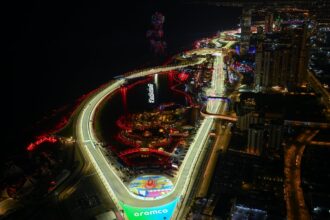
The cancellation of two full race weekends sends immediate shockwaves through the 2025 F1 championship standings. The Bahrain International Circuit in Sakhir and the Jeddah Corniche Circuit are not just venues; they are specific technical challenges that teams spend months simulating and preparing for. Their removal creates a significant competitive vacuum.
- Team Strategy Upended: Development paths, car upgrades, and tire allocation strategies, often pegged to these early flyaway races, are now in flux. Teams that anticipated strong performance in the desert heat must recalibrate.
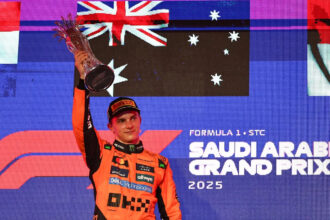
- Driver Momentum Halted: The canceled races were historic venues for reigning star Oscar Piastri, who swept both events in 2024. For drivers like Piastri, losing potential “home track” advantages or momentum-building opportunities could psychologically and tactically alter their season.
- Financial and Logistical Strain: The financial blow to the local economies and promoters is immense. For the teams, it creates a bizarre calendar gap, complicating logistics and potentially straining resources as they manage an unexpected break before the European season begins.
This disruption is part of a broader pattern of international sports being reshaped by the conflict. The relocation of the high-profile Fanatics Flag Football Classic from Saudi Arabia to Los Angeles, featuring NFL icons, is a parallel example of the sports world’s rapid contingency planning. The Middle East, a region that has invested billions to become a global sporting hub, now faces a period of profound vulnerability.
Expert Analysis: The Precarious Balance of Sport and Geopolitics
From a journalistic lens, this cancellation is a watershed moment for modern Formula 1. Under the Liberty Media ownership, F1 has aggressively pursued a “grand prix globe-trotter” strategy, venturing into new markets with significant financial and political backing. The Middle East, with its state-backed events in Bahrain, Saudi Arabia, Qatar, Abu Dhabi, and soon-to-be Oman, has become a cornerstone of this business model. This incident exposes the inherent risk of that dependence.
“Formula 1 has long navigated political complexities, but this is different,” notes a veteran F1 analyst. “This isn’t about protest or diplomacy; it’s about active, multi-front military engagement with direct threats to the region where they race. The sport’s ‘show must go on’ ethos meets its hard limit at credible security threats to personnel and fans.” The analysis points to a critical tension: the commercial imperative to race in new markets versus the fundamental obligation to guarantee safety. When host nations become potential targets, the latter must always prevail, no matter the commercial cost.
Furthermore, this situation forces an uncomfortable examination of sportswashing narratives. While host nations use mega-events to project stability and modernity, cancellations like this inevitably highlight the very instabilities they aim to obscure. The global broadcast of empty paddocks and silent tracks speaks louder than any curated image campaign.
Predictions: What Comes Next for the 2025 F1 Calendar?
The immediate question for fans and the industry is: what fills the void? The season cannot simply proceed with a two-race hole. Several scenarios are on the table, each with its own complexities.
- Calendar Reshuffle & Replacement Races: F1 will scramble to find replacement venues. A double-header at an existing circuit later in the year is possible, but logistics are tight. Historic European tracks like Imola or Portimão could be short-listed for a spring return.
- Permanent Calendar Reassessment: This event will trigger serious internal discussions about calendar diversification and contingency planning. The heavy concentration of races in a single geopolitical zone is now seen as a clear liability.
- Long-Term Regional Impact: Should the conflict persist or normalize into a cold war stalemate, the future of F1’s Middle Eastern expansion is in doubt. Planned new events may be delayed, and existing contracts will be scrutinized under new risk assessment protocols.
The most likely outcome is a patchwork solution for 2025—a replacement race if one can be organized at breakneck speed, or an extended gap that teams will use for intensive testing. The longer-term consequence will be a more cautious and politically-aware F1 administration, one that may begin to rebalance its calendar back towards traditional heartlands.
The Checkered Flag: A Stark Reminder of a Divided World
The cancellation of the Bahrain and Saudi Arabian Grands Prix is more than a scheduling headache. It is a profound symbol of how interconnected—and fragile—the global sporting ecosystem has become. Formula 1, a sport that sells itself as a unifying world championship, finds itself partitioned by the very real divisions of international conflict. The silence on the tarmac in Sakhir and Jeddah will be deafening, a powerful testament to the fact that not even the wealthiest and most powerful sport can operate in a bubble. As teams pack up their simulations and fans seek refunds, the hope is for a swift and peaceful resolution. Until then, the world championship will race on, but with a glaring, cautionary gap in its schedule—a reminder that in the high-stakes race between sport and geopolitics, there are no guaranteed winners.
Source: Based on news from Yahoo Sports.