Farke Fumes: Gudmundsson Dismissal a “Clear Mistake” as Leeds Stifled at Palace
The Championship champions arrived at Selhurst Park with ambition, but left with frustration and a burning sense of injustice. Leeds United’s hard-fought 0-0 draw with Crystal Palace was overshadowed by a pivotal, controversial moment that left manager Daniel Farke pointing a firm finger at the officials. The flashpoint: the 67th-minute sending off of left-back Gabriel Gudmundsson for a second yellow card, a decision the German boss branded a “clear mistake” that altered the trajectory of a tight Premier League contest.
A Game of Fine Margins Undone by a Harsh Whistle
In a match defined by defensive discipline and scarce clear-cut chances, the equilibrium was shattered not by a moment of attacking brilliance, but by a referee’s interpretation. Gudmundsson, already cautioned for a first-half foul on the lively Michael Olise, was deemed to have committed another infringement on the same player. The contact appeared minimal, a tangle of legs as much as a cynical stop, but referee Jarred Gillett deemed it worthy of a match-ending second yellow.
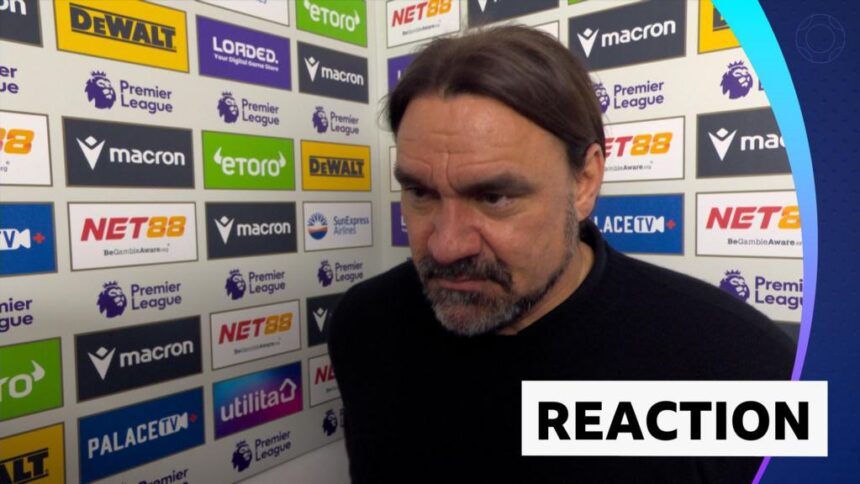
Farke’s post-match assessment was measured in tone but scathing in content. “It was a clear mistake,” he stated, his frustration palpable. “The first yellow was okay, a tactical foul. But the second one… there was barely any contact. In a game of this intensity, at this level, you need the officials to show more understanding and better judgment. It cost us the chance to push for all three points in the final quarter.”
The statistics underscored Leeds’ effective game plan up to that point. They had successfully nullified Palace’s attacking threats, particularly Jean-Philippe Mateta, through a well-drilled low block. The sending off forced a drastic reshuffle, shifting from a potential winning strategy to a pure rearguard action to secure a point.
Expert Analysis: The Ripple Effect of a Controversial Red
Beyond the raw injustice felt by Farke and the traveling support, the Gudmundsson red card had immediate and profound tactical consequences. Let’s break down the key impacts:
- Strategic Sacrifice: Leeds were immediately forced into a defensive substitution, with the attacking-minded Wilfried Gnonto making way for substitute full-back Jamie Shackleton. This killed any growing momentum Leeds had in the search for a winner.
- Momentum Shift: Palace, previously struggling to break down a stubborn Leeds shape, were suddenly gifted the initiative and vast spaces to exploit on their right flank. The entire dynamic of the match flipped in an instant.
- Increased Pressure: The remaining Leeds players, particularly the midfield duo of Archie Gray and Glen Kamara, faced an exhausting 25-minute siege, required to cover exponentially more ground.
- Psychological Blow: Such decisions can foster a siege mentality, but they also inject a sense of grievance that can distract from the task at hand. Leeds’ discipline in seeing out the game, therefore, deserves significant credit.
While Palace manager Oliver Glasner acknowledged his side’s difficulty in breaking down the ten men, the consensus among neutral pundits aligned with Farke’s view. The threshold for a second yellow, especially in a derby-like atmosphere, was deemed met too eagerly, robbing the contest of its competitive balance.
Looking Ahead: Implications for Leeds’ Survival Fight
This single point at Selhurst Park, while respectable, feels like a missed opportunity in the context of a grueling Premier League season. The Gudmundsson incident, however, sparks broader questions for Leeds’ campaign.
Suspension Headache: Gudmundsson will now miss the crucial upcoming match against a direct rival, forcing Farke to alter his defensive line. This tests the squad’s depth early in the season.
Mental Resilience: How Leeds respond to this perceived injustice will be telling. Farke must channel the frustration into a unified, determined spirit at Elland Road. The “us against the world” mentality can be a powerful motivator if harnessed correctly.
VAR’s Silent Role: The incident reignites the debate about VAR’s scope. As the sending off was for two yellow-card offences, it was not a reviewable decision for the video officials. This procedural loophole leaves managers and fans exasperated when what they see as a clear error cannot even be examined.
Positives remain: the defensive unit, marshaled superbly by Joe Rodon, was exemplary for large periods. Illan Meslier’s confident handling and one crucial late save preserved the point. The team’s shape and work-rate, even with ten men, were that of a well-coached unit.
Verdict: A Point Earned, But a Victory Denied?
Leeds United’s return to the Premier League was always going to be a story of grit, moments, and fine margins. Their trip to South London encapsulated that reality perfectly. On one hand, a clean sheet and a point away from home represents a solid foundation, a testament to the team’s organization and heart.
On the other, the lingering feeling is one of what might have been. Daniel Farke’s “clear mistake” verdict will resonate because it speaks to a fundamental desire for fairness in a sport where outcomes are so precarious. The Gudmundsson red card did not just dismiss a player; it arguably dismissed Leeds’ chance to make a definitive, three-point statement.
The challenge now is to transform that sense of grievance into fuel. Leeds demonstrated they have the defensive steel to compete. If they can marry that with a slice of fortune and, perhaps, a more lenient interpretation from officials, their survival prospects will look significantly brighter. For now, the tale of their season begins not with a win or a loss, but with a contentious draw and a manager’s justified protest.
Source: Based on news from BBC Sport.