Russell Martin on Rangers Reign: No Regrets, But Family Abuse Took Its Toll
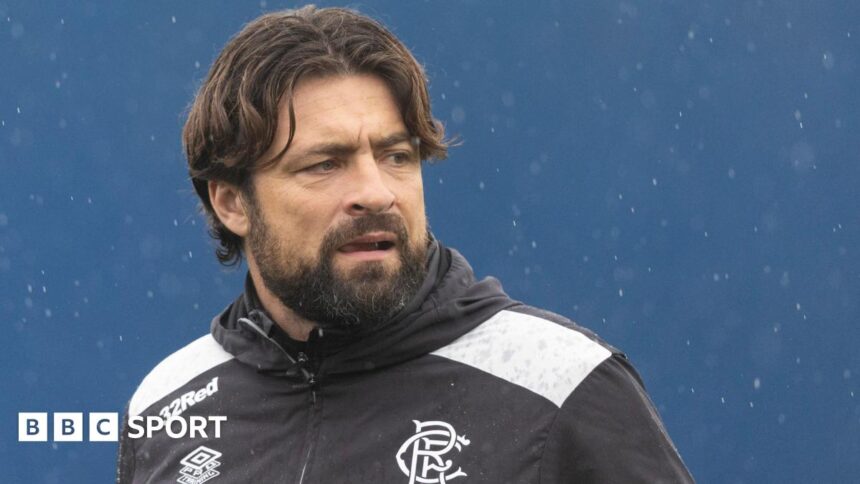
The image of Russell Martin, head bowed on the Ibrox touchline, became a defining motif of a brief and blistering tenure. Appointed as the visionary to restore a progressive identity to Rangers Football Club, his departure after just 123 days was as swift as it was brutal. Now, breaking his silence, the 40-year-old coach has offered a candid reflection on a period of intense pressure, asserting he holds no professional regrets but revealing the deeply personal cost of the vitriol that came with the job.
A Turbulent Tenure: By the Numbers
Martin’s spell at Rangers was a statistical rollercoaster that ultimately failed to gain upward momentum. Hired in the summer, his mandate was clear: implement a possession-dominant, attacking philosophy while navigating the perilous waters of Champions League qualification and mounting a title challenge. The reality proved starkly different. His overall record of five wins, six draws, and six losses from 17 games in all competitions tells a story of inconsistency. Crucially, in the Scottish Premiership, he managed just a single victory alongside five draws, leaving the club languishing in eighth place upon his dismissal.
The European campaign was a tale of two chapters. Early promise saw Rangers overcome Panathinaikos and Viktoria Plzen, stirring hope. That hope was eviscerated in the playoff round by Club Brugge, who inflicted a humiliating 9-3 aggregate defeat. This result, more than any other, became a millstone, seemingly shattering the squad’s confidence and exposing the tactical vulnerabilities opponents would ruthlessly exploit domestically. The 2-2 draw away to Falkirk proved the final act, a microcosm of the reign: moments of quality undermined by defensive fragility.
“No Regrets”: A Coach’s Unwavering Belief
Despite the stark outcomes, Martin’s stance is one of defiant conviction. “I have no regrets from my time at Rangers,” he has stated, a sentiment that speaks to a coach utterly committed to his footballing principles. For Martin, the project was always a long-term build, a cultural shift requiring patience and unwavering belief—commodities in chronically short supply at a club where success is demanded instantly.
His perspective suggests a belief that the foundations were being laid, even if the visible structure was crumbling. He points to performances where his philosophy flickered to life, moments of controlled possession and attacking fluidity that hinted at a potential future. In his analysis, the failures were not of idea, but of execution and time—a squad not yet fully adapted to his demands, and a schedule that offered no respite for coaching or confidence-building. This unwavering self-belief is both Martin’s greatest strength and, in the context of Rangers, his most glaring vulnerability. It is the hallmark of a modern coach schooled in a specific dogma, one who believes the system, given time, will always triumph.
The Human Cost: When Abuse Crosses the Line
While Martin stands firm on the football, his tone shifts palpably when addressing the personal impact. He openly admits that the sustained abuse directed at him and his family was “difficult” to endure. This is the untold story of modern management, particularly in the goldfish bowls of Glasgow and Edinburgh, where online vitriol and real-world hostility bleed together.
The abuse transcended criticism of tactics or team selection. It became personal, invasive, and, as Martin indicates, extended to those closest to him. For a manager, losing a game is professional pain; seeing that loss used as justification for attacks on your family’s well-being is an entirely different, profoundly damaging ordeal. This admission highlights a grim reality of today’s football culture:
- Social media amplifies fury, providing a direct, often anonymous, channel for hatred.
- The pressure-cooker environment of a club in crisis dehumanizes the figure in the dugout, making them a mere receptacle for fan frustration.
- Family members, entirely separate from the sport, become collateral damage in a war they never signed up for.
Martin’s comments serve as a sobering reminder that behind every manager’s press conference and touchline gesture is a human being navigating an often-toxic landscape.
Legacy and Future: What’s Next for Russell Martin?
So, what is the legacy of Russell Martin’s Rangers episode? For the club, it is another false start, a chapter of chaos that has left them playing catch-up in the Premiership and searching, yet again, for a stable identity. It reaffirms the immense difficulty of implementing a long-term project in a landscape ruled by short-term demands.
For Martin himself, the future is intriguing. His reputation has undoubtedly taken a hit; the Ibrox job was a monumental opportunity that ended in very public failure. However, his conviction remains unshaken. This could make him a compelling project for a club with the patience to match his vision, perhaps in the English Football League where he previously impressed with Swansea City.
Expert analysis suggests Martin must perform a delicate balancing act. He cannot abandon the principles that define him as a coach, yet the Rangers experience may necessitate a pragmatic adaptation—a slightly more flexible approach to weather inevitable storms. His next move will be closely watched: does he double down on his philosophy, or does he integrate the hard lessons learned in Glasgow’s furnace?
Conclusion: A Chapter of Conviction and Consequence
Russell Martin’s 123 days at Rangers will be recorded in the history books as a failed experiment. The numbers are unforgiving, the results indefensible from a club perspective. Yet, his recent reflections add crucial depth to that narrative. This was not merely a story of tactical failure, but one of clashing timelines and profound human cost.
His “no regrets” stance underscores the unwavering belief required to reach the top of coaching, even as it invites critique. More importantly, his openness about the abuse faced by his family lifts the curtain on the darkest aspect of modern football fandom. Martin leaves Ibrox with his philosophy intact but bearing the scars of an environment where time is the rarest commodity and fury often overflows its banks. His next chapter will reveal whether this bruising experience was a career-breaking setback or a transformative, if painful, lesson on the rocky road to managerial maturity.
Source: Based on news from BBC Sport.