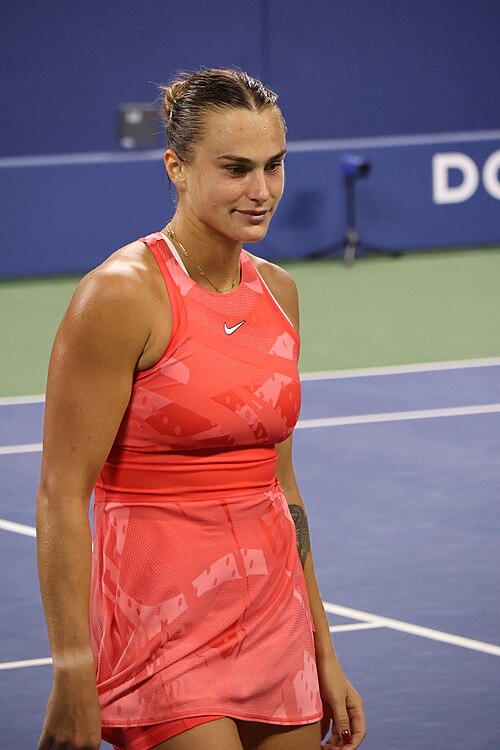
Aryna Sabalenka’s Dubai Dilemma: When Player-Tournament Relations Hit Breaking Point
The world of professional tennis is a delicate ecosystem, a high-stakes ballet of power, prestige, and partnership between athletes and the events that showcase them. That fragile balance is now under a glaring spotlight, as World No. 1 Aryna Sabalenka has openly questioned her future at the prestigious Dubai Tennis Championships following pointed criticism from the tournament’s director. This isn’t just a story about a scheduling conflict; it’s a revealing case study in the growing tensions between the relentless physical and mental demands on players and the commercial expectations of marquee tournaments.
The Spark: Withdrawals and a “Ridiculous” Reaction
In February, the Dubai Duty Free Tennis Championships, a WTA 1000 event, suffered a significant blow when its two top seeds, Aryna Sabalenka and Iga Swiatek, withdrew on the eve of the tournament. Sabalenka cited a minor injury, while Swiatek, the reigning champion, stated she was not mentally ready to compete following a taxing early-season schedule and a recent tournament in Doha.
The tournament’s reaction, however, is what ignited the current firestorm. Dubai tournament director Salah Tahlak told *The National* that the reasons were “a bit strange” and called for more severe penalties beyond fines. “They should be docked ranking points,” Tahlak asserted, framing the withdrawals as a breach of commitment to the fans and the event.
Fast forward to the Miami Open this week, and Sabalenka, never one to hide her feelings, fired back. Labeling Tahlak’s stance as “ridiculous,” she revealed the deep personal sting of the comments. “I’m not sure if I ever want to go back there after his comment. For me it’s too much,” the two-time Australian Open champion stated, laying bare her frustration and hinting at a potential permanent boycott.
Beyond the Headlines: The Unseen Pressure on Modern Players
To view this clash solely as a war of words misses the profound underlying issue. Sabalenka’s reaction points to a significant disconnect between tournament logistics and player welfare. The modern WTA and ATP calendars are a grueling global marathon, with players navigating time zones, surfaces, and the constant risk of injury.
- The Physical Toll: “Minor injuries” are often the precursor to major ones. Playing through a niggle in a non-mandatory event can jeopardize an entire season, especially before the North American hardcourt swing and the clay season.
- The Mental Health Imperative: Iga Swiatek’s candid admission about her mental readiness was a brave acknowledgment of an aspect of athlete health now rightly taken seriously. Ignoring it is a step backward.
- The Ranking Point Paradox: Tahlak’s suggestion of docking points is particularly contentious. Ranking points are the currency of a player’s career, determining seeding, entry, and livelihood. Penalizing them for a health-based decision conflates punishment with protection.
Sabalenka framed it as a lack of respect for the athletes who are the event’s main draw. “We are not machines,” she emphasized in Miami. “We are human beings who can get injured, who can get sick, who can have personal issues.”
Expert Analysis: A Breach of the Unwritten Contract
From a sports management perspective, Tahlak’s public criticism represents a tactical misstep. While tournament directors understandably face immense pressure from sponsors, broadcasters, and ticket-holders when stars withdraw, airing grievances publicly rarely yields a positive outcome. It poisons the well of future participation.
Player relations are built on mutual respect and a long-term partnership. Top-tier athletes have choices. The WTA calendar offers multiple 1000-level events, and players increasingly curate their schedules around their health, peak performance windows, and personal preferences. A tournament that positions itself as adversarial risks becoming an optional stop rather than a cherished destination.
Furthermore, the call for harsher penalties overlooks the existing WTA rules, which already include fines for late withdrawals from mandatory events. Dubai, as a non-mandatory WTA 1000, operates in a more delicate space where it must attract players through prestige, appearance fees, and positive experience—not coercion.
Predictions and Repercussions: What Happens Next?
The fallout from this controversy will ripple through the tour. Here are the likely consequences and predictions:
- Short-Term Standoff: Sabalenka is likely to skip Dubai in 2025. Her pride and principles are clearly engaged, and as a reigning world No. 1 and multiple Grand Slam champion, she has the leverage to make that choice without significant ranking impact.
- Player Solidarity: Other players will be watching closely. This incident may make them think twice about their Dubai commitments, especially if they feel a similar lack of support from the tournament leadership when facing tough health decisions.
- Tournament Response: The Dubai event’s management faces a critical choice: double down or seek reconciliation. To repair the damage, private—and perhaps public—dialogue acknowledging the players’ challenges may be necessary. The ball is in their court to rebuild trust.
- WTA Intervention: The WTA itself may need to facilitate clearer communication guidelines between its tournaments and players to prevent such public spats, which damage the brand of all parties involved.
Conclusion: A Wake-Up Call for Tennis’s Partnership Model
Aryna Sabalenka’s threat to boycott the Dubai Tennis Championships is more than a headline-grabbing tantrum. It is a powerful statement from the sport’s top athlete about respect, understanding, and partnership. The incident exposes a raw nerve in professional tennis: the expectation for players to perform as flawless entertainers, regardless of their human limitations.
Tournaments are not entitled to players’ bodies and minds; they earn their participation by creating a supportive, prestigious, and collaborative environment. Salah Tahlak’s criticism, intended perhaps to defend his event, may have inadvertently weakened it by alienating its most important asset. In the high-stakes game of modern tennis, where player power is growing, the era of public shaming for withdrawals is not just tone-deaf—it’s potentially costly. The ultimate winner here won’t be decided on a court, but in the boardrooms and locker rooms where the future relationships of the sport are negotiated. Sabalenka has served a powerful return; how the tournament receives it will define their relevance for years to come.
Source: Based on news from Deadspin.
Image: CC licensed via commons.wikimedia.org