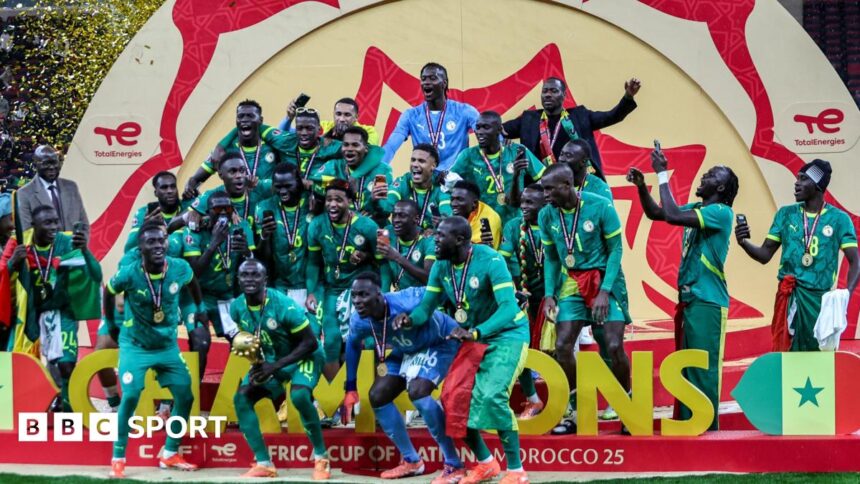
Morocco Crowned, Senegal Stripped: Inside Caf’s ‘Abject’ Afcon Decision That Has Rocked African Football
The beautiful game in Africa is embroiled in its ugliest controversy in recent memory. In a stunning and unprecedented move, the Confederation of African Football (Caf) has officially stripped Senegal of their 2025 Africa Cup of Nations title, awarding it instead to runners-up Morocco. The decision, stemming from a dramatic walk-off by Senegalese players in the final, has not only nullified one of the continent’s most iconic moments but has also ignited a firestorm of dissent from within Caf’s own ranks, with a senior official branding the ruling “abject” and calling for its denunciation.
The Final That Never Ended: A Timeline of Chaos
To understand the gravity of the situation, one must revisit the electrifying—and ultimately chaotic—final in Rabat this past January. In a tense, goalless clash deep into second-half stoppage time, the referee awarded Morocco a penalty after a VAR review for an alleged handball. What followed was not just a protest, but a wholesale abandonment.
Senegal’s entire squad and technical staff, incensed by the call, walked off the pitch in a coordinated act of defiance. For 17 agonizing minutes, the world watched an empty field, a trophy gleaming in the empty stadium. Under immense pressure, the Teranga Lions eventually returned. Moroccan star Brahim Diaz saw his penalty saved by Édouard Mendy, sending the game to extra time, where Pape Gueye’s heroic strike sealed a historic 1-0 victory for Senegal. Until this week, that was the recorded history.
- Stoppage Time: Controversial penalty awarded to hosts Morocco via VAR.
- The Walk-Off: Senegalese team exits pitch in protest, causing a 17-minute delay.
- The Resumption: Play continues; Mendy saves Diaz’s penalty.
- The “Winner”: Pape Gueye scores in extra time; Senegal lifts the trophy.
- The Reversal: Caf Disciplinary Board overturns result, awards title to Morocco.
A “Abject” Decision: Internal Revolt at the Highest Level
The core of this scandal is not just the reversal, but the fierce internal opposition it has provoked. The statement from a senior Caf member, who spoke on condition of anonymity due to the sensitivity of the matter, is a damning indictment of the governing body’s own process.
“This decision is abject, and we have to denounce it,” the official stated. “It sets a dangerous precedent that prioritizes procedure over the spirit of the game played on the pitch. The players returned, the penalty was missed, and the match was won fairly in extra time. To erase that is to erase the fundamental drama and resolve that defines football.”
This internal rift suggests a deep philosophical divide within Caf. On one side, a disciplinary committee applying a strict, by-the-book interpretation of laws regarding team conduct and match abandonment. On the other, football traditionalists and administrators who believe the integrity of the 90+ minutes of play—and the fans’ witnessed outcome—should hold supreme weight. The use of the word “abject,” meaning utterly wretched or contemptible, reveals a level of disgust rarely heard in official corridors.
Expert Analysis: The Precedent and the Pandora’s Box
From a legalistic standpoint, Caf’s rulebook likely provides a framework for such a decision. Regulations concerning “abandonment” or “refusal to play” typically grant governing bodies the power to award matches, even retroactively. The critical nuance here is the 17-minute delay and subsequent resumption. Did the walk-off constitute a formal abandonment, or was it a prolonged protest that the match officials managed and overcame?
“This is where Caf’s ruling feels particularly punitive,” argues sports jurist Dr. Amara Diallo. “The match was completed. All subsequent events—the missed penalty, the extra-time goal—occurred within the laws of the game post-incident. By applying a blanket punishment, Caf has effectively ruled that the walk-off, not Gueye’s goal, was the definitive act of the final. This opens a Pandora’s Box. Does any prolonged protest now risk retroactive trophy confiscation?”
Furthermore, the decision disproportionately impacts the players. Senegal’s walk-off, while disruptive, was a spontaneous reaction to a high-stakes call. Their return demonstrated a willingness to finish the contest. They then proceeded to win it under the most intense psychological pressure imaginable. To have that athletic triumph legally voided weeks later reduces their mental and physical effort to a footnote.
Predictions: Fallout, Appeals, and a Divided Continent
The immediate fallout will be multifaceted and severe:
- Legal Battle: The Senegal Football Federation will undoubtedly launch an appeal to the Court of Arbitration for Sport (CAS). This process could drag on for months, leaving the 2025 title in a state of purgatory.
- Fan and Player Alienation: The legitimacy of the Morocco title will forever be asterisked in the public eye. For Senegalese fans and players, this is a profound sporting injustice that could breed long-term distrust in Caf’s governance.
- Protocol Overhaul: This scandal will force a urgent review of protocols for in-match protests and post-match disciplinary actions. Expect new, clearer guidelines to be drafted, though they will come too late for this shattered final.
- Political Ramifications: Football in Africa is deeply intertwined with national pride and politics. The decision risks creating diplomatic friction between Senegal and Morocco, two football powerhouses, and could influence voting blocs within future Caf elections.
Conclusion: A Victory That Feels Like Defeat for All
In the end, Caf’s decision has created a lose-lose-lose scenario. Senegal loses a hard-fought championship earned on the grass. Morocco gainsAfrican football loses, as its premier competition is now shrouded in controversy, its governance called into question by its own members, and its most glorious moment reduced to a legal citation.
The senior Caf official’s condemnation is a clarion call. It underscores that the soul of sport cannot be adjudicated solely by statute. While discipline and order are essential, the “abject” nature of this ruling lies in its failure to recognize the game’s completed narrative. It has replaced the raw, imperfect drama of a final with a cold, bureaucratic edict, leaving the continent to wonder not who won the Afcon, but what, exactly, has been lost.
Source: Based on news from BBC Sport.