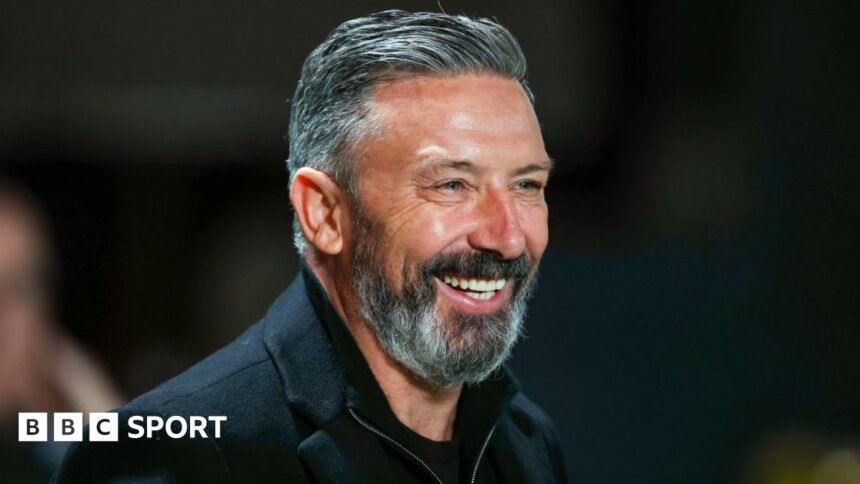
McInnes Dismisses Regret Narrative, Backs Hearts for Grandstand Finish
The air in Scottish football is thick with a rare and intoxicating scent: possibility. For the first time in over a decade, the Premiership summit is not exclusively occupied by the Glasgow duopoly. Heart of Midlothian, under the steadfast guidance of Derek McInnes, have carried the torch as pace-setters for much of the campaign. A recent stumble at Kilmarnock, however, has invited a familiar, doubting whisper from the sidelines. Is this where the dream begins to fray? For the man in the technical area, such talk is not just premature; it’s a distraction from the destiny he is convinced his squad can seize.
The Weight of History and the Refusal to Bow
Derek McInnes is a pragmatist, a manager forged in the fires of Scottish football’s relentless demands. He is acutely aware of the statistic looming over this thrilling title race: it has been 41 years since a club outside of Celtic and Rangers lifted the top-flight crown. That burden, however, is not carried as a weight by his squad, but worn as a badge of opportunity. In the wake of a narrow 1-0 defeat at Rugby Park—a result that allowed Celtic to creep to within two points—the narrative quickly turned to pressure, nerves, and the potential for future regret.
McInnes has rejected this framing outright. His message is not one of anxiety, but of anticipation. “We’re not talking about fear or regret,” he asserted, his focus unblinking. “We’re talking about conviction. This group has earned the right to be here, and I’m convinced we will have a special end to the season.” This is more than managerial bravado; it is a calculated psychological stance. By reframing the conversation from one of fear to one of faith, McInnes is insulating his players from the external noise, ensuring the energy inside the Riccarton training ground remains positive and potent.
The Catalyst: Returning Firepower and Tactical Resilience
The foundation of McInnes’s confidence is not merely philosophical. It is rooted in the imminent return of two pillars of Hearts’ stellar season. The extended absences of captain Lawrence Shankland and midfield dynamo Cammy Devlin since January have been a severe test of the squad’s depth. Shankland’s predatory instincts in front of goal and Devlin’s relentless, terrier-like energy in the engine room are irreplaceable qualities. Their simultaneous return to full training is a boost akin to a major transfer window coup.
- Lawrence Shankland’s Impact: More than just goals, Shankland provides a focal point, a leader in the press, and a clinical edge that turns half-chances into decisive moments. His presence alone alters how opposing defences set up.
- Cammy Devlin’s Role: Devlin is the team’s pulse. His ability to break up play, win second balls, and inject tempo is the catalyst for Hearts’ transitional play, often turning defence into attack in seconds.
McInnes’s hope is clear: with this duo reintegrated, Hearts can be the team that “catches fire between now and the end of the season.” This fire he speaks of is a blend of strategic nous and raw passion. McInnes has built a side that is notoriously difficult to break down—organized, physically robust, and disciplined—but one that has sometimes lacked a cutting edge in their stars’ absence. The returns solve that equation.
Navigating the Run-In: Pressure is a Privilege
The run-in is where titles are truly won. Every pass carries greater significance, every decision is magnified. For Celtic and Rangers, this terrain is well-trodden. For Hearts, it is a new frontier. Yet, McInnes is positioning this not as a disadvantage, but as a galvanizing mission. The pressure, he implies, is not on the challengers but on the perennial champions who are unaccustomed to looking up at anyone else in the table.
The fixture against Dundee this weekend is now a monumental moment. It is the first opportunity to respond, to silence the doubters, and to launch that “special end” McInnes has promised. A convincing performance, likely featuring returning heroes from the bench or the start, would send a resounding message that the Kilmarnock result was a pothole, not a cliff edge.
The key battles will be won in midfield, where Devlin’s return will be crucial, and in the psychological sphere. McInnes’s experience in handling high-stakes games—from cup finals to European qualifiers—becomes a critical asset. His calm, defiant public persona is a direct reflection of the environment he is cultivating behind closed doors.
Expert Analysis: Why Hearts Can Break the Cycle
From a tactical perspective, Hearts under McInnes have mastered a formula that succeeds in modern Scottish football: defensive solidity married to explosive attacking transitions. They are a team built in their manager’s image—resilient, intelligent, and fiercely competitive. The return of Shankland and Devlin doesn’t just add quality; it restores the team’s complete identity.
Furthermore, the dynamic of the title race plays to a key strength: Hearts have been front-runners. They have handled the pressure of leading for months. The chase, historically, is a different kind of pressure, one now squarely on Celtic’s shoulders. Every dropped point by the Glasgow sides will be celebrated in Gorgie, and Hearts have the schedule and the squad to capitalise.
Critical factors for success include:
- Immediate impact from returning stars without disrupting team rhythm.
- Maintaining the defensive record that has been the bedrock of their success.
- Exploiting set-pieces, a consistent strength, in tight games.
Prediction: A Finale For the Ages
While the smart money in a normal season would remain on Celtic’s depth and experience, this is no normal season. McInnes has instilled a belief at Hearts that feels unshakeable. Predicting a Hearts title is a bold call, but predicting a grandstand finish that goes down to the wire is not. This team has shown too much character, resilience, and quality to fade away.
The return of Shankland and Devlin is the X-factor. If they hit the ground running, Hearts possess the firepower and the fortitude to win crucial matches in the coming weeks. They will likely need to take points directly from their rivals in the remaining head-to-head clashes, but this is a squad that has repeatedly risen to big occasions.
In conclusion, Derek McInnes’s rejection of the regret narrative is a masterstroke in leadership. He is not ignoring the challenge; he is redefining it for his players. The message is no longer about avoiding failure, but about embracing a historic opportunity. With their key men returning and a manager whose confidence is unwavering, Heart of Midlothian are not just hoping to cling on. They are preparing to charge. The final chapters of this Scottish Premiership season promise drama, tension, and the very real possibility that a 41-year wait is about to come to a spectacular end. Tynecastle is ready to believe.
Source: Based on news from BBC Sport.