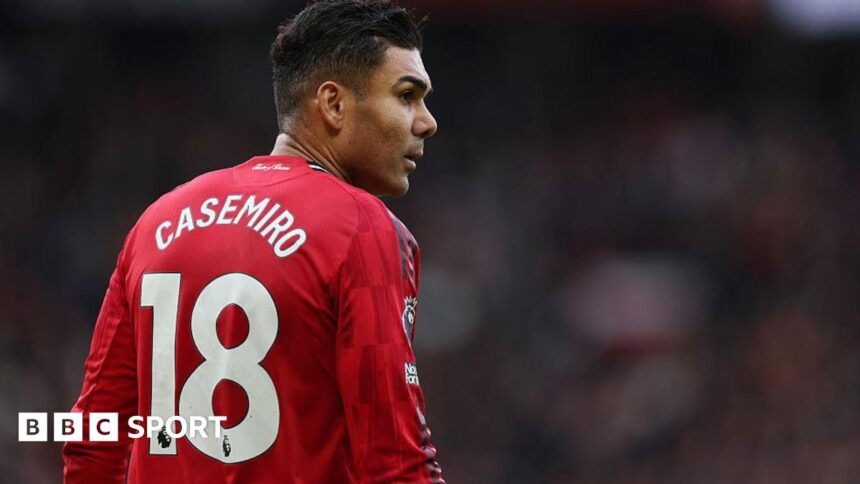
Farewell Number 18, Hello Number Six: Inside Manchester United’s Defining Midfield Hunt
The iconic number 18 shirt, worn with such destructive elegance by Paul Scholes and more recently with combative authority by Bruno Fernandes, is set for another vacancy. This summer, however, its departure signals a seismic shift in Manchester United’s sporting identity. As Casemiro, the five-time Champions League winner, edges towards an exit, the club isn’t merely seeking a replacement. They are hunting for a prototype: the modern number six. This isn’t just a transfer; it’s the foundational piece of a new footballing philosophy, masterminded by the incoming regime of Omar Berrada and Jason Wilcox.
The Architect and The Technician: A New Transfer Blueprint
For years, United’s transfer strategy has been criticized for its reactive, scattergun approach. The pursuit of a new defensive midfielder marks the first major test of a new, coherent model. Omar Berrada, arriving from Manchester City as chief executive, provides the strategic and financial architecture. His expertise lies in building a sustainable, elite-performing organization off the pitch.
On the football side, Jason Wilcox, the recently installed technical director, is the key technician. Hired from Southampton after a successful spell at Manchester City’s academy, Wilcox is a disciple of a specific, possession-based ideology. His mandate is clear: to implement a unified playing style across all age groups and, crucially, to identify first-team players who are its perfect embodiment. The search for Casemiro’s successor is their first major collaborative project, and the profile of player they seek tells us everything about United’s desired future.
Gone is the pure destroyer, the reactive breaker of play. The new blueprint calls for a modern defensive midfielder who is the engine room’s first ignition: a player who demands the ball under pressure, progresses it through incisive passing or dynamic carrying, and possesses the tactical intelligence to shield a defense that pushes high. It’s a role that defines the rhythm of the entire team.
Scouting the Successor: Analysing United’s Midfield Shortlist
The names linked to Old Trafford reveal a clear and deliberate pattern. Each target, to varying degrees, fits the Wilcox-Berrada model of a proactive, technically gifted pivot.
- Adam Wharton (Crystal Palace): The rising English star has been a revelation since his January move. His composure, preternatural passing range (especially line-breaking left-footed diagonals), and calmness in tight spaces make him the archetypal modern English six. At 20, he represents a long-term cornerstone but commands a premium fee.
- Carlos Baleba (Brighton & Hove Albion): A powerhouse with finesse. Baleba combines relentless ball-winning energy with a surprising technical grace and driving runs from deep. He is the most physically comparable to a young Casemiro but is already more adept in a possession-dominant system, honed at the club that perfected the data-led recruitment model United now aspire to.
- Elliott Anderson (Newcastle United): A left-field, potentially cost-effective option. The Newcastle academy graduate is versatile but has shown his best form as a disciplined, forward-thinking number eight. His selection would signal a slight tweak in the profile, perhaps prioritizing ball progression from a slightly advanced starting position, relying on a deeper-lying partner.
- Sandro Tonali (Newcastle United): A statement of ambition, albeit a complex one. Currently serving a lengthy gambling suspension, Tonali is a world-class operator when focused—a master of tempo with exceptional defensive positioning. His acquisition would be a high-risk, high-reward move, requiring careful man-management but offering immediate elite quality.
This shortlist moves beyond reputation, focusing intently on specific technical attributes that suit a possession-based game. It is a stark departure from the superstar-focused shopping of previous summers.
The Casemiro Conundrum: Why a Straight Swap Isn’t Possible
To understand the future, we must acknowledge the past. Casemiro’s first season was a success, providing steel and leadership that propelled United to a Carabao Cup and top-four finish. His decline this season, however, has been a stark illustration of tactical evolution. The Brazilian legend remains a master of space and anticipation in a compact, mid-block defense. Yet, in a system that demands a high defensive line and a midfielder who can control space through positioning and passing, his limitations have been exposed.
His lack of mobility and occasional slowness in distribution have sometimes left United’s midfield disconnected. The new regime isn’t looking for “the next Casemiro.” They are looking for his antithesis in style, if not in importance. This is why the transition is framed as farewell number 18, hello number six. It’s symbolic. They are moving from a celebrated individual who wore a historic number to a specialized role that is the heartbeat of a modern system. The shirt number may change, but the intent is to find a player who makes the team’s number on the back of the kit more formidable.
Predictions and Pivotal Decisions for the Summer Window
The midfield hunt will define United’s window and set the tone for the Erik ten Hag (or a potential successor’s) reign. Several key predictions and decisions loom:
The Wharton Premium: United will have to pay well over £60 million to prize Wharton from Palace after just six months. His ceiling and homegrown status make him a prized, but expensive, asset. This will be a major test of INEOS’s willingness to invest in potential over proven pedigree.
The Brighton Factor: Baleba represents a “safe” bet in terms of profile, given Brighton’s unparalleled success in identifying such talent. Dealing with the Seagulls is never straightforward, but their model is the one United are now trying to emulate.
The Wildcard: Do not rule out a target not yet heavily linked. Wilcox’s data-driven approach, scanning for specific metrics like progressive passes, carries, and defensive actions per 90 minutes, could unearth a gem from Europe’s less-heralded leagues.
The Budget Balance: This priority signing must be balanced against the pressing need for a center-back and a forward. The fee generated from Casemiro’s sale will be crucial, but the new hierarchy has shown they will not be held to ransom, walking away from overvalued deals—a discipline in itself a sign of progress.
Conclusion: More Than a Player, A Statement of Intent
Manchester United’s search for a number six is the most telling project of the post-Ferguson era. It is the first major operation conducted under a modern, multi-disciplinary leadership structure designed to eliminate guesswork and align every footballing decision. Omar Berrada and Jason Wilcox are not just signing a midfielder; they are installing the central processor for their new footballing software.
This transfer is a farewell to an era of reactive, individualistic solutions. It is a definitive hello to a model built on strategy, identity, and a clear vision of how the game should be played. The success or failure of this midfielder hunt will not be judged solely on tackles won or pass completion rates, but on whether this player becomes the invisible hand that guides United into a new, coherent, and successful future. The message from Old Trafford is clear: the number six isn’t just a position they need to fill; it’s the role they need to perfect.
Source: Based on news from BBC Sport.