Duke Dodges Disaster: Blue Devils Rally from Halftime Hole to Survive Siena Scare
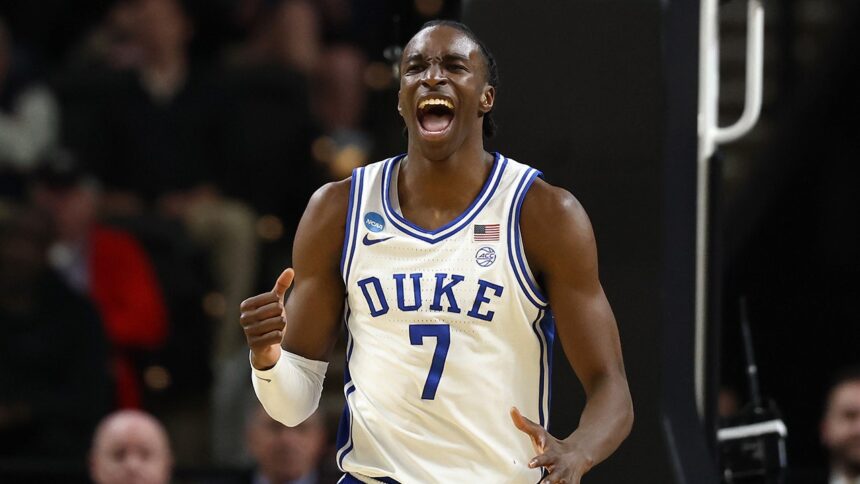
The specter of history, cold and looming, stared down the Duke Blue Devils from the scoreboard at halftime. In the locker room, a stunned silence threatened to swallow the confidence of a No. 1 seed. On the other side, the Siena Saints, a No. 16 seed playing with house money and fearless grit, could taste immortality. For twenty minutes, they authored the perfect upset script. But March Madness is a tale of two halves, and in the second, Duke rewrote the ending, clawing back from an 11-point deficit to secure a heart-stopping 71-65 victory and avoid becoming the third—and most iconic—No. 1 seed to fall to a No. 16.
A First Half For the History Books… Almost
From the opening tip, the script was flipped. Siena, champions of the MAAC, played not like underdogs but like equals. They were quicker to loose balls, sharper in their offensive sets, and utterly unafraid of the Blue Devil mystique. Duke, conversely, looked tight, missing open looks and reacting a step slow on defense.
The Saints built their shocking 43-32 halftime lead on a foundation of flawless execution. They shot 48% from the field, hit five three-pointers, and outrebounded the taller Blue Devils. Every Duke run was met with a poised answer, a silky jumper, or a drive through a seemingly paralyzed defense. The arena buzzed with that familiar, tournament-shaking energy—the feeling that the impossible was not just possible, but probable. The ghosts of UMBC-over-Virginia and Fairleigh Dickinson-over-Purdue were not just memories; they were blueprints being actively followed.
The Turnaround: Composure, Defense, and Star Power
What separates great teams in March is not the avoidance of adversity, but the response to it. The Duke that emerged from the halftime locker room was a different beast. The panic was gone, replaced by a grim determination.
The comeback was built on a sudden defensive awakening. Duke’s ball pressure intensified, disrupting Siena’s rhythm and forcing contested shots. The Saints, who flowed so effortlessly in the first half, were suddenly rushed, their lead chipped away possession by possession.
Offensively, Duke finally leveraged its superior talent inside. The guard penetration opened up, and when shots didn’t fall, they crashed the offensive glass with renewed fury. The comeback was a slow, methodical grind—a testament to composure under the most extreme pressure. Key plays came from veterans who refused to let their careers end in infamy, hitting crucial shots and making defensive stops that swung momentum irrevocably.
- Defensive Identity Shift: Increased full-court pressure and tighter on-ball defense.
- Controlling the Paint: Establishing interior scoring and second-chance opportunities.
- Veteran Leadership: Key players stepping up in high-pressure moments to steady the team.
Beyond the Scare: What This Means for Duke’s Title Hopes
Survive and advance is the only mantra that matters in March, and Duke did just that. But this scare is a glaring red flag that cannot be ignored. It exposed vulnerabilities that elite teams in their region will study relentlessly.
The first-half performance revealed a potential for lethargy and offensive stagnation that can be fatal against more talented opponents. However, the second-half response also showed this team’s championship-level heart and adjustability. The question now is which Duke team shows up for the remainder of the tournament. Are they the entitled giants susceptible to an early punch, or the battle-tested contenders who can win a street fight? This game may prove to be the wake-up call that galvanizes a deep run, or it may be a preview of an earlier exit than expected. Their title odds remain strong, but the aura of invincibility is shattered.
Expert Eyes on the Future: ’26 Title Talk and a Phenom’s Path
The drama of Duke’s escape naturally fuels broader conversations about the future landscape of college basketball. In a recent discussion, analysts Miles Simon and Jason McIntyre looked beyond this bracket to the 2026 title race. While Duke will always reload with elite talent, their conversation highlighted programs like Arizona as perennial contenders, built on a mix of veteran presence and high-end recruiting.
Intriguingly, the discussion turned to a seismic talent shift: the arrival of AJ Dybantsa, the nation’s top prospect, at BYU. The question posed was whether a player of his generational caliber can single-handedly elevate the Cougars into the national championship conversation. While transcendent talent can carry a team far—think Carmelo Anthony at Syracuse—the BYU experiment will be a fascinating case study in how one superstar integrates into a system and withstands the marathon of a college season. Can Dybantsa be the catalyst for a Cinderella story, or will the weight of expectation be too much? His journey will be one of the most compelling narratives heading into next season.
Conclusion: A Warning Shot Heard Round the Tournament
Duke’s 71-65 victory over Siena will be logged in the record books as a win, a simple advancement to the Round of 32. But its legacy will be far greater. It served as the ultimate warning to every presumptive favorite in this tournament: no lead is safe, no seed is sacred, and history is always waiting to be made.
For Siena, this game is a heartbreak laced with pride. They played the perfect half and proved that the gap between a No. 1 and a No. 16 is often more mental than physical. For Duke, it was a costly lesson delivered just in time. They survived, but they are now bloodied and battle-tested. The path to a national championship is never smooth, and perhaps needing to stare into the abyss against Siena will forge a tougher, more resilient Blue Devil squad. In March, sometimes the closest calls provide the clearest path forward. Duke survived its nightmare; now, we see if they can turn it into a dream.
Source: Based on news from Fox Sports.