FIFA Faces Formal Complaint Over 2026 World Cup Ticket Prices: A “Monopoly” Under Fire
The beautiful game is facing an ugly confrontation. As the football world turns its gaze toward the unprecedented 2026 FIFA World Cup across North America, a groundswell of fan anger has erupted into formal action. In a move that strikes at the commercial heart of the sport’s global showpiece, Football Supporters Europe (FSE) and Euroconsumers have lodged a formal complaint with the European Commission, accusing FIFA of abusing its monopoly power to impose “excessive” and “exorbitant” ticket prices. This isn’t just grumbling in the stands; it’s a legal salvo that challenges the very economics of modern mega-events and asks a fundamental question: has the World Cup priced out the very people who give it soul?
The Core of the Complaint: A “Monopoly” Accused of Exploitation
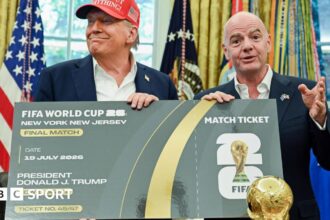
According to a report by BBC Sport, the complaint filed by the supporters’ groups presents a stark economic argument. They allege that FIFA, as the sole organizer and commercial rights holder of the World Cup, occupies a monopoly position. This unique power, they contend, is being abused to set ticket prices at levels that bear no reasonable relation to their cost of production, but instead maximize revenue at the expense of fans. The 2026 tournament, set to begin on June 11, is already the largest in history with 104 matches. Critics argue this scale was sold as a boon for accessibility, but the initial pricing structure told a different story.
The complaint highlights shocking comparisons that have ignited fan fury. Most damningly, FSE states that the cheapest openly available tickets for the 2026 final are priced at over seven times the cost of the cheapest equivalent ticket for the 2022 final in Qatar. When adjusted for the tournament’s North American hosts, this represents a staggering inflation that far outpaces normal economic factors. This isn’t merely a price hike; it’s a paradigm shift that threatens to transform World Cup stadia from cauldrons of passion into enclaves for the affluent.
FIFA’s Concession and the “Phantom” Affordable Tickets
Facing a tsunami of negative publicity following the initial ticket launch, FIFA did attempt a corrective measure. In December, it announced a limited number of affordable tickets priced at £45 (approximately $57 USD) for every single match. On the surface, this was a win for fan groups. However, the complaint argues this move was largely a public relations gesture that failed to address systemic issues.
FSE asserts that by the time general sales opened to the public, these budget-friendly tickets had virtually vanished. They were likely snapped up in earlier sales phases for specific stakeholder groups or were so limited in number as to be statistically insignificant for the millions of global fans trying to access the portal. This created a scenario where:
- Affordable tickets were a phantom, technically existing but practically unavailable to the average supporter.
- The public-facing price list was skewed, making the tournament appear more accessible than it truly was.
- Fans were funneled towards significantly higher-priced categories, validating the complaint’s core “excessive pricing” claim.
This dynamic reveals a critical tension in FIFA’s model: the balance between fulfilling a duty to the sport’s community and maximizing revenue for what is, ultimately, a business operation.
Expert Analysis: The Commercialization Crossroads
The 2026 complaint is more than a dispute over dollars and cents; it’s a symptom of football’s prolonged identity crisis. “We’ve reached a tipping point,” suggests Dr. Liam Carter, a sports economist. “For decades, governing bodies have leveraged the inelastic demand for elite football—the fact that fans will pay almost anything to be there—to drive revenue growth. The 2026 pricing strategy feels like the logical, if brutal, endpoint of that philosophy. FIFA is viewing the expanded tournament not as a chance to include more fans, but to extract more value per fan.”
The monopoly argument is particularly potent in legal terms. Unlike a club competition where fans might choose to follow a different team or league, the World Cup is a unique, non-replicable product. There is no alternative supplier. This gives FIFA tremendous pricing power, which European competition law states cannot be abused to the detriment of consumers. The fans’ groups are effectively arguing that this is precisely what is occurring, with the sport’s most cherished event held hostage.
Furthermore, the geographical context of 2026 amplifies the problem. Hosting across three nations (the USA, Canada, and Mexico) inherently involves massive travel and accommodation costs for almost all visiting fans. Inflated ticket prices on top of this create a perfect storm of exclusion, potentially leaving stadiums dependent on local, casual attendees rather than the passionate, vocal traveling support that defines the tournament’s atmosphere.
Predictions and Potential Outcomes
What happens next will set a crucial precedent for the future of major sporting events. The path forward is fraught with legal and reputational challenges for all parties.
- For the European Commission: The complaint will force a delicate decision. While its jurisdiction over an event in North America is complex, FIFA’s commercial operations are global and certainly affect European consumers. A finding in favor of the fans could lead to fines or, more likely, a mandated negotiation for more transparent and fair pricing structures for future tournaments, including 2026 sales phases yet to come.
- For FIFA: The governing body’s likely immediate response will be to defend its pricing as reflective of the event’s scale and the significant costs involved. However, the damage to its reputation is already mounting. The prospect of half-empty stadiums for non-headliner matches or atmospheres diluted by corporate hospitality is a real threat that could devalue its own product. We may see FIFA offer another, more substantial tranche of affordable tickets or introduce dynamic pricing corrections as the tournament nears.
- For the Future of Fan Power: This formal complaint represents a new level of sophistication in fan activism. Moving beyond protests and petitions to structured legal challenges based on competition law is a powerful escalation. Success here would embolden supporter groups worldwide to scrutinize the commercial practices of all governing bodies, from UEFA to the IOC.
Conclusion: More Than a Game, But at What Cost?
The formal complaint against FIFA is a watershed moment. It transcends the specific prices for seats in Dallas or Vancouver. It is a battle for the soul of the World Cup—a contest between its identity as a global communal festival and its reality as a hyper-commercialized media property. The fans, through FSE and Euroconsumers, are not asking for charity; they are demanding fairness from a monopoly they cannot avoid.
FIFA now stands at a crossroads. It can dig in, fight the complaint, and risk presiding over a tournament remembered for its prohibitive cost and sterile crowds. Or, it can seize this moment as an opportunity for reform, to genuinely use the expanded 2026 format to welcome the world, not just bill it. The beautiful game’s magic has always flowed from the stands, from the deafening roar of ordinary people living extraordinary moments. If that sound is replaced by the quiet rustle of expense accounts, FIFA will have won a financial battle but lost a spiritual war. The world is watching, and not just the matches.
Source: Based on news from Yahoo Sports.