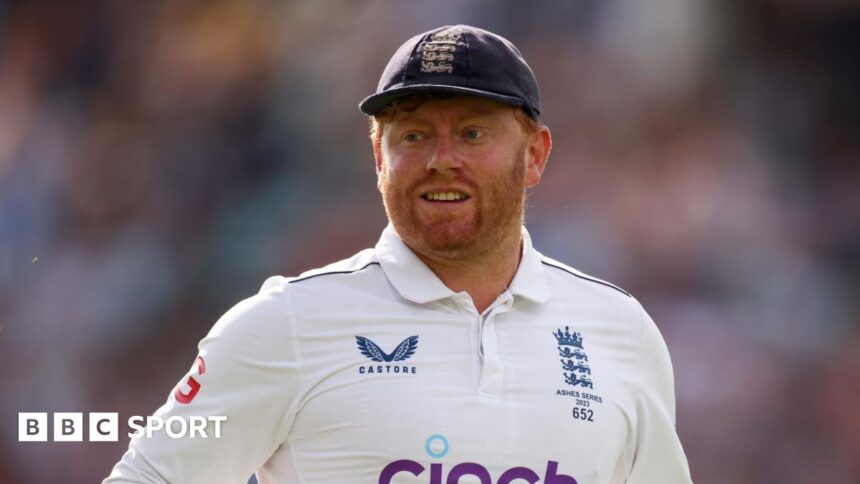
Jonny Bairstow’s Stark Warning: England’s ‘Bazball’ Era Lacking Care, Says Centurion
The dust has settled on England’s Ashes defeat, the key architects of the ‘Bazball’ revolution have been confirmed to continue their mission, and the future path seems set. Yet, from a key soldier now seemingly marooned from the front line, comes a poignant and powerful critique that strikes at the very heart of the regime’s culture. Jonny Bairstow, a 100-Test veteran and a foundational pillar of the Ben Stokes-Brendon McCullum era, has broken ranks, suggesting the environment has lost something vital: care.
In the wake of the confirmation that captain Stokes, coach McCullum, and director of cricket Rob Key will remain in post, Bairstow’s words are not a mere lament from a dropped player. They are a seasoned campaigner’s diagnosis of a potential flaw in a system that prides itself on fearlessness and freedom. His comments force a crucial question: in the relentless pursuit of entertainment and aggressive transformation, has the human element been sidelined?
The Centurion’s Critique: More Than Just Sour Grapes
To dismiss Bairstow’s comments as the disgruntled mutterings of an omitted star would be a profound misreading. This is a player who, with his blistering centuries at Trent Bridge and Headingley in the summer of 2022, wrote the first and most exhilarating chapters of the Bazball story. He was its embodied spirit—audacious, powerful, and transformative. His serious leg injury in September 2022 was a catastrophic blow, not just to the man but to the team’s momentum.
His return, remarkably swift, was hailed as a triumph of resilience. Yet, the numbers tell a challenging story. While his career average sits at a respectable 36.39, in the 11 Tests since his return, it dipped to 31.11. The explosive impact was punctuated by inconsistency, culminating in his dropping in 2024 after a lean tour of India. The regime, in its unwavering commitment to a proactive style, moved on. But Bairstow’s recent reflections suggest the journey back, both physically and mentally, may have been more fraught than the public narrative implied.
“You need the care back in the game,” Bairstow stated, a simple sentence loaded with implication. For a player who has been through the physical trauma of a leg break and multiple ligament surgeries, ‘care’ likely spans a vast spectrum:
- Physical Management: The meticulous, long-term rehabilitation and workload management after a catastrophic injury.
- Mental Wellbeing: The psychological support during a gruelling comeback and the handling of loss of form.
- Man-Management & Communication: The clarity, empathy, and respect shown in selection decisions and role definition.
His critique implies a shortfall in one, or several, of these areas.
Bazball’s Double-Edged Sword: Freedom vs. Support
The Stokes-McCullum philosophy is brilliantly simple: liberate players from fear of failure, grant them unconditional support, and champion aggressive intent above all. It has resurrected careers, made Test cricket a must-watch spectacle, and delivered thrilling victories. However, Bairstow’s comments expose a potential vulnerability in this model. Does an environment built on relentless positivity and unwavering belief struggle to accommodate the more nuanced, delicate needs of a player in crisis?
When the core message is to “go out and express yourself,” what happens when a player is physically struggling to do so, or when form evaporates? The care Bairstow references is the scaffolding around the talent—the sports science, the psychology, the one-on-one conversations that aren’t just about the next daring shot, but about the person hitting it. It is possible to be both fiercely attacking on the field and fiercely supportive off it; Bairstow’s argument is that this balance may have tipped.
The handling of the wicketkeeping conundrum is a case in point. Bairstow returned as a keeper-batter, a demanding role for a fully fit athlete, let alone one recovering from a severe leg injury. The subsequent shift, bringing in Ben Foakes as a specialist keeper before later dropping both, could be seen as pragmatic. But from the player’s perspective, it may have felt like a shifting of the ground beneath him, a change in the fundamental terms of his engagement that impacted his stability and confidence.
Expert Analysis: A System Under the Microscope
From a strategic standpoint, Bairstow’s dip in post-injury numbers made him vulnerable. England’s middle-order is congested, and the rise of Harry Brook created intense competition. Selection decisions based on form are not inherently uncaring; they are a necessary part of elite sport.
However, the expert view suggests the issue is one of tone and depth. “The ‘Bazball’ ethos is brilliant for freeing minds,” notes a former England sports psychologist, “but it is not a substitute for a holistic high-performance system. The ‘care’ Bairstow talks about is the unglamorous, day-to-day work of building resilience, managing transitions, and having difficult conversations with empathy. That must run parallel to the attacking mantra.”
Bairstow’s status as a World Cup and Ashes winner with a century of caps gives his words immense weight. He is not an outsider; he is a decorated insider suggesting the culture he helped build may have a blind spot. His critique is arguably the most significant internal challenge the regime has faced, precisely because it comes from a believer.
Predictions and Pathways: How England Responds
The confirmation of Key, McCullum, and Stokes suggests the ECB is doubling down on the current path. Therefore, the response to Bairstow’s comments will be telling. Will they be dismissed as background noise, or will they prompt introspection?
- Private Reconciliation: Expect behind-the-scenes conversations between Key, McCullum, and Bairstow to manage the relationship, especially if he is considered for a recall.
- Evolution of the Support System: The regime may look to bolster its player welfare and mental health structures, ensuring the ‘care’ infrastructure matches the ambition of the playing style.
- Selection Crossroads: Bairstow’s future remains uncertain. His experience is invaluable, but his fit in the current batting line-up is unclear. How his case is handled moving forward will be the ultimate test of the regime’s man-management.
- Cultural Check: The most significant prediction is that this will force the leadership to audit their culture. Is it truly player-centric, or is it now ideology-centric? The two need not be mutually exclusive, but Bairstow has highlighted a tension.
Conclusion: A Necessary Alarm Bell from a Loyalist
Jonny Bairstow’s call for more care in the game is far more than a personal grievance. It is a vital alarm bell, rung by a loyalist, about the sustainability of a sporting revolution. The ‘Bazball’ project has been a thrilling, record-breaking success in reinvigorating English Test cricket. But all revolutions risk losing sight of the individual in the pursuit of the collective ideal.
True strength in sport lies not just in the courage to play the reverse scoop, but in the courage to build a environment where players feel supported through injury, form slumps, and the inevitable transition out of the team. As England march on under their confirmed leadership, they would be wise to heed Bairstow’s warning. The most aggressive cricket in the world is still played by human beings. And human beings, as the centurion knows all too well, sometimes need care as much as they need confidence.
Source: Based on news from BBC Sport.