Senegal’s AFCON Title Stripped: A Legal Battle for African Football’s Soul
In a stunning development that has sent shockwaves through the global football community, the Confederation of African Football (CAF) has taken the unprecedented step of stripping Senegal of their 2025 Africa Cup of Nations title. The decision, which controversially awarded the championship to tournament hosts Morocco, has ignited a firestorm of debate, accusations of political interference, and now, a formal legal challenge. The Senegalese Football Federation has lodged an appeal with the Court of Arbitration for Sport (CAS), setting the stage for a protracted battle that threatens to undermine the integrity of the continent’s most prestigious tournament. This is not merely a dispute over a trophy; it is a crisis that strikes at the very heart of African football’s credibility.
The Final That Changed Everything: Unpacking the Controversy
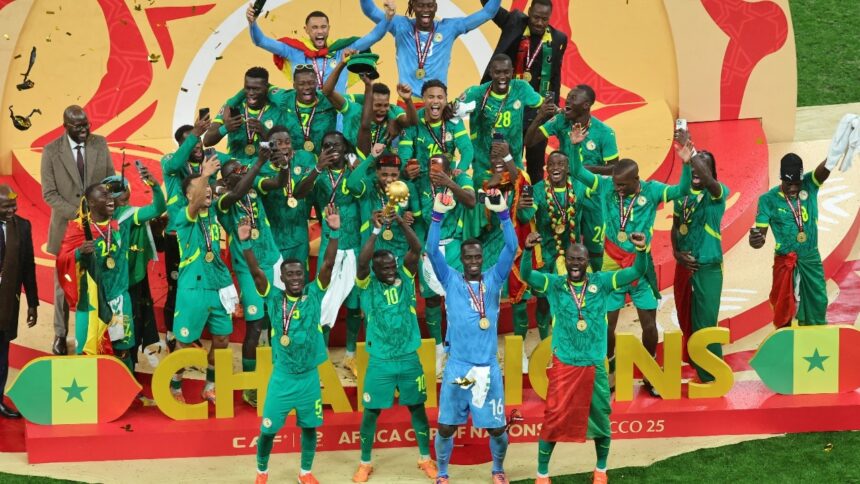
The 2025 AFCON final in Rabat was a spectacle of high drama, ending in a 2-1 victory for Senegal after extra time. The celebrations, however, were short-lived. In the days following the match, CAF opened an investigation into what it termed “grave eligibility irregularities” concerning a key Senegalese player. The specific allegation, which remains shrouded in procedural opacity, centers on a potential administrative discrepancy in the player’s registration documents, unrelated to nationality or age. Critics argue the infraction, if it exists, is a technicality of the most minor order. Despite Senegal’s cooperation and the player featuring throughout the tournament without prior objection, CAF’s Disciplinary Committee ruled with severe retroactive force, annulling the result, awarding the title to Morocco, and handing Senegal a significant fine. The lack of a timely, detailed written verdict has only fueled suspicions of a politically-motivated decision, leveraging a bureaucratic loophole to alter sporting history.
Senegal’s Legal Gambit: The Road to the Court of Arbitration for Sport
Refusing to accept what they deem a “profound injustice,” Senegal has taken the nuclear option. By filing an appeal with CAS, sport’s highest legal authority, they have internationalized the conflict. The Swiss-based court has confirmed the appeal and noted Senegal’s request for an extension to file their full brief, a direct result of CAF’s failure to provide comprehensive reasoning for its landmark decision. This legal maneuvering highlights the procedural flaws in CAF’s process. The case presents several critical legal questions CAS will need to adjudicate:
- Proportionality of Punishment: Does the alleged administrative error warrant the extreme sanction of stripping a title won on the pitch?
- Estoppel and Timeliness: Can CAF investigate a player’s eligibility after he has participated in multiple matches without challenge from opponents or the governing body itself?
- CAF’s Own Regulations: Does the decision align with CAF’s stated statutes and precedents for handling eligibility disputes?
CAS will now assemble a panel of arbitrators to hear evidence from both parties. With no clear timeline set, experts predict a resolution could take anywhere from six months to over a year, leaving the 2025 AFCon title in a state of purgatory.
Expert Analysis: Precedent, Politics, and the Price of Chaos
Football historians and legal analysts are scrambling for comparisons, but few exist. “We have seen points deductions and match forfeits for ineligible players, but to vacate an entire continental championship final after it has been played and celebrated is virtually without precedent at this level,” notes Dr. Amara Diouf, a Senegalese sports jurist. “This isn’t a club tournament; it’s the pinnacle of national team achievement in Africa. The sporting and emotional damage is incalculable.”
The shadow of geopolitics looms large. The decision to award the title to Morocco, a nation with immense footballing and political influence on the continent, has inevitably led to accusations of favoritism. This controversy erupts as CAF has sought to present a modern, transparent image under President Patrice Motsepe. This single decision risks unraveling that progress, painting the organization as capricious and vulnerable to external pressure. Furthermore, the move sets a dangerous precedent. If a title can be revoked months later over a paperwork dispute, what security do any champions have? It introduces a paralyzing uncertainty that could haunt future tournaments.
Predictions and Ramifications: What Happens Next?
The path forward is fraught with complexity, regardless of the CAS verdict. Several potential outcomes exist:
- Senegal Victory: If CAS overturns CAF’s decision, Senegal would be reinstated as champions. However, the moral victory would be bittersweet, forever tainted by the ordeal. The reputational damage to CAF would be severe, potentially triggering leadership crises and calls for systemic reform.
- CAF Victory: If the sanction is upheld, Morocco’s title will carry a permanent asterisk in the eyes of many fans. Senegal and much of the African football community may never accept the legitimacy of the outcome, leading to deep and lasting fractures.
- A Solomonic Compromise: CAS could rule the punishment disproportionate. It might uphold a fine or other penalty for Senegal but order the title to be reinstated, or even—in a radical move—declare the title vacant.
The commercial and sporting fallout is already being felt. Sponsors are wary of association with the scandal. For players like Sadio Mané and Kalidou Koulibaly, whose legacy was cemented by that victory, the emotional toll is profound. The incident also serves as a dire warning to all national federations about the hyper-scrutiny of administrative processes, potentially diverting focus from football development to legalistic box-ticking.
A Crisis of Confidence in African Football
As the legal wheels begin to turn in Lausanne, the real battle is for trust. Senegal’s appeal to CAS is a fight for sporting justice, but it is also a desperate plea for the restoration of order and principle. The controversy has exposed a dangerous rift between the rulers of the African game and its passionate stakeholders—the players and the fans. Whether the title ultimately resides in Dakar or Rabat, CAF emerges from this episode as the definitive loser. The organization now faces an existential task: to reform its governance, ensure transparent and consistent application of its rules, and rebuild the shattered faith of a continent. The final whistle in Rabat was only the beginning; the most important match—for the soul of African football—is now being played in a court of law.
Source: Based on news from India Today Sport.