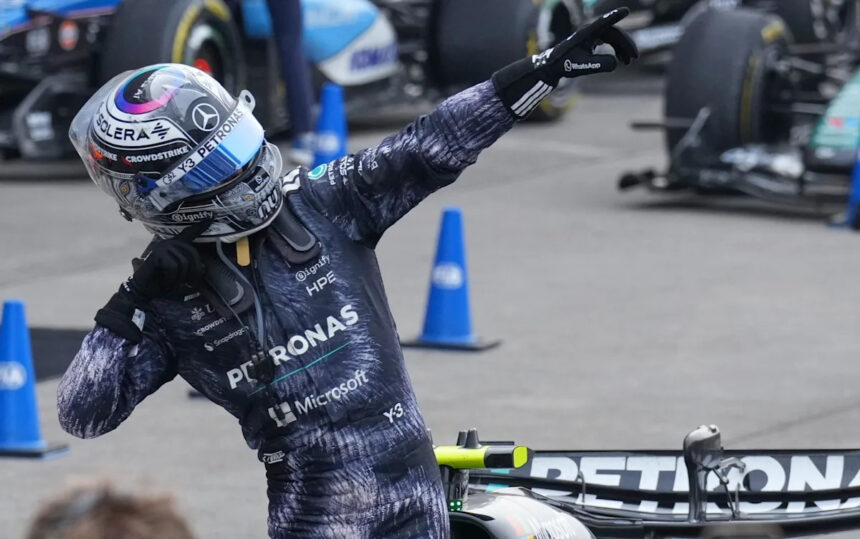
Kimi Antonelli Seizes Championship Lead with Dramatic Japanese GP Victory
The relentless pendulum of Formula 1 fortune swung with brutal force at Suzuka, decapitating George Russell’s championship hopes and anointing a new, teenage leader. In a race defined by a single, fateful safety car, Mercedes’ Kimi Antonelli transformed a nightmare start into a dream result, claiming victory and, more importantly, the lead in the drivers’ world championship. For his teammate Russell, a drive of grit and recovery was undone in an instant, leaving him to curse a cruel twist of fate that has reshaped the 2026 title fight.
A Suzuka Rollercoaster: From Wheelspin to Winning Strategy
The opening moments of the Japanese Grand Prix appeared to have shattered Antonelli’s weekend. Starting from pole, the 19-year-old Italian bogged down with severe wheelspin, tumbling like a stone to sixth place as the field screamed into Turn 1. “It was the worst feeling,” Antonelli later admitted. “The car just didn’t go. For a second, you think the race is over.” Meanwhile, George Russell, starting fourth, expertly navigated the chaos, scything his way towards the front in another demonstration of his razor-sharp racecraft under the new 2026 regulations.
Russell’s charge set the early narrative. He hunted down and passed the McLaren of Oscar Piastri to take a lead that seemed to be growing stronger with each lap. His first pit stop on Lap 21 was clean, and he emerged just behind Piastri, armed with a significant tyre advantage. The strategy was unfolding perfectly. Then, on Lap 22, the scene changed irrevocably.
The Lap 22 Cataclysm: Safety Car Drama Alters Destiny
A devastating 50G impact for Haas’s Ollie Bearman at the high-speed Dunlop Curve brought out the safety car, triggering a frenzy in the pit lane. For the leader, Piastri, and the chasing Russell, it was the worst possible moment. They had just committed to the pit lane, while those yet to stop—including Antonelli—were gifted a “free” pit stop, losing minimal time.
The Mercedes pit wall faced a split-second decision for Antonelli: commit to a one-stop or mirror the leaders. They chose aggression, bringing him in for fresh tyres. He rejoined in the lead once the field compressed. Russell, now trapped behind the safety car in fourth, could only vent his fury. “Unbelievable,” his radio transmission crackled. “Wow, —-, our luck in these last two races.” The sheer despair was palpable; a potential 25-point swing was unfolding through no fault of his own.
The race restart proved just as cruel for the Briton. On cold tyres, he was a sitting duck for the charging Charles Leclerc in the Ferrari, who snatched third place in a move that Russell described as “adding salt to the wounds.” From a likely victory, Russell was suddenly staring at a desperate fight for fourth.
Expert Analysis: Fortune Favors the Bold—and the Lucky
This race was a masterclass in how modern F1 championships can hinge on milliseconds and misfortune. The analysis reveals two starkly different tales:
- Strategic Agility: Mercedes’ call for Antonelli was correct, but it was a no-brainer enabled by pure luck. The team’s readiness to capitalize on the chaos, however, underscores their operational sharpness. Antonelli, despite the early error, displayed immense maturity to control the race from the front under intense pressure.
- Russell’ Resilience and Rotten Luck: Russell’s performance was arguably the drive of the day until Lap 22. His recovery from the start and his pace relative to Piastri confirmed he had race-winning speed. The safety car was a statistical anomaly that hit him with maximum damage, following other issues in the previous round. His championship challenge now faces a psychological mountain.
- Championship Momentum: In F1, momentum is a tangible force. Antonelli, with two consecutive wins, now carries it all. The psychological advantage of leading the standings as a teenager cannot be overstated. For Russell, the task shifts from controlled aggression to calculated recovery, a trickier mental space to inhabit.
The Road Ahead: Predictions for a Title Fight Transformed
With the championship lead changing hands, the dynamic within Mercedes and the wider grid has been violently shifted. We predict the following key developments:
Internal Team Dynamics: The notion of a clear “number one” at Mercedes has evaporated. Antonelli’s lead legitimizes his title claim, and the team must now manage a fierce intra-team battle with immense diplomacy. Russell’s frustration will need careful handling to prevent it from boiling over.
Pressure on Antonelli: The Italian is no longer the plucky rookie; he is the championship leader with a target on his back. How he handles the relentless scrutiny and expectation over the next triple-header will define his season. His race craft is proven, but his consistency under this new pressure is not.
Resurgent Rivals: Do not discount Oscar Piastri or Charles Leclerc. McLaren and Ferrari have cars capable of winning on any Sunday. This Mercedes duel could open the door for a third party to capitalize if the silver arrows begin to take points off each other. The 2026 regulations are clearly delivering unpredictable and thrilling races, making the title fight wide open.
Conclusion: A Championship Forged in Fire and Fate
The 2026 Japanese Grand Prix will be remembered as the day the championship was ripped from one Mercedes driver’s grasp and handed to another on a silver platter forged by chance. Kimi Antonelli is a deserving winner, a prodigy with the skill to seize an opportunity. But the shadow of what might have been for George Russell will loom large over this season. His challenge now is Herculean: to fight not just a fast teammate and fierce rivals, but a narrative of misfortune. The drivers’ championship has its new leader, but the story of this year’s title is now a deeply personal duel, charged with drama, talent, and the unforgiving whims of racing luck. The battle lines at Mercedes are drawn, and the entire F1 world will be watching the fallout.
Source: Based on news from Yahoo Sports.