FIFA Chief Confirms Iran’s World Cup Fate: Team to Play in U.S. Amid Regional Tensions
In a decisive statement that cuts through a fog of geopolitical uncertainty, FIFA President Gianni Infantino has unequivocally confirmed Iran’s participation in the 2026 FIFA World Cup. Speaking to AFP from the sidelines of an international friendly in Turkey, Infantino delivered a clear message: not only will Iran be at the tournament, but they will also compete in the United States as originally drawn. This announcement, made against the backdrop of ongoing conflict in the Middle East, underscores FIFA’s commitment to keeping football separate from international politics and sets the stage for one of the most geopolitically charged narratives of the North American-hosted mega-event.
A Surprise Appearance and a Firm Declaration
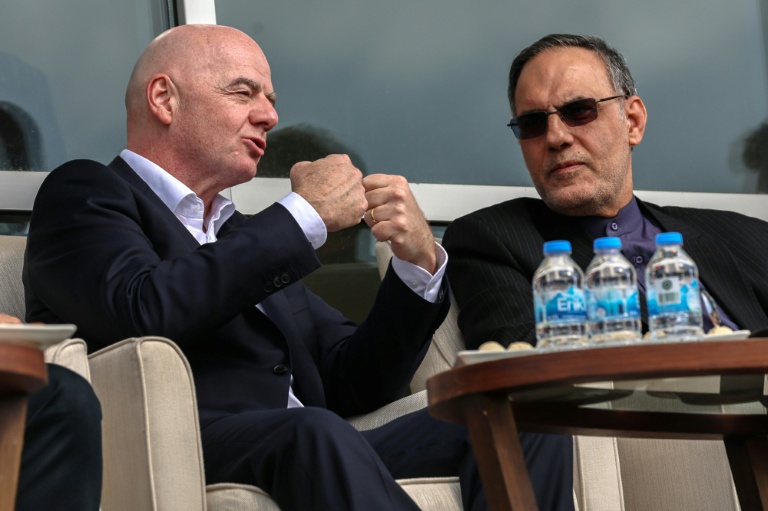
The setting for Infantino’s proclamation was as symbolic as it was unexpected. The FIFA president made an unannounced visit to watch Iran dismantle Costa Rica 5-0 in a friendly match in Antalya, Turkey. His presence alone was a powerful gesture of engagement. At halftime, speaking to AFP, he left no room for ambiguity. “Iran will be at the World Cup,” Infantino stated firmly. He expressed delight at Iran’s footballing strength, adding, “I’ve seen the team, I’ve spoken to the players and the coach, so everything is fine.” This hands-on approach—personally meeting with the squad—suggests a concerted effort by FIFA’s top brass to ensure stability and focus within the Iranian camp ahead of the global showpiece.
Most critically, Infantino addressed the elephant in the room: the location of Iran’s matches. The 2026 World Cup draw, held last December, placed Iran in a group with Germany, Scotland, and the United States, with all three of their first-round matches scheduled on U.S. soil. Given the decades of strained diplomatic relations between Tehran and Washington, questions had swirled about the feasibility and security of this arrangement, especially following the recent escalation of conflict in the Middle East. Infantino preemptively shut down any speculation of a venue change. “Their matches will be played where they are supposed to be, according to the draw,” he stressed. This is a monumental commitment to the sporting integrity of the tournament’s schedule.
Navigating the Political Pitch: FIFA’s Stance and Precedents
Infantino’s announcement is not made in a vacuum. It is a calculated stance by FIFA to insulate the World Cup from geopolitical storms, a challenge the organization has faced repeatedly throughout its history. The decision carries significant weight and establishes several key precedents for the 2026 tournament:
- Sport Over Politics: FIFA is drawing a firm line, asserting that qualification and the tournament draw are sporting matters, not political tools. Moving Iran’s matches would be seen as a political concession, setting a dangerous precedent for future tournaments.
- Security as Paramount: By confirming the U.S. venues, FIFA is expressing confidence in the host nation’s ability to provide stringent security for the Iranian team, officials, and fans. This will involve unprecedented coordination between FIFA, U.S. Soccer, and multiple federal and local law enforcement agencies.
- Fan Logistics and Diplomacy: The statement implicitly greenlights travel for Iranian supporters. This will test visa protocols and require delicate logistical planning to ensure a safe and welcoming environment for all fans, a massive undertaking for U.S. authorities.
Historically, FIFA has a mixed record. It has suspended nations for government interference in football matters, but outright banning a team from a finals due to external political conflicts is rare. Infantino’s proactive, on-the-ground diplomacy with the Iranian team appears to be a strategy to foster goodwill and present a unified football front, hoping the “beautiful game” can serve as a temporary bridge, however narrow.
The Group of Intrigue: Analysis and Predictions for Iran’s Campaign
With their place confirmed, the focus sharpens on the pitch. Iran finds itself in arguably the most narratively rich group of the 2026 World Cup. Drawn into Group F with Germany, Scotland, and the United States, every match is laden with subtext. Iran will open its campaign against the U.S. in Los Angeles—a match that will instantly become one of the most politically scrutinized sporting events in recent memory. The atmosphere at SoFi Stadium will be electric, tense, and globally watched.
From a tactical perspective, Iran, under manager Amir Ghalenoei, is a perennial Asian powerhouse known for its disciplined defensive structure, physicality, and potent counter-attacks. They have a history of being a tough out for elite teams, as demonstrated by their wins over Wales and draws with Portugal and Senegal in recent World Cups. Their decisive friendly win over Costa Rica, witnessed by Infantino, shows a team in strong form.
Here is a breakdown of their group stage prospects:
- vs. United States (Los Angeles): More than just football. The U.S. will have overwhelming home support. Iran will embrace the “us against the world” mentality. Expect a tight, nervy, and highly tactical battle. Prediction: A tense draw or a narrow win for either side is most likely.
- vs. Scotland (Seattle): A classic clash of styles. Scotland’s energetic, direct approach will test Iran’s defensive resilience. This match may be crucial for both teams’ knockout hopes. Prediction: A physical, low-scoring affair. Iran’s tournament experience could give them a slight edge.
- vs. Germany (New York/New Jersey): The ultimate test. Iran will likely need a result here to advance. Germany’s technical superiority is immense, but Iran’s organization can frustrate. Prediction: Germany are clear favorites, but Iran is capable of a heroic, historic upset if they can stay compact and clinical.
Iran’s path to the knockout rounds is arduous but not impossible. Taking points from the U.S. and Scotland games will be essential. Their success may hinge on the form of their European-based stars like Porto’s Mehdi Taremi and Roma’s Sardar Azmoun.
Conclusion: A World Cup Like No Other
Gianni Infantino’s firm declaration to AFP does more than just confirm a team’s schedule; it locks in a defining storyline for the 2026 World Cup. By insisting that Iran will play in the United States as planned, FIFA has chosen to navigate the complex intersection of sport and global politics head-on, rather than avoid it. This guarantees that the tournament will be a spectacle not only of athletic excellence but also of profound cultural and diplomatic significance.
The eyes of the world will be on Los Angeles, Seattle, and New York/New Jersey when Iran takes the field. The matches will be a testament to the power of sport to command a global stage amidst discord, and a massive challenge for security and event organizers. For the Iranian players, it is a chance to define their legacy through football, representing their nation on the world’s biggest sporting stage under uniquely intense circumstances. For fans, it is a reminder that the World Cup is more than a game; it is a mirror of our world—its complexities, its tensions, and, perhaps, its potential for moments of unifying human achievement. The countdown to 2026 just became infinitely more compelling.
Source: Based on news from Yahoo Sports.