Is the Championship Heading for a Financial ‘Catastrophe’?
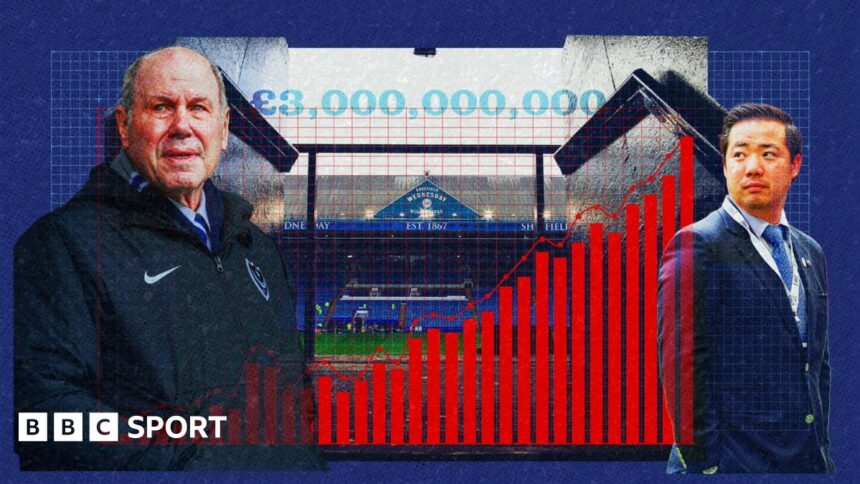
The roar of the crowd, the drama of a last-minute winner, the dream of Premier League riches—the EFL Championship sells a compelling story. But behind the curtain, a far less glamorous narrative is unfolding, one of staggering losses and unsustainable gambles. Portsmouth chairman Michael Eisner, the former Disney CEO who knows a thing or two about blockbuster numbers, has sounded a stark alarm: a financial “catastrophe” is looming for England’s second tier. With storied clubs like Sheffield Wednesday and Leicester City, a recent Premier League champion, facing points deductions and financial turmoil, the warning cannot be dismissed as mere panic. The league is running on fumes, fueled by a collective £3 billion lost over the past decade. The question is no longer if the model is broken, but who will be left picking up the pieces.
The Staggering Scale of the Losses
Let’s try to comprehend the figure: £3 billion. In the ten years since Financial Fair Play (now Profitability and Sustainability Rules) was introduced to promote prudence, Championship clubs have burned through this astronomical sum. To put that into perspective, that’s not just a line in an accountant’s ledger; it’s a monument to financial misadventure.
- It could buy a matchday pie and a pint roughly 300 million times over.
- It would cover the cost of about 760 properties in London’s exclusive Mayfair.
- It could purchase 12,000 family homes valued at £250,000, effectively building a new town.
This isn’t a slow bleed; it’s a hemorrhage. The financial model is fundamentally inverted. Clubs are not spending based on what they earn; they are spending based on what they might earn if they achieve promotion. The Premier League’s television deal, worth billions, acts as a shimmering mirage, driving clubs to risk everything for a place at the top table. The result is a dangerous arms race in player wages, transfer fees, and agent commissions, all funded by owners willing to cover losses—until they aren’t.
The Warning Signs: From Hillsborough to the King Power
The theory of impending crisis is crystallizing into hard reality at clubs across the division. Michael Eisner’s warning is not abstract; he points directly at the current struggles of Sheffield Wednesday and Leicester City as symptomatic of the disease.
Sheffield Wednesday began this season with a crushing -8 point deduction for breaching the league’s PSR rules, a penalty that threatened their Championship status before a ball was kicked. Their troubles stem from years of overspending in pursuit of promotion, leaving a legacy of debt and a strained relationship with creditors. It’s a classic Championship tale: push the financial limits for glory, and face the brutal reckoning when you fall short.
More startling is the case of Leicester City. The 2016 Premier League champions, a club that recently competed in European competitions, are now facing potential points deductions next season for alleged breaches of PSR during their final top-flight years. Their projected losses for 2022-23 were a league-record £89.7m. This illustrates a terrifying new dimension: the financial contagion is no longer confined to perennial second-tier clubs. The cost of Premier League survival, followed by the parachute payment cliff-edge after relegation, is creating financial vortices that can swallow even the most established names.
They are not alone. Reading, Derby County, and Wigan Athletic have all suffered points penalties and existential threats in recent years. The pattern is clear: the league’s own regulations are being tripped over by clubs for whom compliance is secondary to the desperate chase for promotion or survival.
The Root Causes: A Perfect Storm of Pressure
Why is the Championship uniquely vulnerable? The answer lies in a perfect storm of structural and competitive pressures.
The Parachute Payment System is the primary distorting factor. Clubs relegated from the Premier League receive substantial payments over three years to soften the blow. While intended to promote stability, they create a two-tier division. Newly relegated clubs have a massive financial advantage, allowing them to retain higher-caliber squads and wage bills, forcing rival clubs without that cushion to spend beyond their means to compete. This arms race inflates the market for everyone.
The “Dream” of Promotion is the league’s driving force, but it’s a lottery with ruinously expensive tickets. The financial gap between the Premier League and the Championship is the largest between any two contiguous divisions in world sport. The reward for success is so astronomically high that it justifies, in owners’ minds, catastrophic levels of risk. Failure, however, leaves a mountain of debt and playing contracts that are impossible to sustain.
Finally, there is the issue of Governance and Enforcement. The PSR rules are well-intentioned but have proven porous. Points deductions, while severe, are often seen as a cost of doing business—a punishment that comes after the competitive advantage has been gained. The system incentivizes short-term gambling over long-term sustainability.
Avoiding the Catastrophe: Pathways to Sustainability
So, is catastrophe inevitable? Not necessarily, but averting it requires radical and potentially painful shifts. The current model is broken, and tinkering at the edges will not suffice. Several solutions are being debated:
- A Financial Restructuring Agreement: A collective bargain, similar to the NFL’s hard salary cap, could be imposed. This would strictly tie spending to a percentage of central and generated revenue, instantly leveling the playing field and forcing clubs to live within their means.
- Reform of Parachute Payments: These could be phased out or radically reduced, with funds redistributed more evenly across the Championship to enhance competitive balance. Alternatively, a larger share of Premier League solidarity payments could be performance-based within the Championship, rewarding well-run clubs.
- Enhanced Owner Vetting and Real-Time Monitoring: The EFL could implement more rigorous “stress tests” on prospective owners’ business plans and move towards real-time financial monitoring to prevent breaches before they occur, rather than punishing them after.
- A Collective Shift in Mindset: Ultimately, clubs and their fans may need to recalibrate expectations. The era of wild spending may have to give way to a focus on academy development, smarter recruitment, and organic growth. Sustainability must become the new definition of success.
The Final Whistle: Reckoning or Reform?
The warning from Michael Eisner is a sobering intervention from a seasoned business figure who sees the numbers for what they are: unsustainable. The Championship is the most exciting, unpredictable league in the world, but it is built on a foundation of quicksand. The £3 billion black hole is not just a statistic; it is a testament to a decade of fiscal folly.
The coming years will be defining. We will either see more historic clubs follow the path of Bury and Macclesfield into oblivion, triggering a true catastrophe, or we will witness a painful but necessary correction. The league must choose between being a casino, where a few lucky winners take all while the rest face ruin, or a sustainable competition where clubs are community assets, not financial playthings.
The passion of the fans, the history in the stands, and the drama on the pitch deserve better. The time for empty promises and quick fixes is over. The Championship must now decide if it has the courage to reform itself, or if it will continue its march toward a disaster that, for many clubs, may already be too late to avoid.
Source: Based on news from BBC Sport.