From Pitch to Protection: Iranian Footballers Find Asylum and a New Dream in Australia
In the universal language of football, the sound of a ball striking a boot is one of promise and potential. For two Iranian women, that sound now echoes with a profound new meaning—one of safety, freedom, and a hard-won future. For the first time since being granted asylum, Iranian footballers Fatemeh Pasandideh and Atefeh Ramezanisadeh have broken their silence, sharing a powerful vision of continuing their professional careers “in safety” on Australian soil. Their journey from national team players to refugees underscores a global struggle for women’s rights in sport and geopolitics, transforming them from athletes into symbols of resilience.
A Safe Haven: From Geopolitical Turmoil to Sporting Sanctuary
The players’ asylum comes against a backdrop of intense regional conflict. As reported by Fox News national correspondent Bryan Llenas, the decision followed the U.S. and Israel’s joint military campaign against Iran, a period of heightened instability. While touring in Australia, Pasandideh and Ramezanisadeh made the life-altering choice to remain, seeking refuge from the escalating tensions. The Australian government’s subsequent grant of asylum was not just a bureaucratic act; it was a lifeline.
In a joint statement conveyed via the Australian Associated Press, the athletes expressed profound gratitude: “The compassion and support shown to us during this challenging time has provided us with hope for a future where we can live and compete in safety.” The phrase “safe haven” carries immense weight, signifying more than physical security. It represents the freedom to train, to play, and to simply exist as athletes without the shadow of political repression or the restrictive societal codes that have long hampered women’s sports in Iran.
This move by Australia highlights a growing, if complex, trend of nations providing sanctuary to athletes at risk. It positions sport as a conduit for human rights, where a government’s recognition of athletic talent intersects with its humanitarian obligations.
Kicking Down Barriers: The Broader Struggle for Iranian Women in Sports
The story of Pasandideh and Ramezanisadeh is not an isolated incident but a chapter in a decades-long narrative of resistance. Iranian women athletes have consistently navigated a labyrinth of restrictions:
- Strict Dress Codes: Mandatory hijab and full-body covering during competition, often impacting performance and comfort.
- Limited Access: Historical bans on women attending stadiums for men’s events, only partially lifted in recent years amid fierce activism.
- Political Scrutiny: Athletes becoming targets for reprisal if perceived as critical of the regime, a risk magnified for high-profile women.
- “Blue Girl” Tragedy: The death of Sahar Khodayari, who set herself on fire after being arrested for trying to attend a match, became a global rallying cry for change.
For female footballers, these barriers are compounded. Their dreams are often secondary to political and ideological mandates. The decision to seek asylum, therefore, is a drastic but understandable step to reclaim agency over their careers and lives. It is a choice between representing a nation that systematically curtails their freedom and seeking a new community where their talent is the sole metric of their worth.
Expert Analysis: The Ripple Effects of Athletic Asylum
Sports sociologists and geopolitical analysts see this event as a significant inflection point. “This is a powerful form of soft diplomacy and a stark indictment,” notes Dr. Anya Petrova, a specialist in sport and global politics. “When athletes choose asylum, they are voting with their feet against a system. Australia isn’t just gaining two players; it is making a statement about valuing human rights and sporting integrity.”
The impact is twofold. For the global football community, it spotlights the ongoing plight of women in sports under oppressive regimes, pressuring governing bodies like FIFA to take stronger, more consistent stances. For Iran, it represents a continued “brain drain” of sporting talent—a loss of role models and potential coaches who could inspire the next generation at home.
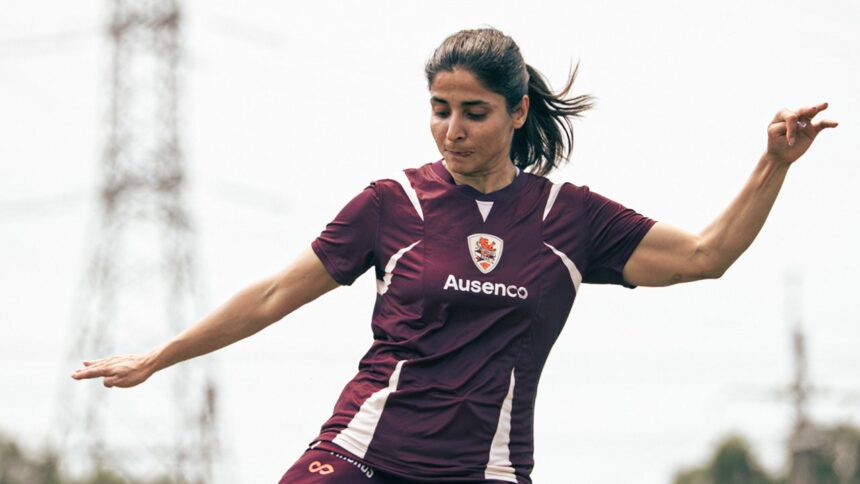
Furthermore, the image of Fatemeh Pasandideh training with the Brisbane Roar club (as captured in an Associated Press photo) is itself a potent symbol. It visualizes the seamless integration possible when opportunity meets freedom. Her kick of the ball in Brisbane is more than a training drill; it is a declaration of a new beginning.
The Road Ahead: Predictions for Their Careers and Legacy
What does the future hold for these athletes? The path is paved with both opportunity and challenge.
Immediate Sporting Integration: The Australian football ecosystem, particularly the A-League Women, offers a professional, competitive, and supportive environment. Clubs like Brisbane Roar have already shown interest, providing a direct pathway for the players to achieve their dream of competing in safety. Their technical skills, honed in a high-pressure international environment, could be a significant asset.
Advocacy Roles: Pasandideh and Ramezanisadeh will likely evolve into powerful advocates for refugee athletes and for women’s rights in sport globally. Their firsthand testimony carries an authority that can influence policy and public opinion.
Psychological Journey: The transition from national team player to asylum-seeker is profound. The support systems within Australian sport will be crucial in helping them navigate the complex emotions of displacement, even as they embrace a hopeful new chapter.
Long-term Legacy: Their story may inspire other women athletes facing similar oppression, but it also sends a clear message to Tehran: the world is watching, and talent demands freedom. It could intensify internal debates about reform within Iran’s sporting institutions.
A Conclusion Beyond the Game
The saga of Fatemeh Pasandideh and Atefeh Ramezanisadeh transcends sports headlines. It is a human story of courage, a geopolitical indicator, and a beacon for the transformative power of sport. Their quest to simply play football “in safety” underscores a fundamental truth: athletic excellence cannot flourish in an environment of fear and restriction.
As they lace up their boots on Australian soil, they are not just training for a new season; they are embodying a profound hope. Their journey reminds us that the pitch is more than a field of play—it can be a sanctuary, a platform for protest, and a foundation for a new life. The world will now watch not only their goals and assists but their very freedom, a testament to the idea that every athlete deserves the right to pursue their passion without peril.
Source: Based on news from Fox Sports.