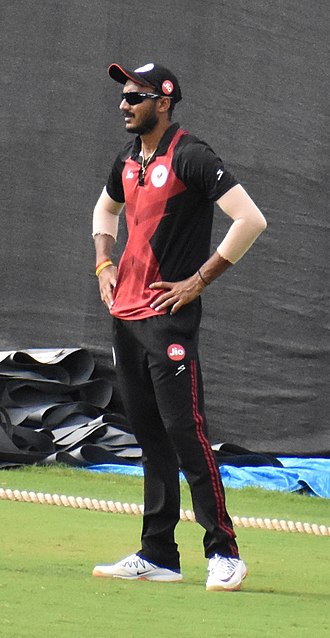
Axar Patel Under Fire: Did Tactical Blunders Cost DC the Game Against SRH?
The Indian Premier League is a theatre of fine margins, where a single tactical decision can transform a captain from a genius into a villain. On Tuesday night, Delhi Capitals captain Axar Patel found himself cast firmly in the latter role. His team’s heavy defeat to the Sunrisers Hyderabad wasn’t just about a mammoth target of 243; it was about the baffling choices made in the field that allowed SRH to run riot. The cricketing world is now asking one question: What was Axar Patel thinking?
The numbers are damning. SRH piled up a staggering 242/2, powered by Abhishek Sharma’s breathtaking, unbeaten 135. While the batting unit will face its own scrutiny for a failed chase, the real post-match autopsy centers on the captain’s bizarre bowling rotations. Overusing a part-time spinner while severely underutilizing his two premier spinners was a move that left pundits and fans alike scratching their heads. This was not a case of a bad day; it was a masterclass in tactical self-sabotage.
The Riddle of the Part-Timer: Why Did Rana Bowl Four Overs?
The most glaring anomaly in Delhi’s bowling card was the usage of Nitish Rana. Rana, a part-time off-spinner, was handed a full quota of four overs. He finished with figures of 0/55 – an economy rate of nearly 14 runs per over. In a game where every run mattered, feeding a part-timer to a rampaging Abhishek Sharma was akin to waving a red flag at a bull.
Let’s break down the logic, or lack thereof:
- Role Confusion: Rana is a batting all-rounder. His bowling is a secondary skill, used to grab a wicket or two in the middle overs. Using him as a primary weapon against a set opener on a flat deck is a fundamental tactical error.
- Match-up Disaster: Abhishek Sharma, a left-hander, feasts on off-spin that turns into him. Rana’s trajectory and lack of pace variation were meat and drink for the SRH opener, who smashed him for multiple sixes over the leg side.
- Resource Waste: By bowling Rana out, Axar Patel effectively removed a bowling option that could have been used for a single over as a surprise. Instead, he became a liability that bled runs at a critical juncture.
The decision to persist with Rana, even as the runs flowed, suggests a captain who either lost faith in his main bowlers or simply misread the pitch conditions. There is no other explanation for allowing a part-timer to complete his spell while your strike bowlers sat idle.
The Curious Case of the Missing Spinners: Axar and Kuldeep Benched
If the Rana overuse was the headline, the underuse of Axar Patel and Kuldeep Yadav was the subtext that made the story even more damning. These two are the heart of Delhi’s spin attack. Axar is a proven wicket-taker and economy specialist, while Kuldeep is a wrist-spinner capable of breaking partnerships. Yet, between them, they bowled just four overs total.
Here is the hard data on the mismanagement:
- Axar Patel: Bowled only 2 overs, conceding 20 runs. He did not even complete his full quota.
- Kuldeep Yadav: Bowled only 2 overs, conceding 19 runs. He was introduced late and immediately removed.
- Comparison: The two primary spinners combined for 39 runs in 4 overs. Nitish Rana alone conceded 55 runs in 4 overs. The math is simple: using your best bowlers would have likely saved at least 15-20 runs, and possibly yielded a wicket.
Expert Analysis: In a high-scoring IPL clash, the captain’s job is to use his best weapons to stem the flow. Axar Patel, as a left-arm spinner, is specifically effective against right-handers in the middle overs. Kuldeep Yadav thrives on deception and flight. By not bowling them, Axar Patel neutralized his own strengths. It felt like a chess player who refused to move his queen and instead kept sacrificing pawns. The decision to hold back your trump cards while the opposition piled on runs is a classic sign of a captain under pressure, making reactive rather than proactive calls.
Was It a Pitch Misread or a Panic Attack?
To understand Axar Patel’s thought process, we must consider the context. SRH’s start was explosive. Abhishek Sharma and Travis Head came out swinging, putting the DC bowlers on the back foot from the first over. In such situations, a captain can panic. Axar Patel’s decision to turn to Rana might have been an attempt to “buy a wicket” with a less predictable option. It backfired spectacularly.
Another theory is that Axar Patel misjudged the pitch. Perhaps he believed the surface would assist his spinners later, so he wanted to preserve them for the death overs. But that logic falls apart when you consider that the death overs in T20 are usually the domain of fast bowlers. By the time Kuldeep and Axar were finally brought on, the game was already out of control.
Key Tactical Failures:
- Bowling Changes: The lack of rhythm. Bowlers were not given a consistent spell to settle. Rana was brought back even after being hit for boundaries.
- Field Placement: The field settings for Rana were defensive, which invited singles and built pressure on the other end. Yet, the boundaries kept coming.
- Lack of Aggression: With a score like 242, you need wickets. Using a part-timer is a defensive move that rarely yields breakthroughs against top-order batters.
The SRH vs DC, IPL 2026 HIGHLIGHTS will show a captain who looked lost. He was seen discussing tactics with the coaching staff, but the execution on the field was disjointed. This was not the calculated captaincy we saw from him earlier in the season. It was a tactical meltdown.
Predictions: What This Means for DC’s Season and Axar’s Captaincy
One bad game does not define a season, but it can expose deep-seated issues. For Delhi Capitals, this loss is a massive wake-up call. They now face a credibility crisis in their leadership. The players will look at the captain and wonder if they will be used correctly in the next game.
Prediction 1: Axar Patel must delegate. He cannot be the captain, the primary spinner, and the tactical mastermind all at once. He needs a strong vice-captain or a bowling coach who can overrule him during the game. The decision to bowl Rana should have been challenged by the team management.
Prediction 2: The spin duo must be unleashed. In the next match, expect Axar Patel to overcorrect. He will likely bowl Kuldeep Yadav and himself for their full quota early, even if it means sacrificing a fast bowler. The lesson from this game is simple: trust your match-winners.
Prediction 3: Rana’s bowling role will be redefined. After this disaster, it is highly unlikely that Nitish Rana will bowl more than one over in a game unless a batter is struggling against him. The experiment is over.
Prediction 4: Playoff hopes take a hit. In a tight IPL season, losing a game where you had the bowling resources to win is criminal. This loss could be the difference between qualifying and going home early. The team’s net run rate has also taken a severe beating.
Conclusion: A Lesson in Captaincy Basics
At the end of the day, cricket is a simple game. You use your best bowlers to bowl the most dangerous batters. Axar Patel forgot that basic principle. His tactical blunders against SRH were not just a poor day at the office; they were a fundamental failure of game awareness. He overthought the situation and paid the ultimate price.
The criticism is justified. Fans on social media are calling for his head, and analysts are dissecting every wrong move. But the true test of a captain is how he responds. Axar Patel has the character to bounce back. He is a fighter. However, he must learn that captaincy is not just about leading by example with the ball; it is about making the right calls at the right time.
For Delhi Capitals, the season is not over. But the margin for error is now zero. If Axar Patel repeats these tactical errors, his captaincy tenure will be short-lived. The next game is not just about winning; it is about restoring faith in his leadership. The cricketing world will be watching closely to see if he learned from his nightmare against Sunrisers Hyderabad.
Source: Based on news from India Today Sport.
Image: CC licensed via commons.wikimedia.org