‘Too Much to Handle’: Millie Bright Opens Up About the Social Media Abuse That Defined Her Exit
In the high-stakes world of elite women’s football, Millie Bright was a fortress. A commanding centre-back with a trophy cabinet that groans under the weight of silverware, she was the embodiment of resilience at Chelsea and a stalwart for England. But behind the tackles, the trophies, and the 294 appearances for the Blues, a different battle was raging—one fought not on the pitch, but in the dark corners of social media.
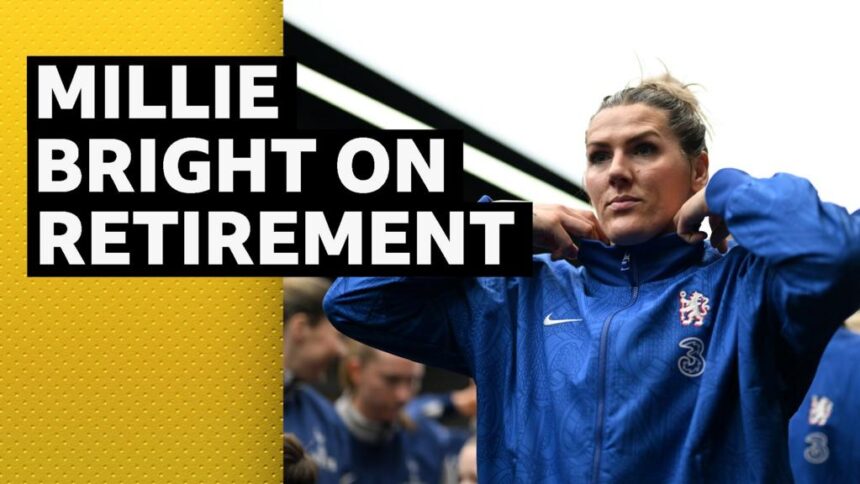
In a raw and revealing interview with the BBC’s women’s sport reporter Jo Currie, Bright has broken her silence on the abuse that ultimately became “too much to handle.” The timing is poignant. Having retired from England duty last year and now departed Chelsea after a glittering 11-year spell, the 31-year-old is lifting the lid on a mental toll that forced her to reassess everything. This isn’t just a retirement story; it’s a stark warning about the human cost of online toxicity in modern sport.
The Weight of the Crown: Why Bright Walked Away
For the uninitiated, Millie Bright’s career reads like a fantasy script. Eight Women’s Super League titles, six FA Cups, and four League Cups at Chelsea. A European Championship winner with England. She was the rock upon which dynasties were built. Yet, as she sat down with Currie, the narrative shifted from glory to survival.
“I lost myself,” Bright admitted. It’s a chilling confession from a player who never looked lost on the pitch. The retirement from international duty last year was the first major signal. Now, with her Chelsea chapter closed, she has revealed that the relentless social media abuse became a primary driver behind her decisions.
Let’s be clear: this is not a case of a player being thin-skinned. This is about the volume and velocity of hate that elite female athletes receive. Bright, a leader by nature, found herself absorbing blows that were never aimed at her performance. They were personal, targeted, and designed to break her spirit.
- Intensity of the hate: Bright described the abuse as a constant noise that blurred her focus.
- Impact on identity: The player who defined herself by winning began to question her entire worth.
- The tipping point: It wasn’t one comment, but the cumulative weight of thousands that made her feel “lost.”
Expert Analysis: From a journalistic perspective, what Bright is doing is incredibly brave. Athletes are often told to “ignore the noise.” But when the noise is a cacophony of threats and insults delivered directly to your phone, ignoring it isn’t a strategy—it’s a survival mechanism that often fails. Her honesty forces clubs, governing bodies, and platforms to ask: What more are we doing to protect players?
The Chelsea Departure: A Legend Leaves on Her Own Terms
To fully understand the gravity of her revelation, we must look at what she left behind. Chelsea is not just a club; it’s a machine that demands excellence. Bright made 294 appearances for the Blues—a testament to her durability and class. She was the last of the old guard, the link between the semi-professional era and the global juggernaut the WSL has become.
Walking away from that environment was not a physical decision. It was psychological. The abuse she faced didn’t just affect her game; it poisoned her relationship with the sport she loved. When you dedicate your life to a club and, in return, receive a torrent of hate for a missed tackle or a bad result, the contract of loyalty becomes broken.
Her departure marks the end of an era. The spine of Chelsea’s dominance—players like Bright, Fran Kirby, and Magdalena Eriksson—has now fully dissolved. But Bright’s exit feels different. It feels like a statement. She is not leaving because she is past her prime; she is leaving because the external pressures made the joy unsustainable.
Prediction: The void Bright leaves at Chelsea is not just tactical. It’s emotional. The Blues will struggle to find a leader who commands the same respect in the dressing room. Look for Chelsea to invest heavily in a defensive leader in the summer transfer window, but replicating Bright’s aura is a far more difficult task than replacing her passing range.
The ‘I Lost Myself’ Moment: A Crisis of Confidence
The headline quote from the interview—“I lost myself”—is the most telling. It speaks to a crisis that goes beyond football. For a decade, Bright was defined by her role. She was the captain, the organiser, the warrior. When social media abuse stripped that identity away, she was left staring into an abyss.
What is particularly disturbing is the gendered nature of the abuse. Female footballers face a specific brand of vitriol that male counterparts rarely encounter. It often attacks their appearance, their sexuality, and their right to be elite athletes. Bright, who is known for her privacy, has now chosen to expose this ugly underbelly.
Her interview with the BBC is a masterclass in vulnerability. She doesn’t claim to have the answers. She doesn’t offer a neat solution. Instead, she presents the problem in its raw, unvarnished form. This is what it looks like when a world-class athlete is brought to her knees by a keyboard warrior.
Key takeaways from her confession:
- Mental health is non-negotiable: Bright prioritised her sanity over legacy. This is a powerful message for younger players.
- Support systems matter: She credits her inner circle and club support staff for helping her navigate the darkest days.
- The future is uncertain: Bright is not retiring from football entirely. She is taking a step back to rediscover who she is without the noise.
What Comes Next: Bright’s Future and the WSL’s Responsibility
So, where does Millie Bright go from here? The interview makes it clear that she is not done with football. She is simply done with the version of football that demanded she absorb poison. A move abroad or a role in punditry is entirely plausible. But the bigger question is: what does the sport do with her testimony?
The Women’s Super League is growing at an exponential rate. More money, more viewers, more pressure. With that growth comes a darker side—more trolls, more abuse, more platforms for hate. Bright’s story is a canary in the coal mine. If a player of her stature—a multiple-title winner, an England legend—can be driven to the brink, what hope is there for younger, less established players?
Expert Analysis: The onus cannot solely be on the players to “toughen up.” Clubs must invest in full-time mental health professionals. Social media companies must do a better job of policing hate speech. And fans must understand that the person on the screen is a human being. Bright’s legacy should not just be about the eight WSL titles. It should be about the conversation she has started today.
Prediction: Millie Bright will not be silent. Her next move, whether on the pitch or in the media, will be on her own terms. She will become an advocate for mental health in sport. Watch for her to partner with organisations like Mind or the FA’s mental health charter. She has the platform, and now she has the story.
Conclusion: The Real Trophy is Peace
Millie Bright leaves Chelsea and England with a resume that few can match. But the most important legacy she leaves behind today is not a trophy—it is the courage to speak the truth. The social media abuse was “too much to handle,” and she had the strength to say it out loud.
For every young girl who dreams of playing at Stamford Bridge or Wembley, Bright’s story is a double-edged sword. It shows the incredible heights you can reach, but it also reveals the dark depths you might have to navigate. The game needs more Millie Brights—not just for their defensive skills, but for their honesty.
As she steps away from the daily grind, one thing is certain: she has won the most important battle. She has reclaimed herself. And in a world that demands athletes be superhuman, being human is the most powerful statement of all.
Source: Based on news from BBC Sport.