Slot’s VAR Fury Masks Deeper Wounds: Liverpool’s “Ridiculous Goals” Epidemic Exposed at Old Trafford
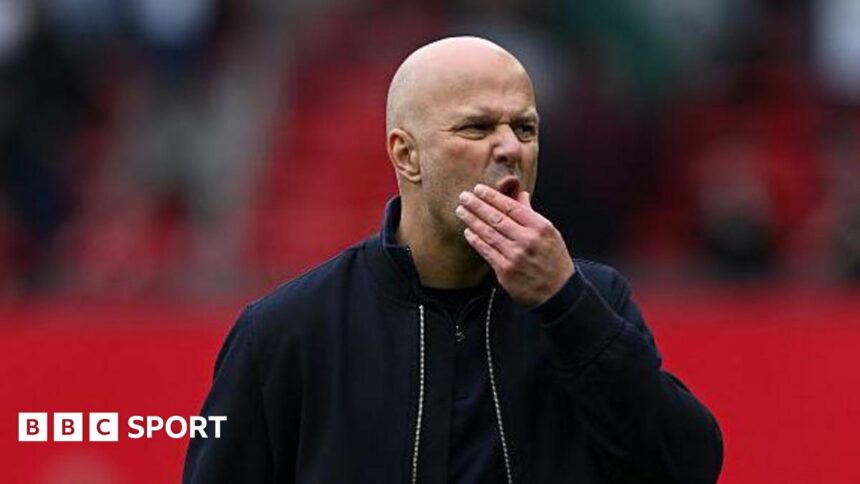
Old Trafford has rarely felt more like a theatre of the absurd for Liverpool. In a season already defined by inconsistency and defensive fragility, the Reds crashed to an 11th Premier League defeat of the campaign, a 3-2 loss to Manchester United that left head coach Arne Slot fuming at a VAR decision but, more tellingly, pointing an accusing finger at his own squad. The Dutchman’s post-match press conference was a masterclass in controlled fury, but beneath the surface of his “VAR intervention” complaint lies a far more troubling narrative: a team that has lost its spine, its structure, and its ability to stop conceding what the manager himself branded “ridiculous goals.”
This was not a game decided by a single controversial pixel. It was a game decided by a 14-minute defensive collapse that left Liverpool chasing shadows. While the VAR check on Benjamin Sesko’s strike—which put United 2-0 ahead—will dominate the headlines, the reality is that Liverpool’s season is unraveling not because of bad luck, but because of systemic failure. Let’s dissect the carnage, the controversy, and the cold, hard truth facing Slot’s side.
The VAR Flashpoint: Sesko’s Goal and the “No Surprise” Response
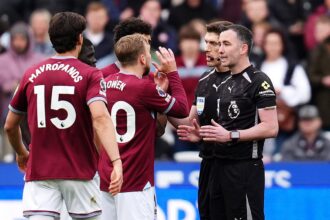
The moment arrived in the 14th minute. A corner swung into the Liverpool box, a scramble ensued, and Benjamin Sesko smashed the ball into the net. Immediately, Liverpool players surrounded referee Darren England, claiming a handball in the build-up. The ball had struck United defender Leny Yoro on the arm before falling to Sesko. The VAR, Stuart Attwell, reviewed the footage. The call stood. Goal.
Slot’s reaction was telling. “It was no surprise a VAR intervention went against us,” he said, his voice dripping with weary frustration. “I have learned that here, it is always 50-50. But that is not the reason we lost.” This was a calculated statement. Slot knows that blaming VAR alone is a crutch. Yet, the lack of consistency in these decisions is a genuine concern. Consider the following:
- The Yoro handball: Did the arm make the body unnaturally bigger? Yes. Was it deliberate? Unlikely. Under the current “clear and obvious” threshold, the decision to uphold the goal was defensible, but infuriatingly borderline.
- Liverpool’s history: The club has been on the wrong end of several high-profile VAR calls this season, from disallowed goals to penalty non-awards. The cumulative effect is a sense of persecution, even if each individual call is technically correct.
- The “controlled” lie: Slot claimed his team “controlled the game without being a threat.” That is the most damning indictment of all. Possession without penetration is sterile. It is the hallmark of a team that has lost its identity.
Key takeaway: The VAR decision was a talking point, but it was not the turning point. That came earlier, when Liverpool’s defensive structure crumbled like a house of cards.
The “Ridiculous Goals” Epidemic: Defensive Chaos Exposed
Let’s talk about the real problem. Slot did not mince words: “We have to take a hard look at ourselves. We keep conceding ridiculous goals. It is not good enough.” He is right. Liverpool’s first two goals conceded at Old Trafford were a masterclass in defensive incompetence.
The first goal (7th minute): A simple ball over the top. United’s Rasmus Hojlund outpaced Virgil van Dijk—yes, the same van Dijk who was once considered the best defender in the world. Hojlund’s cross found Alejandro Garnacho, who tapped in from two yards. Unmarked. The full-back, Conor Bradley, was caught ball-watching. The center-backs were static. It was a goal straight out of a training-ground drill—for the opposition.
The second goal (14th minute): The Sesko strike. But the build-up was the real horror show. Liverpool failed to clear a routine corner. The ball bounced around the six-yard box as if it were a pinball machine. No one attacked the ball. No one picked up the runner. It was chaotic, undisciplined, and frankly, embarrassing for a club of Liverpool’s stature.
The third goal (67th minute): A counter-attack that sliced through Liverpool’s midfield like a hot knife through butter. Kobbie Mainoo played a simple one-two, and suddenly, the entire Liverpool backline was sprinting toward their own goal, completely disorganized. Marcus Rashford slotted home. Three goals, three different types of defensive failure: lack of pace, lack of concentration, lack of structure.
This is not a one-off. Liverpool have now conceded 47 goals in the Premier League this season—their worst defensive record in over a decade. The “ridiculous goals” are a pattern:
- Set-piece vulnerability: They have conceded 14 goals from set-pieces, the second-worst in the league.
- Transitional frailty: Opponents are carving them open on the break with alarming ease. The midfield is too slow to recover.
- Individual errors: Van Dijk, Ibrahima Konaté, and Alisson have all made uncharacteristic mistakes. The confidence is shot.
Prediction: If this defensive rot continues, Liverpool will not finish in the top six. They are currently seventh, but Brighton, Newcastle, and Chelsea are breathing down their necks. A Europa Conference League spot is now the ceiling, not the floor.
Controlled but Toothless: The Attack’s Silent Crisis
Slot’s comment about “controlling the game without being a threat” is the most revealing line of his entire press conference. It speaks to a deeper tactical issue: Liverpool are dominating possession, but they have no idea what to do with it. Against United, they had 62% possession and 18 shots, but only 4 on target. They were the definition of sterile dominance.
Mohamed Salah is still the talisman, but he is being forced to drop deeper and deeper to get the ball. Darwin Nunez continues to be a bundle of energy with zero end product—he missed a gilt-edged header from six yards out. Luis Diaz is all dribble, no finish. The midfield, once the engine room of the team, is now a graveyard for creativity. Alexis Mac Allister is fighting a lone battle, while Dominik Szoboszlai has gone missing in big games.
The stats paint a grim picture:
- Expected Goals (xG): Liverpool’s xG was 1.9, but they scored only 2 goals (one a penalty, one a deflected strike). They are underperforming their xG by a significant margin.
- Big chances missed: Liverpool have missed 48 “big chances” this season—the third-worst record in the top half of the table.
- Creativity drought: Since the departure of Jordan Henderson and Fabinho, the midfield has lacked a progressive passer. Trent Alexander-Arnold is the only consistent source of line-breaking passes, but his defensive liabilities are a constant liability.
Expert analysis: Slot inherited a squad in transition, but he has failed to adapt his tactics. He wants to play a high-pressing, possession-based game, but he does not have the personnel. The full-backs are exposed. The midfield is slow. The forwards are wasteful. It is a mismatch between philosophy and reality.
Prediction: Liverpool will need a major summer rebuild. At least two new defenders, a ball-winning midfielder, and a reliable striker are required. Until then, expect more games where they control the ball but lose the match.
The Bigger Picture: A Season on the Brink
This defeat was not just about three points. It was about momentum, belief, and the psychological toll of a season that has gone off the rails. Liverpool are now 11 points adrift of the top four, and with only 10 games remaining, the math is brutal. Even a run of eight wins would likely not be enough, given the form of Aston Villa, Tottenham, and Manchester City ahead of them.
What went wrong? The summer transfer window was a disaster. The failure to replace Sadio Mane adequately, the reliance on injury-prone players, and the gamble on a young manager with no Premier League experience have all backfired. Slot is not blameless—his in-game management has been questioned, and his substitutions often come too late.
What needs to change?
- Defensive urgency: Slot must drill set-piece routines until they are second nature. The chaos at Old Trafford was inexcusable.
- Midfield balance: Play a proper defensive midfielder. Wataru Endo has been overlooked, but he offers the protection the backline desperately needs.
- Attacking efficiency: Nunez must be benched. His energy is not enough. Cody Gakpo offers more intelligence in the final third.
Strong conclusion: Arne Slot’s VAR fury was a convenient mask, but the mirror is now staring him in the face. Liverpool are not unlucky. They are not victims of conspiracy. They are a team that has forgotten how to defend, how to take chances, and how to win. The “ridiculous goals” are not an accident—they are a symptom of a club in decline. The next three games—against West Ham, Brighton, and Arsenal—will define the season. If the rot continues, the conversation will shift from “can they make the top four?” to “can they keep their best players?” The answer, right now, is terrifyingly uncertain.
Source: Based on news from BBC Sport.