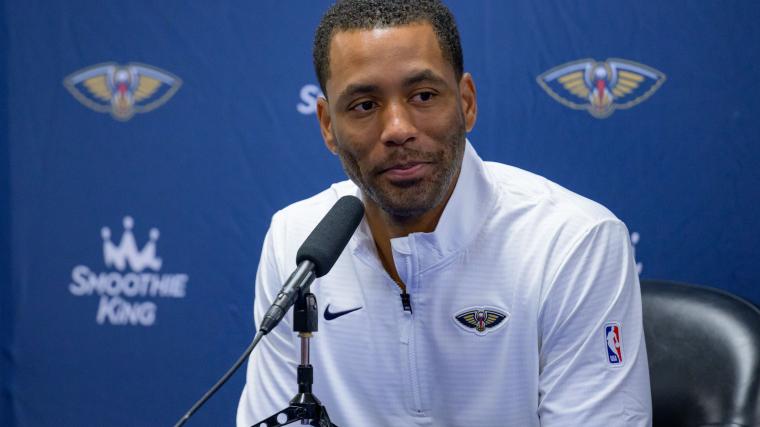
Bulls bet on Bryson Graham to lead new era: Why Chicago hired the rising executive
The Chicago Bulls have officially turned the page. In a move that signals a decisive shift in philosophy, the franchise announced Monday the hiring of Bryson Graham as their new executive vice president of basketball operations. The decision ends a lengthy search and places the future of the organization in the hands of one of the league’s most rapidly ascending front-office minds. This is not a retread hire. This is a bet on youth, analytics, and a fresh perspective.
Graham arrives in Chicago after a brief but impactful stint with the Atlanta Hawks, where he served as senior vice president. He was recruited to Atlanta by general manager Onsi Saleh just last summer. But his meteoric rise across the NBA ecosystem made him impossible to ignore for teams seeking innovative leadership. The Bulls, desperate to escape the mediocrity of the play-in tournament, have decided that the best way forward is to look toward the future—and Graham embodies that future.
From intern to GM: The Bryson Graham origin story
To understand why the Bulls made this move, you have to understand the path Graham took to get here. It is a story of relentless upward mobility, and it stands as one of the most impressive developmental arcs for an NBA executive in recent memory.
Graham spent 15 years with the New Orleans Pelicans organization, a tenure that began in the most humble of ways. He joined the Pelicans as an intern during the 2010–11 season. From that entry-level position, he climbed steadily through the ranks, earning respect for his sharp eye for talent and his data-driven approach to roster construction. He worked in player personnel, scouting, and front-office strategy, eventually being named general manager for the 2024–25 season.
His journey from intern to GM is not just a feel-good story; it is proof of a work ethic and a basketball IQ that has been tested under pressure. In New Orleans, Graham was instrumental in several key roster decisions, including the evaluation of draft prospects and the navigation of the salary cap. He learned under a variety of executives and developed a reputation as a forward-thinking talent evaluator who does not shy away from difficult decisions.
Why the Bulls chose Graham over veteran executives
The Bulls’ front-office search was extensive. Many expected the team to target a seasoned veteran—a former general manager with a proven track record. Instead, Chicago went young. They went aggressive. They went with Graham.
There are several reasons why this hire makes sense for Chicago.
- Fresh perspective: The Bulls have been stuck in a cycle of veteran-laden rosters and short-term fixes. Graham represents a clean break from that approach. He is not tied to any previous Bulls regime.
- Analytical edge: Graham’s background in New Orleans was heavily rooted in analytics and player development. The Bulls have lagged behind in modern roster construction. Graham brings a data-driven mindset that should modernize the front office.
- Proven talent identification: During his time with the Pelicans, Graham helped identify and acquire undervalued players. The Bulls need that skill desperately, especially with limited cap flexibility.
- Leadership under pressure: Being the GM in New Orleans meant navigating the complexities of a small-market team. Graham knows how to build a roster without the luxury of free-agent superstars.
The Bulls are betting that Graham’s rapid rise is a predictor of future success. They are not hiring him for what he has already done; they are hiring him for what they believe he can become. That is a gamble, but it is a calculated one.
Expert analysis: What Bryson Graham must fix immediately
Graham walks into a situation that is far from perfect. The Bulls have a roster that is expensive, imbalanced, and lacking a clear identity. Here is the immediate checklist for the new executive vice president.
1. The Zach LaVine dilemma. This is the elephant in the room. LaVine is a talented scorer, but his massive contract and defensive limitations make him a difficult asset to move. Graham must decide whether to trade LaVine for future assets or attempt to build a system that maximizes his offensive gifts. Expect Graham to explore trade options aggressively.
2. The future of DeMar DeRozan and Nikola Vucevic. Both veterans are on expiring or declining contracts. Graham needs to determine if they fit a long-term timeline. If the Bulls are rebuilding, these players could be moved for younger pieces and draft capital. If Graham believes in a retool, he may try to extend them on team-friendly deals.
3. Developing young talent. The Bulls have promising young players like Coby White, Ayo Dosunmu, and Patrick Williams. Graham’s background in New Orleans—where he helped develop players like Brandon Ingram and Herb Jones—suggests he will prioritize player development. He must create a culture where young players thrive.
4. The draft and cap management. The Bulls have not had a first-round pick in recent years due to previous trades. Graham must rebuild the asset base. He will likely prioritize acquiring draft picks and flexible contracts. Expect him to be active on the trade market and in the buyout market.
Predictions for the Bulls under Bryson Graham
Predicting the future in the NBA is a fool’s game, but based on Graham’s history and the current state of the roster, a few trends are likely to emerge.
Short-term (2025-26 season): The Bulls will likely take a step back in the win column. Graham will use the season to evaluate the roster, move veteran contracts, and accumulate assets. Do not be surprised if Chicago misses the playoffs entirely. That is the price of a true rebuild.
Medium-term (2026-28): By year two or three, expect the Bulls to have a younger, more athletic roster. Graham will prioritize length, shooting, and defensive versatility. The team will look more like the modern NBA teams he helped build in New Orleans. A return to playoff contention is realistic.
Long-term (2028 and beyond): If Graham’s talent evaluation is as sharp as advertised, the Bulls could become a perennial playoff team. The goal is to build a sustainable contender, not a one-season wonder. Graham’s patience and discipline will be tested.
Strong conclusion: A new chapter for Chicago basketball
The Chicago Bulls have finally made a decision that feels like a genuine reset. Hiring Bryson Graham is not a safe move. It is a bold, forward-thinking move that embraces the modern NBA. Graham has earned this opportunity through years of grinding, learning, and winning.
He arrives in Chicago with a clear mandate: rebuild the foundation, modernize the front office, and restore the Bulls to relevance. The road will not be easy. The Eastern Conference is stacked with elite teams and deep organizations. But Graham has proven that he can rise from an intern to an executive vice president. He knows how to climb.
The Bulls are betting that he can take the entire franchise with him. For a team that has been wandering in the wilderness for nearly a decade, that is the kind of bet worth making.
Bulls tap rising executive Bryson Graham to lead basketball operations originally appeared on The Sporting News. Add The Sporting News as a Preferred Source by clicking here.
Source: Based on news from Yahoo Sports.